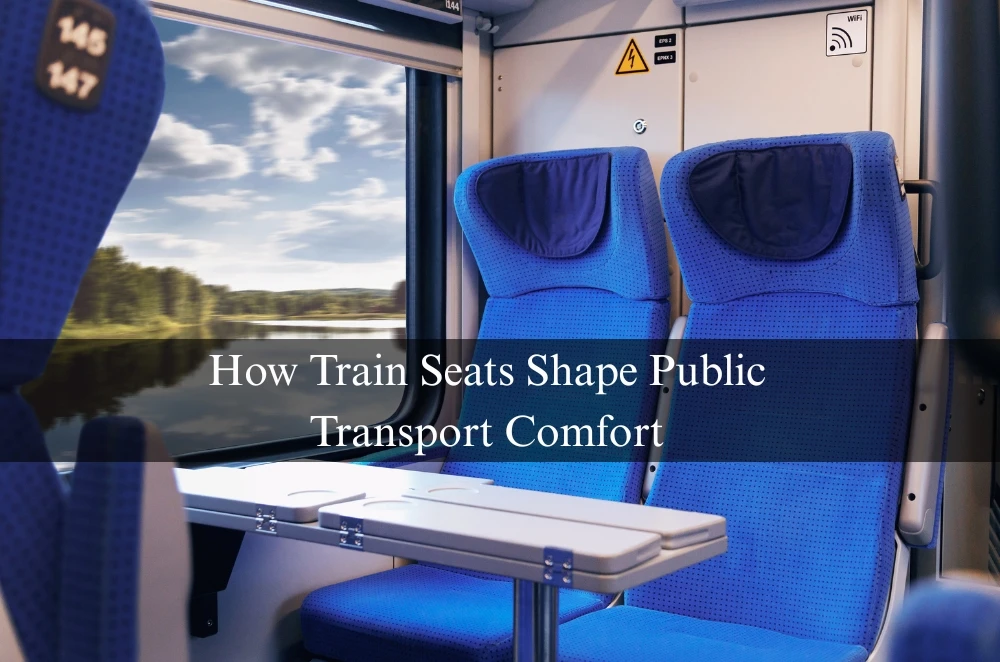

If you’ve ever spent more than 20 minutes on public transport, you know exactly how important train seat design can be. Whether you're heading to work or riding across regions, train seats do more than provide a place to sit — they shape the entire travel experience. For manufacturers and operators, choosing the right design isn’t just about aesthetics or durability; it’s about delivering comfort, safety, and long-term value.
Designing for people, not just passengers
Gone are the days of generic, hard-cushioned train seating. Today’s travellers expect more — and rightly so. As commutes stretch and passenger demographics shift, public expectations around seating comfort and safety continue to rise.
Here’s what modern train seat design takes into account:
- Ergonomic support for spine and posture
- Adequate legroom and hip spacing
- Cushioning for vibration-damping
- Material breathability and temperature responsiveness
The best seating designs work across demographics — accommodating elderly riders, school students, workers, and tourists with equal comfort.
Public comfort meets safety: A design balancing act
Comfort alone doesn’t cut it. Safety and compliance remain critical pillars in train seat design, especially in Australia, where national and state-level transport standards apply. Seats must not only meet wear-and-tear expectations but also incorporate public transport safety features like secure anchoring, fire-resistant materials, and visibility compliance.
Design teams also consider:
- Crashworthiness: How well seats perform in sudden stops
- Anti-slip surfaces for ingress/egress zones
- Tamper-proof elements in high-traffic areas
- Modular parts for easy maintenance and repair
These design priorities ensure safety without sacrificing passenger wellbeing — a balance that often determines whether new seat models make it to service or not.
Why material performance matters in train seating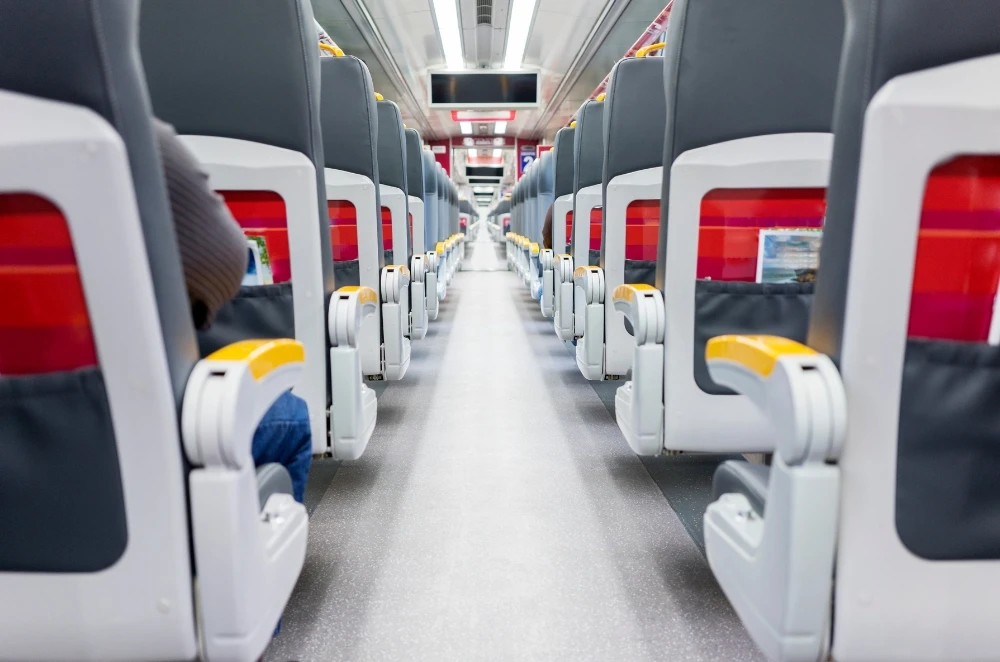
While often taken for granted, the materials used in train seat construction play a huge role in long-term comfort and reliability. Seat surfaces are exposed to thousands of daily passengers, changing indoor conditions, and frequent cleaning — all of which can impact durability and feel.
High-performance materials help ensure consistent comfort and ease of maintenance. Leading manufacturers typically opt for:
- Cold-tolerant, high-density foam that retains shape after prolonged use
- Moisture-resistant upholstery that resists odour and staining
- Antimicrobial coatings for hygiene in high-traffic transit systems
- Low-glare finishes to reduce eye strain under artificial lighting
Rather than seeing seating as a static fixture, operators now view it as a living component of the passenger experience — one that needs to be resilient, easy to maintain, and pleasant across all types of usage patterns.
Real-world insights from fleet upgrades
I once worked alongside a transit contractor on a mid-year seat retrofit for an urban train line in Victoria. The aim? Replace outdated plastic shells with ergonomic, cushioned alternatives without reducing seat count. Commuter feedback had been loud: too hard, too cold, and too cramped.
By installing slightly contoured, fabric-wrapped seats with curved lumbar zones and shorter bases (for better leg clearance), we saw an immediate boost in rider satisfaction. Commuters mentioned feeling less fatigued during evening rides, and vandalism dropped too, likely due to higher perceived quality.
That job proved something simple but powerful: when passengers feel looked after, they treat the space with more respect.
What matters most to passengers?
While operators and engineers focus on compliance, it’s often the little things that define comfort for everyday users. Surveys repeatedly show that commuters value:
- Cleanliness
- Cushioning depth
- Seat height for easy sit/stand transitions
- Armrest accessibility
- Logical configuration (especially for facing seats or solo riders)
These elements align with broader passenger seating safety priorities, proving that safety doesn’t have to mean sacrificing comfort. Instead, a well-designed seat can blend both.
The role of materials and modularity
Material choice in seating affects not only how a seat feels but also how it performs over time. Upholstery must resist tearing, absorb minimal odour, and clean easily. Foam should compress evenly but return to shape. And the frame itself must be lightweight yet secure.
Modern seat designs also favour modular construction. Instead of replacing an entire row when wear appears, maintenance crews can swap out individual cushions, armrests, or shell backs. This keeps operating costs low and ensures:
- Shorter service disruptions
- Longer asset lifespans
- Reduced waste and environmental impact
Modular parts also open opportunities for seasonal design updates, such as fabric tones that hide winter grime or temperature-neutral textures that don’t feel icy to the touch.
Seating layout as a psychological factor
Believe it or not, how seats are arranged plays a major role in perceived comfort. People tend to prefer predictable layouts with intuitive flow — no guessing games or awkward eye contact.
Here are some layout configurations that perform well:
- Forward-facing for long-distance or express routes
- Mixed layouts for metro/commuter trains
- Priority seating zones near doors
- Family or group configurations with central tables
Ergonomics and layout also influence how passengers rate their overall experience. That’s why some authorities partner with researchers and tap into ergonomic train seat solutions to refine both seating and cabin flow.
Future-facing seating: Where innovation is headed
As technology evolves, so does train seating. Some prototypes and pilot projects are exploring:
- Smart cushioning with vibration feedback
- Built-in charging ports for electronic devices
- Dynamic seat assignment using apps
- Materials made from recycled composites
- Lightweight aluminium and carbon fibre substructures
With AI-assisted diagnostics and sensor feedback, seats can eventually signal when maintenance is needed, turning preventive care into a real-time response.
But even as features evolve, the core priorities remain: comfort, safety, longevity, and user confidence.
Final thoughts on the role of train seating
Train seats might seem like a simple fixture, but they’re anything but. They hold the power to influence mood, satisfaction, and perception of public transport. Well-designed seating improves safety, supports access for all users, and shapes whether passengers ride again or look elsewhere.
So next time you take a seat on a train, notice the curves, the material, the spacing — and remember that what you're sitting on was likely the product of thousands of design hours, field tests, and real-world insights. It’s more than just a seat. It’s the journey, shaped one ride at a time.











Sign in to leave a comment.