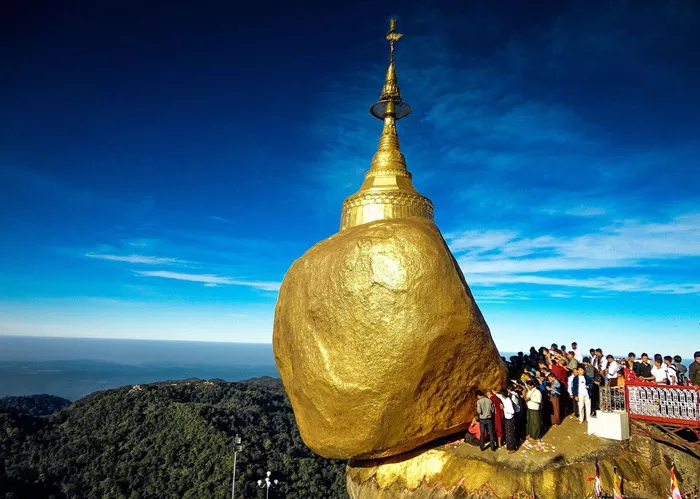

The Kyaiktiyo Pagoda, also known as the Golden Rock, is one of the most important Buddhist pilgrimage sites in Myanmar. This sacred site draws thousands of devotees and tourists every year. The pagoda is famous for its unique location, perched atop a granite boulder covered with gold leaves. It seems to defy gravity as it balances precariously on the edge of a cliff. This site is not only a place of worship but also a symbol of faith and devotion in Theravada Buddhism.
Location of Kyaiktiyo Pagoda

Geographical Setting
Kyaiktiyo Pagoda is located in Mon State, in southeastern Myanmar. The site is situated about 210 kilometers from Yangon, Myanmar’s largest city. The pagoda stands on Mount Kyaiktiyo, part of the Bilauktaung range of mountains. This region is known for its lush forests, rolling hills, and cool climate. Pilgrims and tourists usually travel to Kyaiktiyo by road, followed by a steep hike or a truck ride to reach the top of the mountain.
Accessibility
Visitors typically travel to the town of Kinpun, which serves as the gateway to the pagoda. From Kinpun, there is a well-maintained path leading to the base of the mountain. From there, pilgrims either walk approximately 11 kilometers to reach the summit or take trucks that transport visitors partway up. The final stretch to the pagoda requires a short climb. This journey itself is considered an act of devotion, reflecting the Buddhist practice of patience and perseverance.
Historical Background

Origins of the Pagoda
The history of Kyaiktiyo Pagoda is deeply rooted in Buddhist legend and tradition. According to local belief, the golden rock itself is held in place by a strand of the Buddha’s hair. Centuries ago, a hermit named Taik Tha guided King Tissa to the rock and advised him to build a pagoda on top of it. The king followed the hermit’s guidance, and the pagoda was constructed. Since then, it has become a major pilgrimage site for Buddhists across Myanmar and beyond.
Legends and Stories
One of the most popular legends associated with Kyaiktiyo Pagoda is that of the rock’s miraculous balance. It is said that the Buddha gave a single hair to a hermit, who in turn passed it to a king. The hair was enshrined in the rock, and it gained the power to remain balanced on the cliff. Devotees believe that the pagoda and the rock’s precarious position symbolize the delicate balance of life and the power of faith.
Architectural Features

The Golden Rock
The central feature of Kyaiktiyo Pagoda is the massive granite boulder, covered in gold leaf applied by devoted pilgrims. The rock itself is about 7.3 meters in height and 15 meters in circumference. The golden surface glows beautifully under sunlight, creating a visually stunning and spiritually inspiring sight. Pilgrims apply gold leaf as an act of merit-making, a key practice in Theravada Buddhism.
The Pagoda Structure
The pagoda itself is relatively small, standing at only 7.3 meters tall, built on top of the golden rock. Despite its modest size, it is of immense spiritual significance. The pagoda houses the relic of the Buddha’s hair, making it an object of veneration. Surrounding the main structure are smaller shrines, prayer halls, and areas for meditation, allowing devotees to engage in various spiritual practices while at the site.
Religious Significance

Importance in Theravada Buddhism
Kyaiktiyo Pagoda holds great importance in Theravada Buddhism, the main form of Buddhism practiced in Myanmar. Pilgrims visit the site to pay homage, meditate, and seek blessings. Many believe that visiting the pagoda and applying gold leaf can bring spiritual merit, health, and protection from misfortune. The act of climbing the mountain and walking around the rock three times while chanting is seen as a profound spiritual exercise.
Pilgrimage Practices
The pilgrimage season at Kyaiktiyo Pagoda usually starts in November and lasts until March, coinciding with the dry season when the weather is most suitable for visiting. Devotees observe strict practices, including wearing modest clothing and following traditional Buddhist rituals. Men and women may have separate areas for meditation and offerings. Many pilgrims bring food, flowers, candles, and incense to offer at the pagoda, reflecting the Buddhist practice of dana, or giving.
Cultural Significance
Role in Myanmar Society
Kyaiktiyo Pagoda is not just a religious site but also a cultural icon. It represents faith, perseverance, and the unique spiritual heritage of Myanmar. The golden rock has inspired numerous works of art, literature, and folklore in Burmese culture. Festivals and celebrations held at the pagoda strengthen community bonds and preserve traditional Buddhist practices. The pagoda also attracts international tourists, providing an opportunity for cultural exchange and understanding.
Festivals and Events
One of the most notable events at Kyaiktiyo Pagoda is the annual pilgrimage festival. During this festival, thousands of devotees ascend the mountain to pay homage and participate in religious ceremonies. Nighttime illuminations, candle lighting, and chanting sessions create a mesmerizing spiritual atmosphere. These events reinforce the pagoda’s role as a center for devotion and community gathering, allowing people to experience collective worship and reflection.
Spiritual Practices at Kyaiktiyo

Meditation and Prayer
Many pilgrims visit Kyaiktiyo Pagoda to meditate. The serene environment, surrounded by mountains and forest, provides a peaceful setting for mindfulness practice. Meditation here allows practitioners to focus on the impermanence of life, the teachings of the Buddha, and the development of compassion. Prayer and chanting are also common, with devotees reciting Pali scriptures and mantras to honor the Buddha and seek spiritual blessings.
Merit-Making Activities
Merit-making is an essential aspect of Buddhist practice at Kyaiktiyo Pagoda. Applying gold leaf to the rock, offering food to monks, and donating to maintain the pagoda are all ways to accumulate merit. Devotees believe that these actions bring positive karma, leading to spiritual growth, happiness, and better circumstances in future lives. The pagoda thus serves as a place where faith is expressed through both devotion and ethical action.
Environmental and Conservation Efforts
Preserving the Natural Surroundings
The area around Kyaiktiyo Pagoda is rich in biodiversity. Efforts have been made to protect the natural environment from the impact of tourism and pilgrimage activities. Local authorities and Buddhist organizations encourage sustainable practices, such as waste management, limited vehicle access, and the use of eco-friendly facilities. Preserving the natural beauty ensures that the site remains spiritually uplifting and physically safe for visitors.
Maintenance of the Pagoda
Maintaining Kyaiktiyo Pagoda requires careful attention. Monks and local communities regularly repair structures, clean the area, and manage crowds. Special care is taken to maintain the golden rock, which requires frequent application of gold leaf by devotees. These efforts ensure that the pagoda continues to inspire faith and devotion while remaining structurally sound and safe for pilgrims.
Tourism and Visitor Experience

Attracting International Visitors
Kyaiktiyo Pagoda has become a popular destination for international tourists as well. Travelers are drawn not only by the unique rock and pagoda but also by the spiritual and cultural experiences offered. Tour guides provide insights into Buddhist teachings, local legends, and pilgrimage practices, enhancing visitors’ understanding of Myanmar’s religious heritage. Respectful tourism is encouraged, emphasizing the importance of dressing modestly and observing local customs.
Facilities and Accommodations
Several guesthouses, hotels, and restaurants are available near Kinpun and along the route to the pagoda. These facilities cater to both pilgrims and tourists, providing comfortable lodging, food, and transportation services. Additionally, there are shops selling souvenirs, religious items, and local crafts, allowing visitors to take home mementos of their spiritual journey. Despite modern amenities, the sacred atmosphere of the site is carefully preserved.
Balancing Tradition and Modernity
Modern tourism and infrastructure development present challenges in preserving the spiritual and cultural integrity of Kyaiktiyo Pagoda. Efforts are made to balance accessibility with tradition, ensuring that the essence of devotion and meditation is not lost. Monks, local communities, and governmental organizations work together to maintain this balance, allowing the site to remain a living center of Buddhist practice.
Conclusion
Kyaiktiyo Pagoda is a unique and sacred site that represents the profound faith of the Buddhist community in Myanmar. Its historical significance, spiritual practices, and cultural influence make it a must-visit location for pilgrims and tourists alike. From the legendary golden rock to the serene meditation areas, the pagoda offers an immersive experience in Buddhist devotion and culture. By visiting Kyaiktiyo Pagoda, one not only witnesses a marvel of nature and architecture but also participates in a centuries-old tradition of faith, reflection, and merit-making.
FAQs
Q1: Why is Kyaiktiyo Pagoda called the Golden Rock?
A1: It is called the Golden Rock because the boulder on which the pagoda stands is covered with gold leaf applied by devotees. The golden surface glows under sunlight, giving it its famous appearance.
Q2: What is the religious significance of the rock?
A2: The rock is believed to be held in place by a strand of the Buddha’s hair, making it a sacred site. Pilgrims visit to pay homage, meditate, and accumulate merit in accordance with Theravada Buddhist practices.
Q3: How can visitors reach Kyaiktiyo Pagoda?
A3: Visitors usually travel to Kinpun by road and then either hike about 11 kilometers or take trucks up the mountain. The final climb to the pagoda is a short but steep journey, considered part of the spiritual pilgrimage.
Q4: When is the best time to visit Kyaiktiyo Pagoda?
A4: The pilgrimage season from November to March is ideal, as the weather is dry and pleasant. During this time, pilgrims and tourists can experience festivals, candle-lighting ceremonies, and other religious activities.










Sign in to leave a comment.