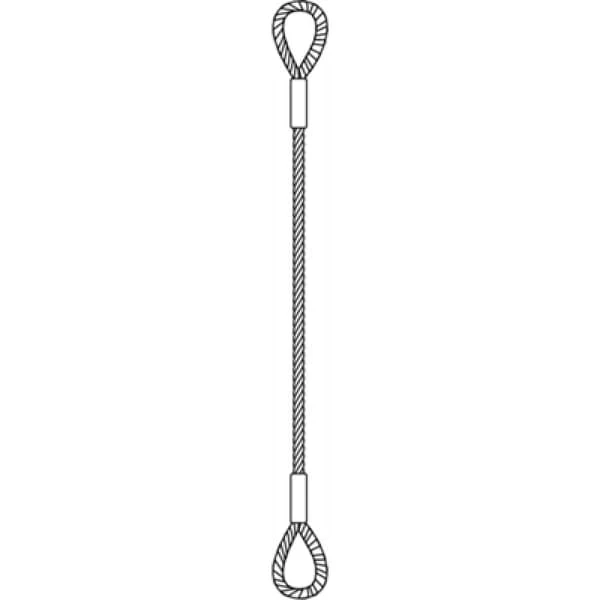

In various industrial and construction environments, lifting wire rope slings serve as indispensable tools for safely moving heavy loads. Their design and construction enable them to withstand significant weight while maintaining flexibility and durability. Understanding the types and uses of these slings is crucial for ensuring safety, efficiency, and compliance with industry standards.
Understanding Lifting Wire Rope Slings
Lifting wire rope slings are made from multiple strands of wire that are twisted together to form a flexible yet strong rope. This configuration allows the slings to endure heavy lifting loads without compromising their integrity. The wire is typically coated with a protective material to enhance corrosion resistance, ensuring longevity even in harsh environments.
The versatility of these slings is one of their most notable features. They can be used in a multitude of applications, from construction sites to shipping yards, making them a staple in various industries. Their adaptability is further enhanced by their ability to be configured in different ways, depending on the load and lifting requirements.
Types of Lifting Wire Rope Slings
1. Single Leg Slings
Single leg slings are the most basic form of wire rope slings, consisting of a single length of wire rope with a loop at each end. These slings are primarily used for vertical lifting applications. They are ideal for lifting loads where the weight is evenly distributed, providing stability and ease of use. However, users must be cautious about the angle of lift, as excessive angles can lead to increased stress on the sling, potentially causing failure.
2. Double Leg Slings
Double leg slings feature two lengths of wire rope connected to a load, allowing for a more balanced lift. This type of sling is particularly effective for lifting larger or awkwardly shaped loads. The dual legs distribute the weight more evenly, reducing the risk of tipping or sliding during transport. When using double leg slings, it is essential to consider the angles of the legs; the more acute the angle, the greater the load on each leg. Proper rigging techniques must be employed to ensure safety and effectiveness.
3. Multi-Leg Slings
For even more complex lifting scenarios, multi-leg slings, which can feature three or four legs, are available. These slings provide unparalleled versatility, allowing for a range of configurations to accommodate various load shapes and sizes. Multi-leg slings are particularly useful in scenarios where load stability is paramount. They enable the user to create a bridle lift, which distributes weight across multiple points and minimizes the risk of accidents.
4. Endless Slings
Endless wire rope slings are unique in their construction, featuring a continuous loop of wire rope without defined ends. This design allows users to utilize any part of the sling for lifting, effectively extending its lifespan since wear is distributed evenly across the entire sling. Endless slings are particularly useful in applications where the load may shift or rotate, offering enhanced stability and safety.
Choosing the Right Lifting Wire Rope Sling
Selecting the appropriate lifting wire rope sling is crucial for ensuring safety and efficiency. Factors to consider include the load weight, lifting angle, and environmental conditions. Each type of sling has its strengths and weaknesses, and understanding these can prevent accidents and equipment failures.
When assessing the load weight, it is critical to account for the total weight, including any rigging hardware. Overloading a sling can lead to catastrophic failures, resulting in injuries and property damage. Additionally, the lifting angle plays a significant role in determining the effectiveness of the sling. A higher lifting angle may increase the load on the sling, necessitating a reevaluation of the rigging setup.
Environmental conditions should also influence the choice of sling. If the sling is to be used in corrosive environments, selecting a wire rope with adequate protective coatings is essential. Similarly, if the lifting operation occurs in extreme temperatures, understanding how these conditions affect the sling's performance is vital.
Safe Practices for Using Lifting Wire Rope Slings
Safety is paramount when using lifting wire rope slings. Adhering to established protocols and guidelines can significantly reduce the risk of accidents. First and foremost, it is essential to conduct a thorough inspection of the sling before each use. Look for signs of wear, such as fraying or kinking, which can compromise the sling's integrity.
Proper training is another critical aspect of ensuring safe operations. Workers should be educated on the correct rigging techniques, including how to properly attach the sling to the load and how to maintain appropriate lifting angles. Additionally, understanding the load limits and operational capacities of the sling is crucial for preventing overloads.
Moreover, using the right rigging hardware, such as hooks and shackles, can further enhance safety during lifting operations. Ensure that all components are rated for the load being lifted and are compatible with the sling being used.
Finally, communication among team members is vital. Establishing clear signals and protocols can help ensure that everyone involved in the lifting operation understands their responsibilities and can act swiftly in case of unforeseen circumstances.
Conclusion
In conclusion, lifting wire rope slings are essential tools in various industries, providing the strength and flexibility necessary to handle heavy loads safely. Understanding the different types of slings, their applications, and best practices for use is crucial for anyone involved in lifting operations. By prioritizing safety and proper rigging techniques, users can ensure that their lifting tasks are performed efficiently and without incident. For those looking to enhance their lifting capabilities, resources like UK Lifting Store offer a wealth of information and quality products to meet all lifting needs.










Sign in to leave a comment.