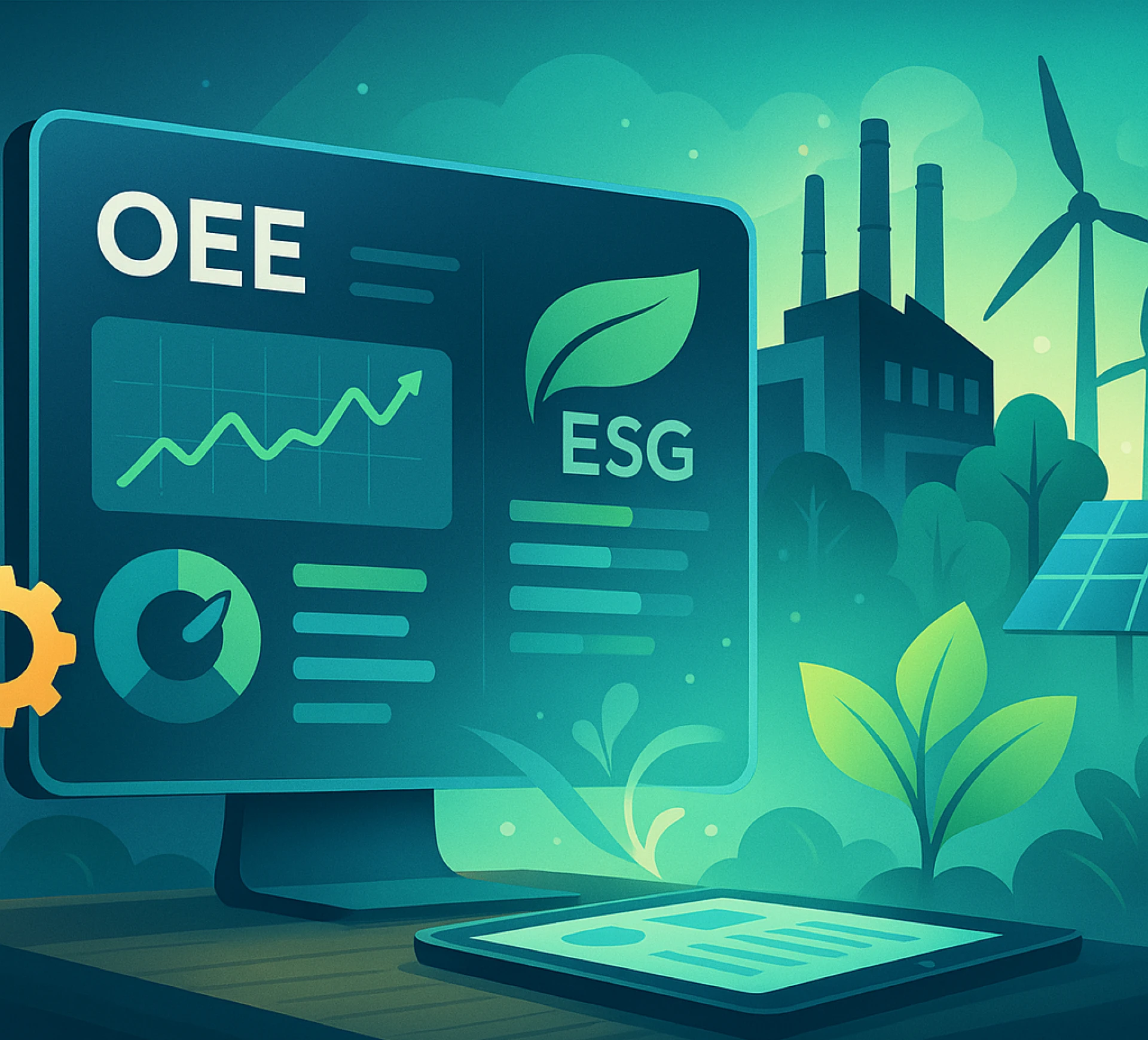

Monitoring tools like OEE are essential to manufacturing success. From helping manufacturers reduce costs on production to improving the production process, these tools are at the heart of how a manufacturing firm works.
However, regulatory compliance, being a key consideration for manufacturing companies, essentially requires help from ESG software (environmental, social, and governance factor monitoring). In fact, both OEE and ESG software work in solidarity to provide sustainability and energy efficiency to manufacturers.
We have explored how both OEE and ESG software converge to provide an efficient manufacturing process. Moreover, this blog post helps you understand how monitoring software helps in maintaining sustainability benchmarks and regulations for manufacturers.
The Convergence of OEE and ESG Goals
The world of manufacturing has to constantly deal with regulatory compliance issues. The industry has to constantly monitor social, environmental, and governance compliance to operate without friction.
Multiple ESG scopes affect ESG reporting of insights and how compliant a manufacturer is with the regulatory frameworks.
For instance,
Scope 1 emissions are connected to the assets a manufacturer control directly. These are emissions that relate to the Overall Equipment Effectiveness (OEE). However, the calculations are often complex and time-consuming.
Scope 2 emissions are reported by the energy providers, utility services, and logistics companies. Scope 3 emissions: The biggest challenge to manufacturers is that the scope 3 manufacturing companies now provide emission data to the customers and the suppliers.
Operational efficiency is all about deriving more from less. When a manufacturer is reducing energy consumption, they are reducing the cost of energy and simultaneously reducing their carbon footprint. Therefore, monitoring the overall equipment effectiveness has a significant impact on how compliant a manufacturer is with the ESG norms.
Furthermore, the use of OEE and different manufacturing software enables data-driven decision-making. Therefore, advanced software solutions such as ERP systems and Industry 4.0 technologies are essential to improving energy consumption, asset utilization, and promoting circular economy models. Ultimately, it leads to more sustainable manufacturing practices.
Role of Monitoring Software in Driving Sustainability
OEE has always been viewed through the lens of economic efficiency. The metrics on OEE software allow manufacturers to maintain and measure productivity, quality, and performance. The result derived from OEE tools possesses an economic angle. However, the metrics and the results from these tools indirectly point to sustainability practices.
Here's how the use of OEE relates to ESG metrics:
- Tracking energy consumption and material use in comparison to units produced helps track carbon footprints.
- There's a new metric called Overall Environmental Equipment Effectiveness (OEEE) that extends the environmental impact of using any manufacturing equipment. These metrics help tie operational performance with sustainability goals.
- With OEEE, companies can make decisions accounting for both profitability and ecological responsibility.
Both OEE and ESG software align sustainability goals and help manufacturers gain their much-coveted energy efficiency.
Here's how both software programs work:
OEE Monitoring Software:
OEE monitoring software helps manufacturers collect real-time performance data of different equipment in use. This data collection involves collecting data related to performance, efficiency, and the quality of output that manufacturing equipment delivers.
Furthermore, downtime tracking features of OEE software allow checking inefficiencies in the process, tools, and identifying bottlenecks causing downtimes in the process. Additionally, OEE monitoring software can schedule the preventive maintenance process to reduce the chances of future downtimes.
OEE scoring mechanism allows manufacturers to score each equipment and process in use. It helps easily track the effectiveness of equipment and the time period it is able to serve.
ESG Software
This software, on the other hand, provides carbon footprint data related to manufacturing equipment, energy usage, and possible ways of waste reduction.
These tools automate ESG reporting compliance, helping manufacturers track different parts of the equipment and their processes that need adjustment or alteration. Manufacturers can also integrate these tools with sustainability software platforms.
Where OEE software helps track efficiency and operability of manufacturing equipment, ESG software, in compliance with sustainability tools, helps manufacturers decide what needs adjustment. Both software solutions work in solidarity with each other to provide an efficient manufacturing process and ensure regulatory compliance.
Benefits of Integrated Monitoring Solutions
Manufacturers enjoy the benefits of integrating different manufacturing automation tools like ESG and OEE. Both types of software, as mentioned above, provide sustainability, compliance, and operational efficiency.
These types of tools provide operational efficiency and control over analytical tools to ensure sustainability. The following benefits discuss more about how integrating OEE and ESG software into the manufacturing cycle ensures success:
1. Better Data Accuracy
Automated data capturing capabilities of OEE reduce manual errors. OEE software tracks data from different sensors, machines, and tools, providing real-time insights to manufacturers. This is a way to reduce operational and manufacturing anomalies.
2. Efficiency Gains and Downtime Reduction
OEE tools spot downtimes and bottlenecks that cause them. Spotting production and manufacturing bottlenecks and helping analyze the root cause of disruption to improve production delays through proactive maintenance measures. This improves the overall appeal of the product in the market and ensures smooth business operation.
3. ESG Compliance and Reporting
Consistent output from OEE tools helps manufacturers stay on par with changing regulatory frameworks and reporting. Environmental monitoring systems integrated with ESG frameworks make it easy for automated tools to collect data and enhance transparency for stakeholders.
Easy data collection and compliance maintenance improve company credibility among different customers and investors.
4. Holistic Loss Analysis and Continuous Improvement
Integrated ESG and OEE software enables easy and comprehensive loss and inefficiency analysis. They can improve their energy, equipment, and waste management, and their benchmark over time. Eventually, the loss analysis and constant improvement process support the manufacturers' operational and sustainable enhancement.
5. Risk Management & Corporate Governance
ESG integrated monitoring software supports hazard assessment, risk mitigation, and a clear reporting feature. It strengthens the governance capabilities and structures regulatory adherence, an essential factor for sustainable business growth.
Monitoring that Makes Manufacturing Friction-Free!
While OEE tools oversee the manufacturing process and outline areas of improvement, ESG software goes on to prepare a compliance framework specific to the manufacturing process. Data collection and reporting through ESG software helps manufacturers automate their compliance and equipment adjustment requirements. In short, a convergence between two of these software and mechanisms leads to a sustainable and improved manufacturing process.
Furthermore, with tools like AI and machine learning involved, OEE tools are collecting and analyzing data at scale, making the road to sustainability friction-free. If you are a manufacturer and have not yet invested in an integrated solution, it's time to move ahead of the trend.













Sign in to leave a comment.