

As healthcare continues to evolve, patient-centered care models are gaining attention for improving outcomes and streamlining care. Two such models—Principal Care Management (PCM) and Chronic Care Management (CCM)—are often discussed together, but they serve different purposes and patient populations. If you're seeking clarity on principal care management, how it differs from chronic care management, and which one fits your practice or organization, this comprehensive guide is for you.
Understanding Principal Care Management
Principal Care Management focuses on patients with a single high-risk or complex chronic condition that requires management by a specialist or primary care provider. PCM services are designed to help these patients receive coordinated, ongoing care for their specific condition.
Key features of principal care management:
- Targeted at patients with one severe chronic condition (such as heart failure, diabetes, or COPD)
- Involves creating and maintaining a care plan tailored to the patient’s primary health concern
- Requires at least 30 minutes of clinical staff time directed by a physician or other qualified healthcare professional per calendar month
- Includes medication management, coordination with other providers, and patient/caregiver communication
PCM is especially valuable for patients whose primary challenge is managing a single condition that, if left unmanaged, could result in hospitalizations or complications.
What is Chronic Care Management?
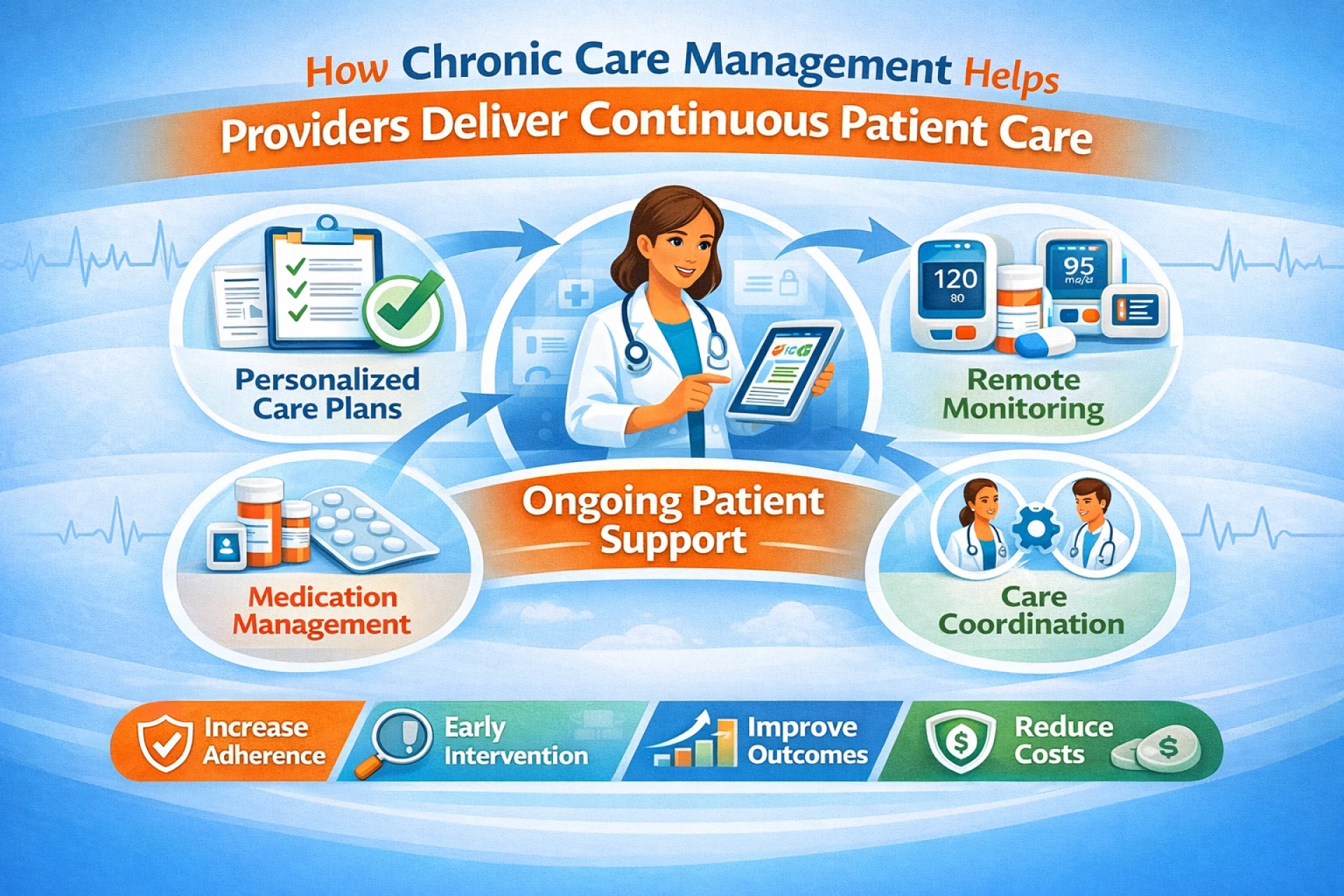
Chronic Care Management is designed for patients with two or more chronic conditions expected to last at least 12 months or until the patient’s death. CCM aims to provide comprehensive care coordination, improve quality of life, and reduce the need for emergency care or hospitalizations.
Key features of chronic care management:
- For patients with multiple chronic conditions (such as hypertension, diabetes, arthritis, or asthma)
- Includes the development and regular updating of a comprehensive care plan
- Requires a minimum of 20 minutes of clinical staff time per calendar month
- Covers medication reconciliation, coordination of care across providers, 24/7 access to care management services, and patient education
CCM is ideal for patients with complex health needs who would benefit from ongoing support and coordination across multiple conditions.
Principal Care Management vs Chronic Care Management: Key Differences
While both principal care management and chronic care management focus on improving care for patients with chronic illnesses, they have distinct differences:
1. Number of Conditions Managed
- PCM is for patients with one complex chronic condition.
- CCM is for patients with two or more chronic conditions.
2. Care Plan Structure
- PCM care plans revolve around a single health issue.
- CCM care plans are comprehensive, covering all of a patient’s chronic conditions.
3. Clinical Staff Time Requirements
- PCM requires at least 30 minutes of provider time per month.
- CCM requires at least 20 minutes of provider time per month.
4. Billing and Reimbursement
- Both PCM and CCM have unique CPT codes for billing Medicare and other payers.
- PCM codes are generally used when only one condition is being managed, while CCM codes are for patients with multiple qualifying conditions.
5. Provider Participation
- PCM can be managed by a specialist focused on one condition.
- CCM is usually coordinated by primary care providers who oversee the patient’s overall health.
6. Patient Population
- PCM targets patients with a single, high-risk chronic issue.
- CCM is for patients with complex, multi-condition health profiles.
Benefits of Principal Care Management
Implementing principal care management in your practice offers several advantages:
- Improved outcomes for high-risk patients by focusing on their most pressing health issue
- Enhanced patient engagement through regular communication and education
- Fewer hospital admissions and emergency visits due to proactive care
- Increased practice revenue through Medicare reimbursement for PCM services
Benefits of Chronic Care Management
Chronic care management brings its own set of benefits:
- Comprehensive support for patients with complex health needs
- Better medication adherence and symptom control across multiple conditions
- Improved care coordination between primary and specialty providers
- High patient satisfaction and quality of life
How to Determine Which Service is Right for Your Patients
Choosing between principal care management and chronic care management depends on the patient's needs:
- If a patient is struggling mainly with one chronic condition that requires intensive management, PCM is most appropriate.
- If a patient presents with two or more chronic conditions that require ongoing, coordinated care, CCM is the better choice.
Some practices offer both services, depending on their patient population, and transition patients from PCM to CCM or vice versa as their needs change.
Implementing Principal Care Management in Your Practice
To start providing principal care management, follow these steps:
1. Identify eligible patients with one complex chronic condition.
2. Obtain patient consent for PCM services.
3. Develop a condition-specific care plan.
4. Document all PCM activities and time spent providing care.
5. Bill the appropriate PCM CPT code to Medicare or the relevant payer.
Consider using digital health solutions, like healthArc, to streamline PCM workflows, care plan documentation, and patient communication.
Implementing Chronic Care Management in Your Practice
To successfully implement chronic care management:
1. Identify patients with two or more qualifying chronic conditions.
2. Secure written patient consent for CCM services.
3. Create and regularly update a comprehensive care plan.
4. Track all CCM-related activities and maintain accurate records.
5. Submit claims using the appropriate CCM CPT codes.
Leveraging care management software, such as healthArc, can automate much of the process, ensuring compliance and efficiency.
Why Principal Care Management Matters for Providers and Patients
Principal care management bridges a critical gap for patients who may not qualify for CCM but still require intensive support for a single condition. It enables providers to:
- Address gaps in care
- Reduce hospitalizations and ER visits
- Increase patient satisfaction
- Capture new revenue streams
By integrating PCM into your clinical offerings, you can deliver focused, high-quality care that aligns with value-based care goals.
Conclusion
Principal care management and chronic care management are both essential tools in today’s healthcare landscape. Understanding the differences between principal care management and chronic care management will empower your practice to deliver the right care to the right patients at the right time. Whether your patients need focused management for a single chronic condition or comprehensive support for multiple illnesses, implementing these care models can enhance patient outcomes and improve your practice’s financial health.
If you’re considering implementing principal care management or chronic care management, leveraging digital platforms like healtharc can simplify the process and maximize the benefits for both your patients and your organization.











Sign in to leave a comment.