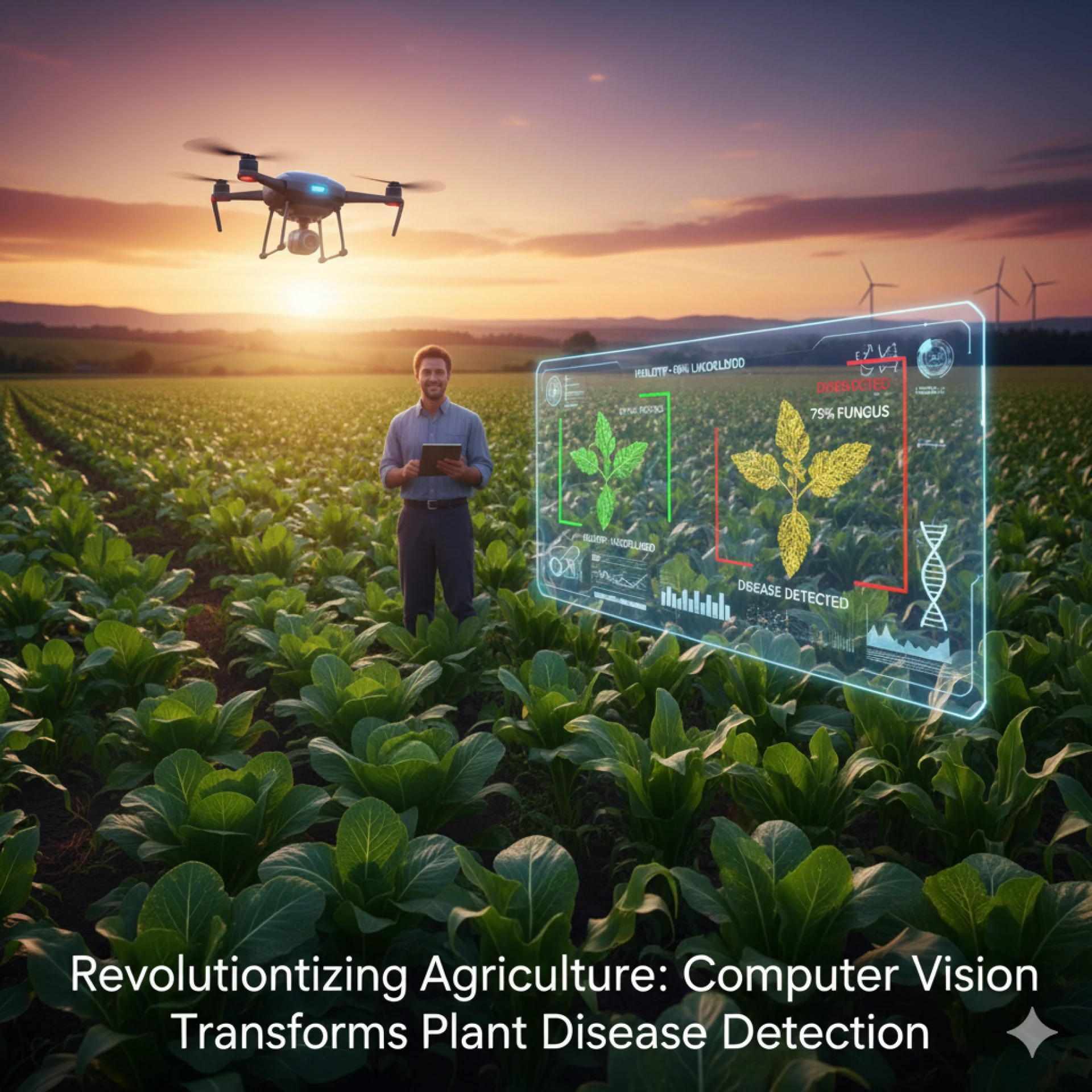

Ensuring crop health is critical for successful farming, and early detection of plant diseases has never been more important. Undetected infections can quickly spread, devastate vast areas of farmland, and lead to billions of dollars in losses globally. Thankfully, the rise of smart farming and computer vision powered by AI is changing the way farmers tackle this challenge.
According to the Food and Agriculture Organization (FAO), 20%–40% of annual crop production is lost worldwide due to pests and diseases. Invasive insects cause an estimated $70 billion in crop damage, while plant diseases account for a staggering $220 billion in losses annually. In this context, computer vision for plant disease detection is helping farmers monitor crop health more efficiently and accurately than ever before.
In this article, we’ll explore how AI-powered computer vision is revolutionizing plant disease detection, the technology behind it, and real-world applications in agriculture.
Why Early Detection of Plant Disease Matters
Catching plant diseases early can mean the difference between saving a harvest or losing an entire crop. Many diseases progress silently, with symptoms appearing only after significant damage has occurred. Traditional methods—walking the fields and manually inspecting plants—are often slow, labor-intensive, and prone to error.
Challenges of Traditional Disease Detection
- Hidden Infections – Some diseases, like viral infections, begin internally and are only noticeable when the plant is already damaged.
- Limited Access to Expertise – Small-scale farmers or those in remote areas often lack agronomists or trained specialists to identify diseases accurately.
- Crop-Specific Knowledge Gaps – Regional crops may not have well-documented disease symptoms, making identification difficult.
- Time-Consuming Monitoring – Surveying acres of crops manually can be overwhelming, especially during crucial growth stages.
How Computer Vision Transforms Disease Detection
Computer vision, combined with AI and deep learning, enables rapid and accurate detection of plant diseases from images of crops. Here’s how the process works:
1. Image Acquisition
High-resolution images of crops are captured using drones, smartphones, or stationary cameras at regular intervals. These images serve as input data for AI analysis.
2. Early Symptom Detection
Deep learning algorithms examine textures, shapes, and colors in leaves and stems to identify early signs of disease—often before they are visible to the human eye.
3. Real-Time Processing
Computer vision software analyzes images in real-time, highlighting potential problem areas so farmers can take quick and precise action.
4. Time and Cost Savings
Instead of walking through fields manually, farmers can monitor crops on a large scale efficiently, saving labor and operational costs.
5. Supporting Sustainable Practices
Targeted treatments reduce unnecessary pesticide use, promoting environmentally friendly farming.
6. Enhanced Speed and Accuracy
AI can process thousands of images simultaneously with high precision, reducing false positives and offering actionable disease management recommendations.
The Computer Vision Workflow for Crop Monitoring
Implementing AI-based computer vision for plant disease detection typically involves the following steps:
Step 1: Image Collection – Capture crop images at various growth stages using drones, cameras, or mobile devices.
Step 2: Pre-Processing – Clean and enhance images by removing noise, normalizing lighting, and improving contrast for accurate analysis.
Step 3: Feature Extraction – AI models, often Convolutional Neural Networks (CNNs), identify key features such as lesions, discoloration, and spots.
Step 4: Disease Identification – The system compares extracted features to trained datasets to classify diseases, such as blight, mildew, or fungal infections.
Step 5: Continuous Monitoring – IoT sensors and AI allow ongoing surveillance of plant health, growth, and environmental factors for timely intervention.
Key Considerations Before Implementation
Deploying computer vision technology in agriculture requires careful planning:
- Environmental Variability – Ensure systems perform accurately under different lighting, weather, and field conditions.
- High-Quality Datasets – AI models must be trained on large, diverse datasets covering multiple crops and disease stages.
- Integration – The technology should work seamlessly with existing farm management systems for smooth operations.
Real-World Applications of Computer Vision in Agriculture
- Grape Vineyards – Drones equipped with AI can scan entire vineyards to detect diseases like black rot or downy mildew with high accuracy.
- Tomato Farms – AI models identify early signs of bacterial spots and molds, enabling preventative measures before widespread damage occurs.
- Greenhouses & Hydroponics – Automated systems monitor plant health, humidity, and nutrient levels in real-time, improving efficiency and yield.
Final Thoughts
Computer vision for plant disease detection, powered by AI, is transforming how farmers manage crop health. From real-time disease detection to precision interventions, AI enables data-driven decision-making, reduces pesticide usage, and promotes sustainable agriculture practices. In a world facing climate uncertainty and food security challenges, implementing AI video analytics software for crop monitoring can be a game-changer, helping farmers detect diseases early, optimize yields, and maintain healthier, more resilient crops.
FAQs
1. What is computer vision in agriculture?
It is the use of AI and cameras to monitor visual signs in plants, such as leaf color changes, spots, and wilting, enabling early disease detection.
2. Can plant diseases be detected early?
Yes. AI can identify symptoms of rust, blight, pest infestations, and nutrient deficiencies before they spread.
3. How does computer vision detect plant diseases?
By analyzing high-resolution images, AI identifies colors, shapes, and textures to classify diseases and assess plant health.
4. What are the advantages of computer vision in farming?
Advantages include real-time detection, reduced labor costs, early interventions, scalability, and improved crop yield quality.
5. What tools are needed to implement this technology?
Drones, stationary cameras, image-processing software, and AI models trained on agricultural datasets.
Keen to elevate your crop management practices?
Let our expert team implement advanced computer vision solutions to help you achieve smarter, more sustainable farming. Contact Nextbrain today to transform your agricultural operations.








Sign in to leave a comment.