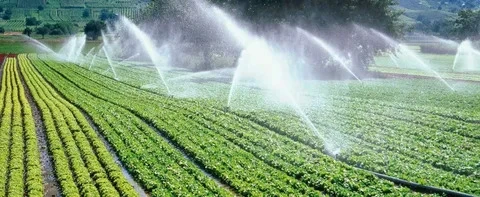

To keep a lawn in Lafayette, Louisiana thriving all year, the key is adapting your irrigation strategy to the demands of each season, not using a single "set it and forget it" schedule. This adaptive approach is the most effective way to build a resilient, healthy lawn that can handle Lafayette's unique climate. Following proven horticultural practices, this guide provides a detailed breakdown of how to water through the intense summer heat, supplement rainfall in spring and fall, and protect dormant grass during the mild winter.
Summer Strategy: Deep Watering for Deep Roots
Lafayette's summers are defined by high heat and humidity, which puts tremendous stress on turfgrass. The goal of summer irrigation is not just to keep the grass green, but to build its resilience from the ground up.
The most effective technique is deep and infrequent watering. This means providing about one inch of water to the entire lawn in a single session, but only doing so once or twice a week, depending on rainfall and soil type. This method encourages the grass roots to grow deeper into the soil in search of moisture. Lawns with deep root systems are far better equipped to survive dry periods than those with the shallow roots that result from light, daily watering.
Timing is also a critical factor. The absolute best time to water is in the early morning, between 4 a.m. and 8 a.m. Watering then minimizes evaporation from the sun and wind, ensuring most of the water gets to the plant roots. Watering in the evening is a bad idea in Louisiana's humid climate, as the grass blades will stay wet all night, creating the perfect breeding ground for fungal diseases like brown patch. A simple way to check if your lawn actually needs it is the footprint test: walk across the grass and look back. If you can still see your footprints, the grass blades don't have enough moisture to spring back up, which is a clear sign it's time to water.
Spring and Fall: Supplementing Nature's Work
The spring and fall are the primary growing and recovery seasons for warm-season grasses like St. Augustine, Centipede, and Bermuda, which are common in the Lafayette area. Irrigation during these transitional seasons should be seen as a supplement to natural rainfall, not a replacement for it.
In the spring, as the lawn comes out of dormancy, it needs consistent moisture to fuel new growth. However, spring in south Louisiana can bring heavy rains. An Professional irrigation system with a working rain sensor is invaluable here; it will automatically skip a scheduled watering cycle if there has been significant rainfall, preventing overwatering and saving money. The general goal is to ensure the lawn receives its one inch of water per week, from rain or irrigation combined.
In the fall, as temperatures cool, the lawn is recovering from summer stress and storing energy for the winter. Continue the deep watering practice, but gradually reduce the frequency as the days get shorter and cooler.
Winter Irrigation: Protecting a Dormant Lawn
While warm-season grasses go dormant and turn brown in the winter, they aren't dead. The crowns and roots are still alive and require a small amount of moisture to survive, especially during dry winter periods.
Winter irrigation should be very limited. A light watering once every three to four weeks is usually sufficient if there has been no rain. The goal is simply to keep the soil from drying out completely and desiccating the roots. It's also a good idea to run your sprinkler system for a few minutes once a month just to keep the moving parts lubricated and in good working order.
Using the Right Irrigation Tools
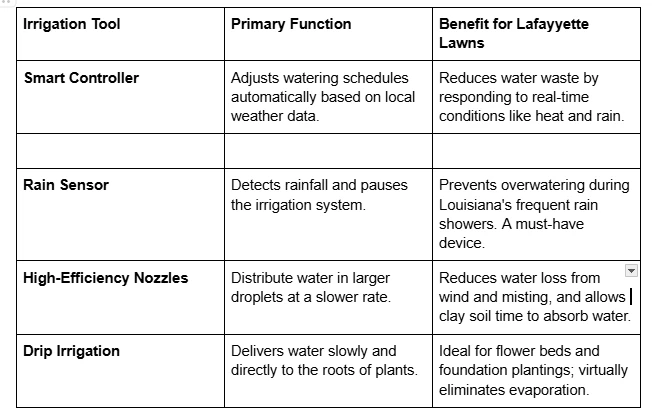
Putting these seasonal strategies into practice is much easier and more efficient with modern irrigation technology. Using the right tools ensures that water is applied uniformly and only when needed.
Here’s a look at some key components of an efficient system.
It's also a good idea to conduct a "catch can test" at least once a year to check for uniform coverage. Simply place several empty, flat-bottomed cans (like tuna cans) around your lawn and run your sprinklers for 20 minutes. If you measure the water and find some cans are full while others are nearly empty, it's a sign of poor coverage that needs adjustment.
Things to Consider Before Adjusting Your System
Before you make major changes to your watering schedule, it's important to understand the specific conditions of your property.
First, identify your grass and soil type. St. Augustine grass requires more water than drought-tolerant Centipede or Bermuda grass. The heavy clay soils prevalent in the Lafayette region absorb water slowly but hold it for a long time, meaning less frequent watering is needed compared to sandy soils.
Second, map out your sun and shade zones. An area of your lawn that gets full sun all day will need significantly more water than a shady spot under a large oak tree. A professionally designed irrigation system will have separate zones for these different areas, allowing you to water them independently.
Finally, check for any local watering restrictions. During periods of drought, local authorities may issue rules about when and how often you can water your lawn. Understanding these property-specific details often leads to a few common questions.
Your Lafayette Irrigation Questions Answered
How long should I run my sprinklers to apply one inch of water?
This varies greatly depending on your water pressure and sprinkler type. The catch can test is the only way to know for sure. As a rough starting point, spray-head zones might take 20-30 minutes, while rotor-head zones could take 45-60 minutes or more to deliver one inch of water.
What are the signs of an overwatered lawn?
An overwatered lawn often feels spongy underfoot. You might see mushrooms or visible fungal growth like brown patch. The grass may also have a weak, shallow root system because it never has to search for water.
Can I just set my controller and leave it for the whole season?
This "set it and forget it" approach is a common mistake. A fixed schedule will inevitably overwater during cool, rainy periods and underwater during hot, dry spells. At a minimum, you should adjust your controller's schedule four times a year as the seasons change.
A Smart Approach to a Healthy Lawn
Properly managing your irrigation system is the foundation of good lawn care in Lafayette. Thinking of watering as a seasonal, adaptive process helps build a lawn with deep, strong roots that is better prepared for environmental stresses. However, optimizing a system for a property's specific needs can be complex. For homeowners who want to ensure their system is working as efficiently as possible, a professional audit is a great investment. An expert can check for leaks, adjust heads for proper coverage, and program the controller for a truly customized, seasonal schedule. Companies like All Seasons Lawn Care & Landscaping offer these specialized irrigation services. Their team can be reached for a consultation at (225) 276-8658 or via email at [email protected].
Reviewer: Sophie Williams looked over this post and brought 7 years of field experience to her suggestions, helping ensure the content stays relevant to business owners and practical for everyday use.
Sign in to leave a comment.