

Cybercrime is no longer a niche concern for IT departments in the basement. It is a global economy, a geopolitical weapon, and a daily operational risk for businesses of every size. As digital transformation accelerates, the attack surface expands, giving bad actors more entry points than ever before. For enterprise leaders and security professionals, staying informed isn't just about reading headlines; it's about survival.
Checking security news daily has become a necessary hygiene factor for modern business. The speed at which vulnerabilities are discovered and exploited means that yesterday’s secure network could be today’s open door. This guide explores the current threat landscape, dissects recent trends in data breaches, and outlines the defense strategies required to keep your organization safe.
The Reality of Modern Cyber Threats
The days of the lone hacker in a hoodie are largely behind us. Today, cybercrime is organized, sophisticated, and incredibly lucrative. Criminal syndicates operate like Fortune 500 companies, complete with HR departments, customer support for ransomware victims, and R&D budgets.
Ransomware as a Service (RaaS)
Ransomware remains the most pervasive threat to enterprise stability. The rise of RaaS models allows developers to sell their malicious code to affiliates who execute the attacks. This lowers the barrier to entry, meaning anyone with bad intent and a little cryptocurrency can launch a devastating attack. These incidents often dominate security news daily, paralyzing hospitals, pipelines, and supply chains.
Supply Chain Vulnerabilities
Attackers have realized that the hardest target isn't always the best target. Instead of attacking a well-defended enterprise directly, they target a smaller, less secure vendor within that enterprise's supply chain. Once they compromise the vendor, they ride trusted pathways straight into the heart of the target network.
The Rise of AI-Driven Attacks
Artificial intelligence is a double-edged sword. While it helps defenders automate threat detection, it also helps attackers. We are seeing the emergence of AI-generated phishing emails that are grammatically perfect and contextually relevant, making them nearly impossible for employees to spot. Deepfake technology is also being used to impersonate CEOs in voice calls to authorize fraudulent wire transfers.
Why Monitoring Security Breach News Matters?
Ignorance is not bliss in cybersecurity; it is negligence. The gap between a vulnerability being disclosed and an exploit being used in the wild is shrinking.
Keeping a pulse on security breach news allows organizations to understand the "who, what, and how" of current attacks. If a competitor or a company in a similar sector gets hit, it serves as a warning flare. It allows your security team to ask, "Could that happen to us?" and "Are we patched against that specific vulnerability?"
Furthermore, regulatory landscapes are shifting. Governments are imposing stricter reporting requirements for data breaches. Staying updated ensures that your compliance strategies evolve alongside legal expectations.
Pillars of Enterprise Defense
Knowing the threats is step one. Building a defense capable of withstanding them is step two. Traditional perimeter defenses—firewalls and antivirus—are no longer sufficient.
Zero Trust Architecture
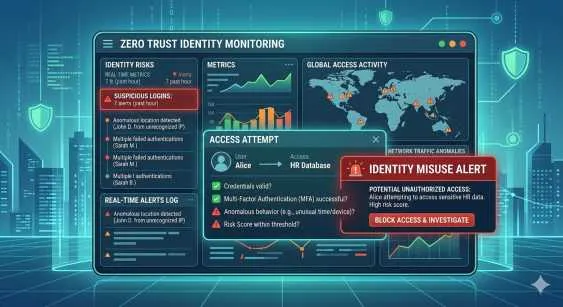
The old model of "trust but verify" is dead. It has been replaced by Zero Trust: "never trust, always verify."
In a Zero Trust architecture, no user or device is trusted by default, even if they are inside the corporate network. Every access request is fully authenticated, authorized, and encrypted before granting access. This limits the "blast radius" if an attacker does manage to breach the perimeter. They might get in, but they won't be able to move laterally across the network to find the crown jewels.
The Human Firewall
Technology can only do so much if an employee clicks a malicious link. Social engineering remains a top entry point for attackers because hacking a human is often easier than hacking a firewall.
Regular, engaging security awareness training is non-negotiable. This shouldn't be a once-a-year compliance video. It needs to be a continuous culture of skepticism where employees are encouraged to report suspicious activity without fear of retribution.
Incident Response Planning
It is statistically probable that your organization will face a security incident. The difference between a minor disruption and a catastrophic failure lies in the response.
Enterprises must have a tested Incident Response (IR) plan. This plan dictates exactly who does what when a breach is detected.
- Who contacts legal?
- Who speaks to the press?
- How do we isolate the affected systems?
- How do we restore from backups?
Regular tabletop exercises—simulations of cyberattacks—help muscle memory kick in when a real crisis hits.
Making Security News Daily a Habit
With the sheer volume of information available, "alert fatigue" is a real problem. Security professionals can become desensitized to the constant stream of warnings.
To combat this, curation is key. You don't need to read every blog on the internet. Identify a few trusted sources that provide high-level analysis of security news daily. Look for sources that offer context, not just fear-mongering.
- Vendor Blogs: Companies like CrowdStrike, Microsoft, and Palo Alto Networks often publish deep dives into new threats they detect.
- Government Agencies: CISA (in the US) and other national cyber centers provide authoritative alerts on critical vulnerabilities.
- Independent Journalists: There are dedicated reporters who specialize in translating complex technical breaches into understandable business risks.
Staying Ahead of the Curve
The landscape of cybersecurity is dynamic. What worked five years ago is obsolete today, and what works today might be insufficient tomorrow.
The goal isn't to achieve a state of perfect security—that doesn't exist. The goal is resilience. By understanding the threats through consistent monitoring of security breach news, and by implementing robust, adaptive defense strategies, enterprises can weather the storm.
Security is not a product you buy; it is a process you live. Make staying informed a part of your daily routine, and you turn the odds in your favor.


Sign in to leave a comment.