
Introduction
The modern world is increasingly focused on comfort, wellness, and hygiene, and the air freshener market has become an important player in this shift. Air fresheners, once considered luxury items or occasional-use products, are now widely adopted in households, workplaces, automobiles, retail spaces, and even public facilities. They are no longer just about masking unpleasant odors—today’s air fresheners are designed to enhance ambiance, promote well-being, and reflect lifestyle choices.
As urbanization rises, disposable incomes grow, and consumer preferences shift toward cleaner and more fragrant environments, the global air freshener market is experiencing steady growth. The demand for innovative, eco-friendly, and long-lasting products is also shaping the way companies operate in this space.
In this blog, we’ll explore the market size, key growth drivers, product segments, challenges, regional insights, and future outlook for the air freshener industry.
Market Size and Growth Outlook
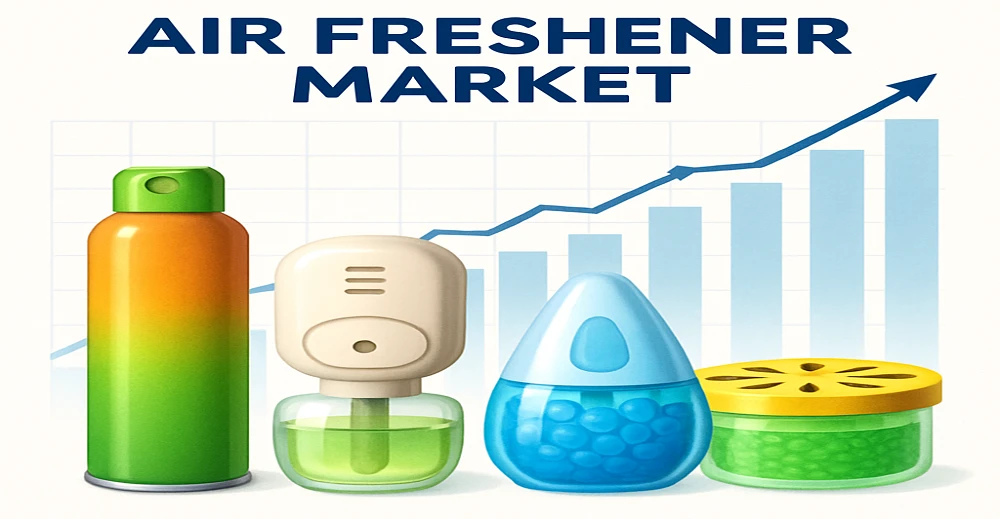
The air freshener market has grown steadily over the past decade, fueled by increasing consumer awareness of hygiene and a growing preference for aesthetically pleasing environments. According to industry estimates, the global air freshener market is projected to grow at a CAGR of around 3.6% through 2030.
Key factors supporting this growth include:
- Rising urban populations with limited ventilation in smaller living spaces.
- Expanding automobile industry, boosting demand for car air fresheners.
- Growing hospitality and retail sectors requiring pleasant ambiances.
- Increasing consumer preference for premium and natural fragrances.
Key Market Drivers
1. Lifestyle Changes and Urbanization
As cities expand and apartments become the norm, people spend more time indoors in enclosed environments. Poor ventilation often leads to stale air and lingering odors, creating higher demand for air fresheners. Urban professionals also prefer products that provide a sense of freshness and luxury.
2. Growing Awareness of Hygiene and Wellness
Post-pandemic, there has been a marked rise in consumer focus on cleanliness and health. Air fresheners infused with antibacterial properties, essential oils, or aromatherapy features are particularly appealing to consumers seeking both fragrance and wellness benefits.
3. Innovation and Product Diversification
The market has seen significant innovations—from traditional sprays to gels, plug-ins, automatic dispensers, and natural essential oil diffusers. Battery-operated and smart-connected air fresheners are also entering the market, offering personalized fragrance settings and longer-lasting effects.
4. Expanding Automobile Industry
Cars are another major segment for air freshener usage. With the rapid expansion of the automotive industry, especially in emerging markets like India, China, and Brazil, demand for car-specific air fresheners continues to grow.
5. Premiumization and Brand Positioning
Leading companies are targeting consumers with luxury and premium air fresheners, focusing on elegant designs, long-lasting fragrances, and eco-friendly packaging. This trend is particularly strong in developed markets like North America and Europe.
Market Challenges
Despite steady growth, the air freshener market faces some notable challenges:
- Environmental Concerns – Many air fresheners contain VOCs (volatile organic compounds) that may contribute to indoor air pollution. Growing consumer awareness of eco-sustainability has put pressure on companies to innovate with natural and non-toxic alternatives.
- Health-Related Issues – Some studies suggest synthetic fragrances may trigger allergies or respiratory irritation. This could impact consumer perception and regulatory policies in certain regions.
- Price Sensitivity in Developing Markets – In emerging economies, price-conscious consumers may prioritize essentials over discretionary products like premium air fresheners, limiting growth potential in lower-income segments.
- Competition from Alternatives – Natural solutions such as scented candles, incense sticks, and essential oil diffusers compete directly with conventional air fresheners.
Market Segmentation
The air freshener market can be segmented based on product type, application, and distribution channel.
By Product Type:
- Sprays/Aerosols – Still the most popular due to affordability and convenience.
- Gel Air Fresheners – Preferred for long-lasting performance, often used in cars and small rooms.
- Plug-ins/Electric Fresheners – Gaining popularity in households and offices for continuous fragrance.
- Candles and Essential Oil Diffusers – Appeal to wellness-focused consumers and those preferring natural alternatives.
- Automatic Air Fresheners – Sensor-based products are popular in commercial and hospitality spaces.
By Application:
- Residential – The largest segment, driven by urban households.
- Commercial – Includes offices, malls, hotels, restaurants, and hospitals where ambiance is critical.
- Automotive – A fast-growing segment fueled by rising car ownership.
By Distribution Channel:
- Supermarkets/Hypermarkets – Still dominant, offering wide visibility.
- Online Retail – Rapidly growing with the popularity of e-commerce and subscription-based fragrance services.
- Convenience Stores & Specialty Stores – Important for impulse purchases.
Regional Insights
1. North America
North America remains a leading market for air fresheners, thanks to high disposable incomes, premium product adoption, and established players. Consumers here are particularly drawn to aromatherapy-based and natural air fresheners.
2. Europe
Europe shows strong demand, especially in Western Europe, where consumers prefer eco-friendly and sustainable products. Strict regulations on VOC emissions also drive innovation in natural formulations.
3. Asia-Pacific
This is the fastest-growing region, fueled by rising middle-class populations, rapid urbanization, and booming automobile ownership. Countries like China, India, and Japan are major contributors to regional growth.
4. Latin America
Growing awareness of hygiene and lifestyle upgrades are boosting demand. Brazil and Mexico are leading markets in this region.
5. Middle East & Africa
While relatively smaller, the MEA market is growing steadily, supported by high demand in premium hospitality sectors and increasing urbanization.
Competitive Landscape
The air freshener market is highly competitive, with multinational giants and local brands vying for consumer attention. Key players include:
- Procter & Gamble (Febreze, Ambi Pur)
- Reckitt Benckiser (Air Wick)
- Henkel
- SC Johnson & Son (Glade)
- Godrej Consumer Products (Aer)
- Farcent
- Church & Dwight
These companies compete through product innovation, marketing campaigns, eco-friendly offerings, and regional expansion strategies.
Emerging Trends in the Air Freshener Market
- Eco-Friendly & Natural Products: Sustainability is at the forefront, with companies focusing on biodegradable packaging, plant-based fragrances, and low-VOC formulations.
- Smart & Connected Air Fresheners: Integration with mobile apps and smart home ecosystems allows consumers to control fragrance intensity and timing remotely.
- Personalized Fragrances: Brands are experimenting with customizable scents, allowing consumers to mix and match fragrances according to their mood or preference.
- Subscription Services: Online retailers are offering monthly or quarterly delivery of air fresheners, ensuring consumers never run out of stock while promoting brand loyalty.
- Multi-functional Air Fresheners: Products now combine fragrance with additional features such as odor-neutralization, antibacterial properties, or air-purification functions.
Future Outlook
The air freshener market is poised for sustainable growth over the next decade, driven by urban lifestyles, product innovation, and rising consumer expectations for hygiene and wellness. However, future success will depend heavily on how companies address environmental concerns and health impacts of synthetic fragrances.
Manufacturers that prioritize eco-friendly innovations, smart technologies, and premium experiences are likely to gain a competitive edge. With increasing focus on sustainability, natural ingredients, and personalized fragrance solutions, the market is expected to diversify and expand further.
Conclusion
The air freshener market has evolved far beyond its early days of simple sprays. Today, it represents a dynamic and innovative industry shaped by consumer demand for freshness, wellness, and sustainability. While environmental concerns and health issues present challenges, the industry’s ability to innovate and adapt ensures continued growth.
From homes to cars, offices to hotels, air fresheners are becoming an essential part of modern living. As trends shift toward eco-consciousness, smart technology, and premiumization, the future of the air freshener market looks fresh and full of opportunities.













Sign in to leave a comment.