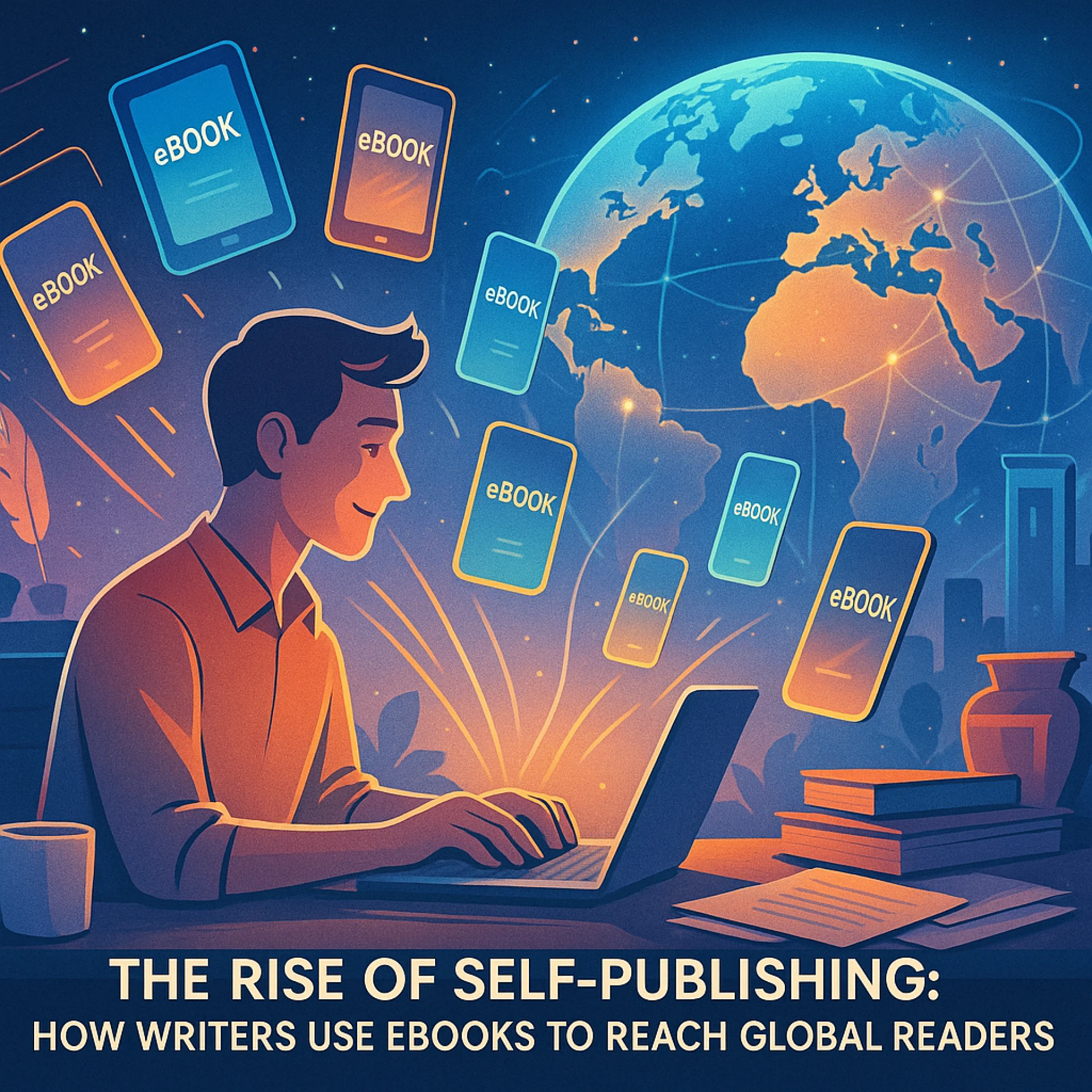

Once upon a time, writers had to chase agents, beg publishers, and pray their manuscript made it past the slush pile. Today? Writers hit "upload," pick a price, and boom — their book’s live across the globe. That’s the power of self-publishing.
It’s no longer a niche route — it’s an empire. According to Statista, self-published book sales in the U.S. alone hit over 300 million units in 2023. Platforms like Amazon KDP, Apple Books, and subscription services like Everand (via partners) are making it easier than ever to get books in front of readers — without a traditional publisher anywhere in sight.
The opportunity for independent writers is massive — if you know how to play the game.
Why Has Self-Publishing Grown Rapidly Since 2010?
What triggered the shift from traditional publishing?
The short version? Amazon flipped the table.
In 2007, Amazon launched Kindle. By 2010, they rolled out Kindle Direct Publishing (KDP), allowing authors to skip the gatekeepers entirely. Suddenly, all you needed was a finished manuscript and a cover — no agent, no publisher, no problem.
This democratized the process. Writers who’d been ignored by Big Five publishers could now build their own audience and keep up to 70% of the royalties. As more tools emerged — like Reedsy for editing and Vellum for formatting — the barriers got even lower.
It was disintermediation in action. And it worked.
What role do global eBook platforms play?
Distribution is everything. The more digital shelves your book sits on, the more readers can find it.
Here’s where platforms like Draft2Digital, PublishDrive, and Kobo Writing Life come in. They don’t just publish — they distribute across dozens of storefronts worldwide, including subscription services like Everand.
Everand gives readers unlimited access to eBooks and audiobooks for a monthly fee. Authors can’t upload directly to Everand, but if you publish through a partner like Draft2Digital, BookBaby, or PublishDrive, your book gets added to Everand’s premium library.
So instead of waiting for a traditional deal, you can reach global readers with one upload — in multiple languages, no less.
📊 Example: KDP Select pays per page read inside Kindle Unlimited, but going wide (i.e., distributing across multiple platforms like Kobo, Apple Books, and Everand via partners) lets you diversify and not rely solely on Amazon’s algorithms.
How Do Writers Start with eBook Self-Publishing?
What are the core steps in the self-publishing workflow?
Let’s break it down. This is your roadmap from first draft to published book:
- Write the manuscript
- Sounds obvious, but writing to market (what your readers want) helps. Tools like Publisher Rocket or simply browsing top books in your genre can guide your theme and tone.
- Edit and proofread
- This is non-negotiable. Hire an editor or use a service like Reedsy. At minimum, use Grammarly and ProWritingAid. No one wants to read a messy draft.
- Format your book
- Use Vellum (Mac only), Scrivener, Atticus, or Draft2Digital’s free formatting tool to create EPUB, MOBI, or PDF files. Keep it clean and easy to read.
- Design your cover
- People do judge a book by its cover. Hire a designer or use Canva Pro if you’re bootstrapping. Your cover must match genre expectations (compare top sellers in your category).
- Optimize your metadata
- This includes your book title, subtitle, categories, keywords, and description. Use keyword research tools (Publisher Rocket, KDP category search, etc.) to improve discoverability.
Once all that’s done, you’re ready to publish. Choose your distribution route based on your goals.
What Are the Most Common Self-Publishing Challenges?
How can writers solve eBook formatting issues?
Formatting can be a pain. A poorly formatted book = bad reviews.
Tools to use:
- Scrivener – Write and export for multiple platforms
- Vellum – Easiest for beautiful formatting (Mac only)
- Reedsy Book Editor – Free and browser-based
Always validate your files with EPUBCheck and test your book in Amazon Previewer or your own Kindle. Choose reflowable format for most fiction/non-fiction and fixed format for art-heavy or children’s books.
Why do many eBooks fail to reach readers?
Two words: bad metadata. You can write a brilliant book, but if your title, blurb, or keywords suck, no one’s finding it.
Other common killers:
- Weak cover design
- No email list
- No launch strategy
- No reviews
FYI: Over 10,000 books are uploaded to Amazon every day. If you’re not standing out, you’re invisible.
How to handle marketing and discoverability?
Treat your book like a product launch.
Launch tips:
- Use Amazon SEO: Pick 7 keywords wisely, place them in your title/subtitle if possible
- Target categories with less competition but still visible
- Run reader magnets (freebies) to grow your mailing list
- Promote with BookBub, Goodreads Giveaways, and StoryOrigin
Even better? List your book with a distributor like PublishDrive or Draft2Digital to unlock reach across Apple Books, Kobo, and Everand.
How Can Authors Monetize Their eBooks?
What pricing strategies work best for self-published eBooks?
Your price matters — not just for revenue, but for reader psychology.
The sweet spot?
- $2.99 to $4.99 for full-length fiction/non-fiction
- Free first book in a series to drive funnel sales
- $0.99 for short reads or promos
This price point hits the impulse-buy range and still qualifies for 70% royalty rates on Amazon and most distributors.
If you're running a series, use tiered pricing:
- Book 1: Free or $0.99
- Book 2+: $3.99–$5.99
Box sets can also help bundle value and drive higher cart totals.
How can global rights and licensing increase earnings?
Most indie authors overlook this — but foreign rights can unlock entirely new revenue streams.
Platforms like PublishDrive and Babelcube help authors license translations. Romance, self-help, and genre fiction do especially well in:
- Germany
- Brazil
- Japan
If you’re writing evergreen content or non-fiction that travels well, consider investing in professional translations. It’s a long play, but a smart one.
How can writers generate passive income with eBooks?
This is the dream: make money while you sleep.
Passive income strategies:
- Write evergreen books (timeless topics like productivity, finance, or craft)
- Tie your books to online courses, coaching, or affiliate marketing
- Create bundle sets or repackage content for new formats (e.g., audiobooks via Findaway Voices)
If you want your books available in subscription models, make sure your distributor (like BookBaby or INscribe) lists with Everand. This gives you access to a huge base of active readers who prefer to “borrow” books via subscription.
Recap with the Best Tips
Quickfire recap for the self-pubbers out there:
- Start with a solid manuscript. Edit it hard.
- Invest in a pro-looking cover and smart metadata.
- Choose your distribution path wisely — KDP for Amazon, D2D or PublishDrive for wide.
- Use reader magnets, Amazon SEO, and BookBub promos.
- Price smart. $2.99–$4.99 is the sweet spot.
- Think global: translations = new money.
- Don’t sleep on subscriptions
- Grow your list. No audience, no sales.
- Bundle and repackage. More formats = more streams.
Conclusion
Self-publishing isn’t a shortcut — it’s a strategy. The tools are there, the platforms are ready, and the market is booming. But you need a plan.
Whether you're a debut author or a seasoned coach packaging your IP into an eBook, the goal is the same: get in front of the right readers.
By choosing smart partners (like PublishDrive or Draft2Digital), you can unlock access to premium platforms like Everand and let your content work for you across the globe.
This is the new publishing — fast, flexible, and full of opportunity. You just have to hit “publish.”











Sign in to leave a comment.