
Introduction
Electronic Health Record (EHR) systems are essential for modern healthcare. They store patient information, streamline workflows, and support decision-making for providers. However, traditional EHRs often face challenges like data overload, limited usability, and poor interoperability.
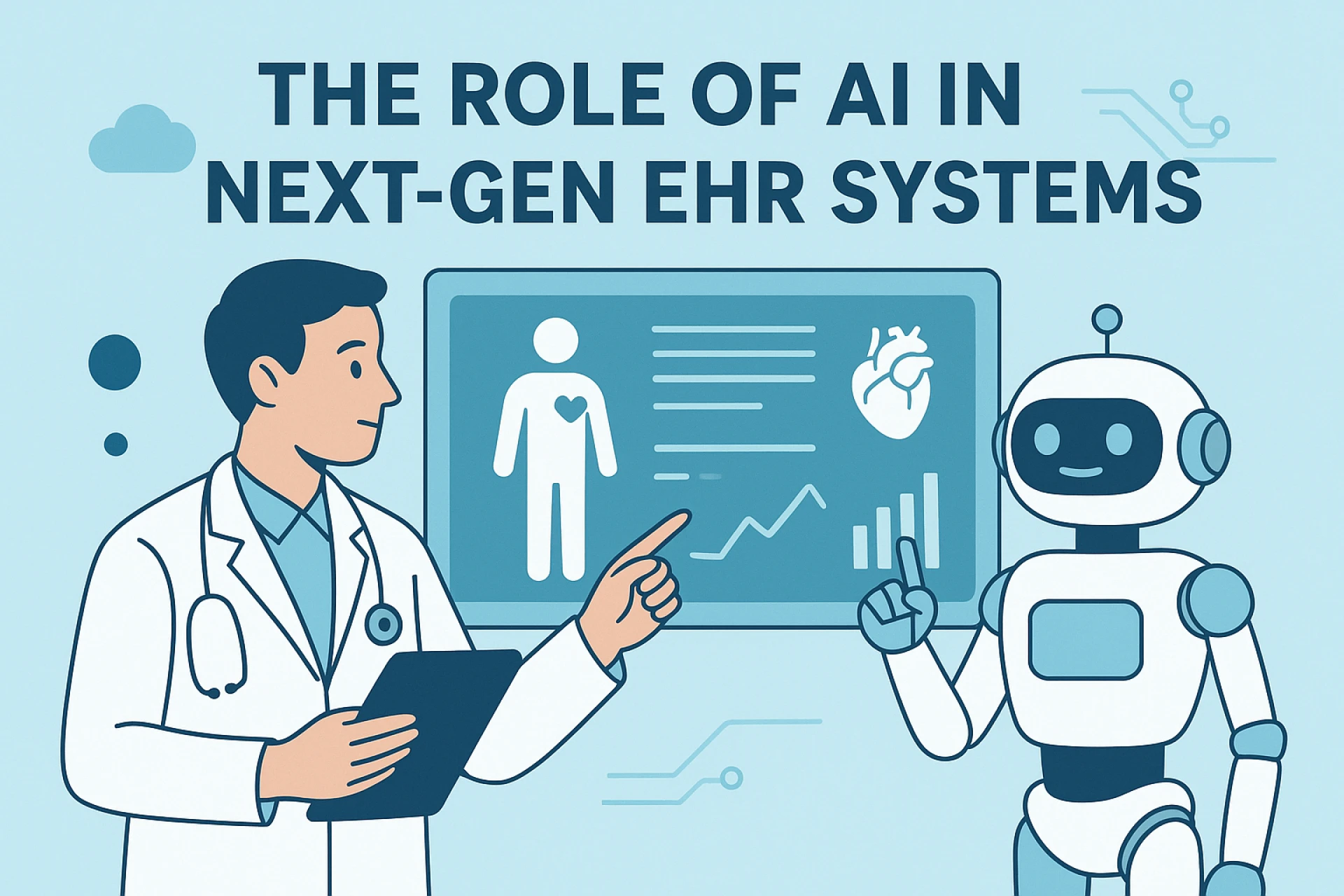
Artificial Intelligence (AI) is now becoming a key part of the next generation of EHR systems. By automating tasks, analyzing patterns, and offering predictive insights, AI can make EHRs more efficient and valuable. This blog explores the role of AI in transforming EHR systems, the benefits it brings, and how it aligns with broader healthcare trends.
Understanding the Role of AI in Healthcare
What AI Brings to EHRs
AI involves using algorithms to analyze data, recognize patterns, and provide recommendations. In EHR systems, AI can:
- Improve clinical decision-making
- Reduce administrative burdens
- Enhance patient engagement
- Support predictive analytics
Why Traditional EHRs Need AI
Many providers feel EHRs take more time than they save. AI addresses these challenges by making systems smarter and more adaptive.
Benefits of AI-Powered EHR Systems
1. Improved Clinical Decision Support
Real-Time Recommendations
AI can analyze a patient’s medical history and provide real-time suggestions for diagnosis or treatment.
Drug Interaction Alerts
AI systems can detect potential conflicts in prescriptions and alert providers before errors occur.
2. Enhanced Administrative Efficiency
Automated Documentation
AI-powered speech recognition can transcribe doctor-patient conversations into structured notes.
Task Automation
Routine tasks like appointment reminders and billing can be automated to reduce staff workload.
3. Personalized Patient Care
Tailored Treatment Plans
AI can create personalized care recommendations based on genetic information, lifestyle, and medical history.
Predictive Risk Analysis
EHRs with AI can flag patients at risk for chronic conditions and recommend preventive steps.
4. Better Interoperability
Data Integration
AI helps integrate EHR data from different providers, labs, and pharmacies.
Standardization
AI can normalize data formats for easier sharing across systems.
This makes EHR software development critical for organizations looking to integrate AI features into their platforms.
AI Applications in Next-Gen EHR Systems
Natural Language Processing (NLP)
NLP allows systems to process unstructured data such as doctor notes or clinical reports.
Machine Learning Algorithms
Machine learning identifies patterns in patient data to improve diagnoses, treatment, and resource planning.
Predictive Analytics
AI predicts patient admissions, disease outbreaks, and treatment responses.
Chatbots and Virtual Assistants
AI-driven assistants help patients schedule appointments, access records, and answer common questions.
How AI Supports Healthcare Providers
Reducing Physician Burnout
AI cuts down on manual documentation, giving providers more time for patient care.
Faster Access to Information
AI systems can retrieve relevant data instantly, improving decision-making.
Supporting Telehealth
AI-enhanced EHRs integrate with telemedicine platforms for remote consultations.
The Patient’s Perspective
Better Access to Care
Patients can interact with AI tools like symptom checkers connected to their EHR data.
Transparent Health Records
AI simplifies medical jargon into easy-to-understand summaries for patients.
Proactive Health Management
Patients can receive reminders for checkups, medications, or preventive screenings.
Challenges of AI in EHR Systems
Data Privacy Concerns
AI systems require access to sensitive patient information, making strong security measures essential.
Bias in Algorithms
If training data is incomplete or biased, AI outputs may be inaccurate.
Integration Issues
Adding AI features to legacy EHR systems requires careful planning and customization.
Compliance with Regulations
EHR systems must meet strict compliance standards like HIPAA.
AI and Healthcare Data
The Importance of Quality Data
AI depends on accurate, complete, and well-structured data. Poor-quality data reduces reliability.
Role of Big Data in Healthcare
Hospitals generate massive volumes of structured and unstructured data daily. AI can make sense of this data to support decisions.
Recent healthcare IT statistics highlight how data growth in healthcare continues to challenge providers, making AI-enabled tools increasingly valuable.
Emerging Technologies Alongside AI
IoT and the IoMT Market
Connected devices such as wearables and remote monitors feed real-time data into EHRs. The IoMT market is expanding rapidly, and AI ensures this data is analyzed and used effectively in care decisions.
Cloud Integration
Cloud-based EHRs combined with AI improve scalability and accessibility across locations.
Blockchain
Blockchain can secure data exchange between EHR systems while AI manages insights.
AI and Healthcare Software Trends
Integration with Telemedicine
AI-enabled EHRs integrate with telehealth services, making remote consultations seamless.
Focus on Patient-Centric Models
AI supports the shift toward patient-centered care, aligning with ongoing healthcare software trends.
Predictive and Preventive Care
AI ensures that EHRs are not just records of the past but tools for predicting future health needs.
Case Examples of AI in EHR Systems
Example 1: Predicting Readmissions
Hospitals are using AI-driven EHRs to predict which patients are at high risk of readmission. This allows for timely interventions.
Example 2: Automating Clinical Notes
AI transcription tools reduce the time doctors spend writing notes, improving productivity.
Example 3: Virtual Patient Assistants
Some clinics use AI chatbots integrated with EHRs to handle patient queries and appointment scheduling.
Best Practices for Implementing AI in EHR Systems
Start Small
Begin with one AI feature, such as automated transcription, and expand gradually.
Ensure Staff Training
Healthcare providers must understand how to use AI tools effectively.
Maintain Transparency
AI recommendations should be explainable and not function as a “black box.”
Regular Updates and Monitoring
AI systems must be updated regularly to adapt to changing healthcare needs.
The Future of AI in EHR Systems
Predictive Medicine
AI will help identify health risks early and suggest preventive measures.
Real-Time Decision Support
Next-gen EHRs will provide real-time alerts during consultations.
Greater Integration with IoT
Wearables, sensors, and remote monitoring devices will feed live data into AI-enhanced EHRs.
Continuous Learning Systems
AI will evolve into systems that continuously learn from patient outcomes and improve over time.
Conclusion
AI is reshaping the way EHR systems function. From predictive analytics to automation, AI adds intelligence to patient records and makes them more actionable. It supports both providers and patients by improving efficiency, accuracy, and engagement.
For organizations, investing in EHR software development with AI capabilities ensures future readiness. With the rise of the IoMT market, real-time health data will play an even larger role in patient care. Recent healthcare IT statistics highlight the ongoing growth of healthcare data, reinforcing the need for AI to manage it effectively. Meanwhile, staying aligned with healthcare software trends helps ensure EHR systems remain relevant and innovative.
AI is no longer optional for next-gen EHRs—it is becoming a necessity for healthcare providers to deliver better outcomes in a data-driven world.












Sign in to leave a comment.