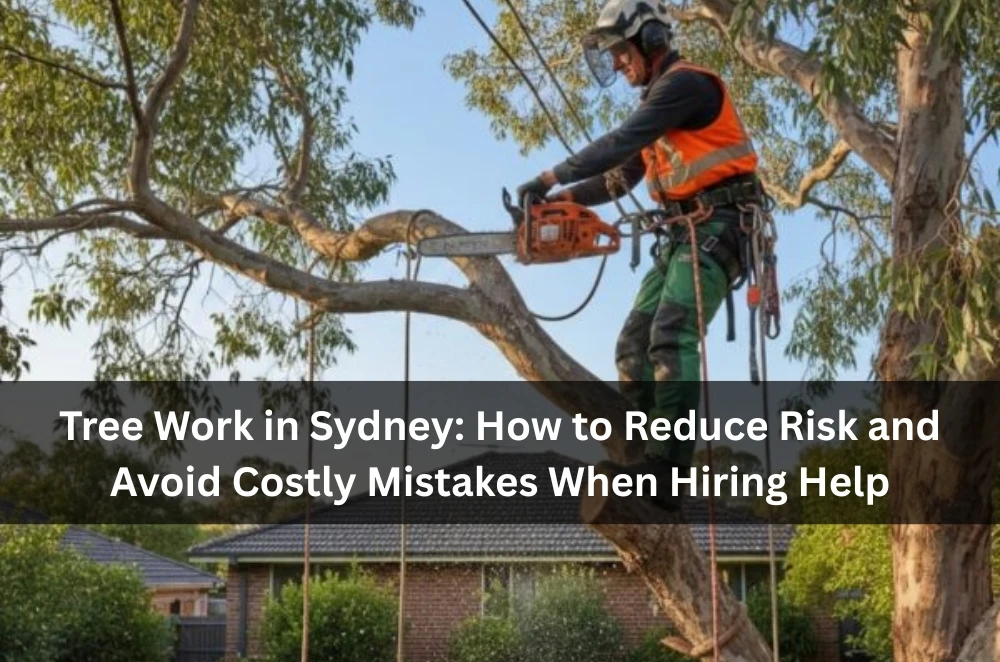

Tree work is one of those property jobs that looks simple from the ground and gets complicated fast once you’re dealing with height, weight, awkward angles, and what’s sitting underneath—especially when the goal is safe tree removal for Sydney properties.
In Sydney, many call-outs aren’t about “making the yard look nice”—they’re about reducing risk: branches over roofs, trees crowding accessways, limbs rubbing on gutters, or growth that’s one storm away from becoming a problem.
This guide covers how to think through tree work as a planning job: what to check first, what mistakes to avoid, how to compare quotes, and a practical 7–14 day plan to get from concern to a completed, tidy site.
When tree work is maintenance vs a safety issue
Not every tree job is urgent.
But some situations should move quickly because the risk is higher and the consequences are expensive.
Maintenance-style work is usually about keeping growth manageable: improving light, reducing overhang, keeping branches clear of structures, and preventing the slow damage that happens when trees rub, drop debris, and block drainage.
Safety-style work is about reducing immediate risk: large dead limbs, obvious cracking, significant lean that’s getting worse, or branches interacting with structures and accessways in a way that could cause damage.
If there’s any doubt about whether the job is a safety issue, it’s worth treating it as one until a competent on-site assessment says otherwise.
What to check before booking tree work
Three jobs go smoothly when the “site reality” is understood upfront.
Most delays and disputes happen because access, scope, and protection weren’t clarified until the day work started.
Access, neighbours, and what’s underneath
Check how the team will access the tree and where debris can safely land or be lowered.
If the work area sits near fences, gardens, sheds, cars, or pedestrian routes, note that early—those details affect how the job is staged and how long it takes.
If branches overhang a neighbour’s side or the tree sits close to boundaries, factor in communication early so the day doesn’t turn into a surprise conversation mid-job.
Powerlines and other high-consequence constraints
Trees near overhead lines or service connections change the entire risk profile.
Even if the job looks “small,” the presence of lines, tight corridors, or restricted clearance means planning and controls matter more than speed.
Avoid treating these jobs as routine.
Define the job outcome in plain language
“Trim the tree” is not a scope.
Write down what you want the outcome to be: reduce overhang from the roof, increase clearance above a driveway, remove a dead limb, stop branches touching gutters, or open up light to a courtyard.
If you can describe the outcome clearly, it’s easier to scope the work, compare quotes, and avoid “we thought you meant…” misunderstandings.
Waste, stump, and tidy-up expectations
Tree work produces more waste than people expect.
Clarify whether green waste is removed, whether logs are left behind, whether the site is raked/blown, and what “tidy” means at handover.
If you want chips for mulch or want timber kept for firewood, mention that early so it’s planned, not improvised.
Common mistakes that create damage, delays, or repeat work
Most tree-work headaches come from planning gaps, not bad intentions.
These are the issues that tend to cause the most friction.
- Vague scope. “Prune it back” means different things to different people.
- Ignoring access constraints. Tight driveways, stairs, and narrow side paths slow everything down.
- Not thinking about what’s below. Gardens, fences, and roofs need a protection plan.
- Underestimating waste volume. Debris piles grow quickly and can block the site if removal isn’t planned.
- Assuming “quick” equals “safe.” Rushed work around height and weight increases risk.
- No plan for neighbours or shared spaces. Strata and boundary jobs can stall without coordination.
- Skipping a proper handover check. Stubs, hanging debris, and missed clean-up details are easiest to fix immediately.
Decision factors: comparing quotes and choosing the right approach
Comparing tree quotes is hard when every quote uses different language.
The trick is to compare scope and controls—not just the total.
What a good quote should make clear
The quote should describe what will be done (in plain terms), what will not be done, and how the site will be protected.
It should also clarify what happens to the waste: removed, chipped, left on site, or staged for later removal.
For higher-risk sites, it should be obvious how access and safety will be managed, because that’s what prevents damage and long delays.
If you want a quick way to check scope and site controls before approving a quote, the All Green Gardening & Landscaping can be a useful reference.
Prune vs remove: the “future maintenance” question
Sometimes the best decision isn’t about today—it’s about what the property will need next year.
Pruning can reduce risk and improve usability without removing the tree, but it should still be done with a clear outcome in mind.
Removal is usually chosen when the tree is failing, causing repeated issues, or is in the wrong place for the site’s long-term use.
A useful decision question is: “Will this job reduce future problems, or will I be paying for the same issue again in 12 months?”
Site protection and cleanup are part of the value
A lower price can be perfectly reasonable if the site is simple.
But for tight access, valuable landscaping, or commercial sites that can’t afford downtime, the value is often in planning: controlled lowering, protection, fast clean-up, and leaving the site usable.
That’s where “cheap” can become “expensive” if a fence gets damaged or waste blocks access for days.
A simple 7–14 day plan to get from concern to completed job
This plan keeps things moving without rushing decisions that matter.
Days 1–2: Define the problem and the outcome
Walk the site and note what’s driving the job: risk, clearance, light, mess, or access.
Write down the outcome you want (clear roofline, clear driveway, remove dead limb, reduce overhang, etc.).
Take a few photos from key angles so the scope doesn’t rely on memory.
Days 3–5: Map constraints and stakeholders
Note access limitations, parking, shared driveways, strata rules, and neighbour boundaries.
Identify anything high-consequence: overhead lines, fragile landscaping, tight drop zones, traffic/pedestrian areas.
If the job impacts neighbours or shared spaces, communicate early so the day-of-work doesn’t stall.
Days 6–9: Collect quotes you can compare
Ask for scope in plain language, clear inclusions/exclusions, and what will happen to waste.
Confirm what “tidy” means at handover and whether removal is included.
Compare quotes by scope and controls, not just totals.
Days 10–14: Prepare the site for a smooth job
Clear vehicles, move outdoor furniture, and protect fragile garden zones where possible.
Confirm access and start/finish windows.
Schedule a simple handover walkthrough so the site is checked while the team is still set up to fix small issues.
Operator Experience Moment
The three jobs that feel “easy” at the end are usually the ones that were planned well at the start.
When the scope is vague, the day turns into decisions made under pressure: where waste goes, what gets protected, and what “enough pruning” means.
When the outcome and access plan are clear, the work runs calmer and the clean-up is faster.
Local SMB Mini-Walkthrough
A Sydney strata building has trees overhanging a shared driveway and dropping debris into gutters.
They define the outcome as clearance above vehicle height and reduced roofline overhang, not “trim everything.”
Access is planned around resident traffic, so the driveway isn’t blocked during peak hours.
Protection is set for nearby garden beds and the fence line to prevent damage during lowering.
Green waste removal is included, so the site is usable immediately after the job.
A short handover walkthrough is done to check for hanging debris, clean gutters zones, and tidy-up quality.
Practical Opinions
If the outcome can’t be described clearly, the quote won’t be comparable.
Pay attention to access and clean-up—those two details decide whether the job feels smooth.
When risk is involved, “fast” is only good if it’s controlled.
Key Takeaways
- Tree work runs smoother when you define the outcome (clearance, risk reduction, light) in plain language.
- Access planning, protection, and waste removal are the biggest drivers of time and cost.
- Compare quotes by scope and site controls, not just totals.
- A 7–14 day plan helps avoid last-minute decisions and keeps the job predictable.
Common questions we hear from Aussie business owners
Q1) How do we know if a tree issue is urgent or just maintenance?
Usually, urgency comes down to visible risk: dead limbs, cracking, obvious instability, or branches interacting with roofs and accessways. A practical next step is to document what you’re seeing (photos + notes) and arrange an on-site assessment with a clear outcome in mind. In most Sydney suburbs, storm season and saturated ground can make marginal trees more unpredictable.
Q2) What should a tree work quote include so we can compare options properly?
In most cases, you want plain-language scope, inclusions/exclusions, access assumptions, what protection is planned, and what happens to waste at the end. A practical next step is to ask each provider to state what “tidy” means and whether removal is included. Usually, Sydney sites with tight access or strata rules need extra detail to avoid delays.
Q3) Can we just “trim it back” to reduce risk?
It depends on why you’re trimming and what risk you’re trying to reduce. A practical next step is to define the goal (roof clearance, driveway clearance, deadwood removal) and ask whether pruning will actually address it or simply delay the same problem. In most cases, Sydney properties with recurring gutter debris and roof overhang benefit from a clear, repeatable maintenance outcome.
Q4) How do we minimise disruption for strata or commercial sites?
Usually, disruption drops when access and timing are planned around peak movement and when waste removal is included so the site is usable immediately. A practical next step is to schedule work windows and communicate them early to residents or staff, then confirm a handover walkthrough time. In most Sydney strata and commercial sites, shared driveways and pedestrian routes are the main constraint.












Sign in to leave a comment.