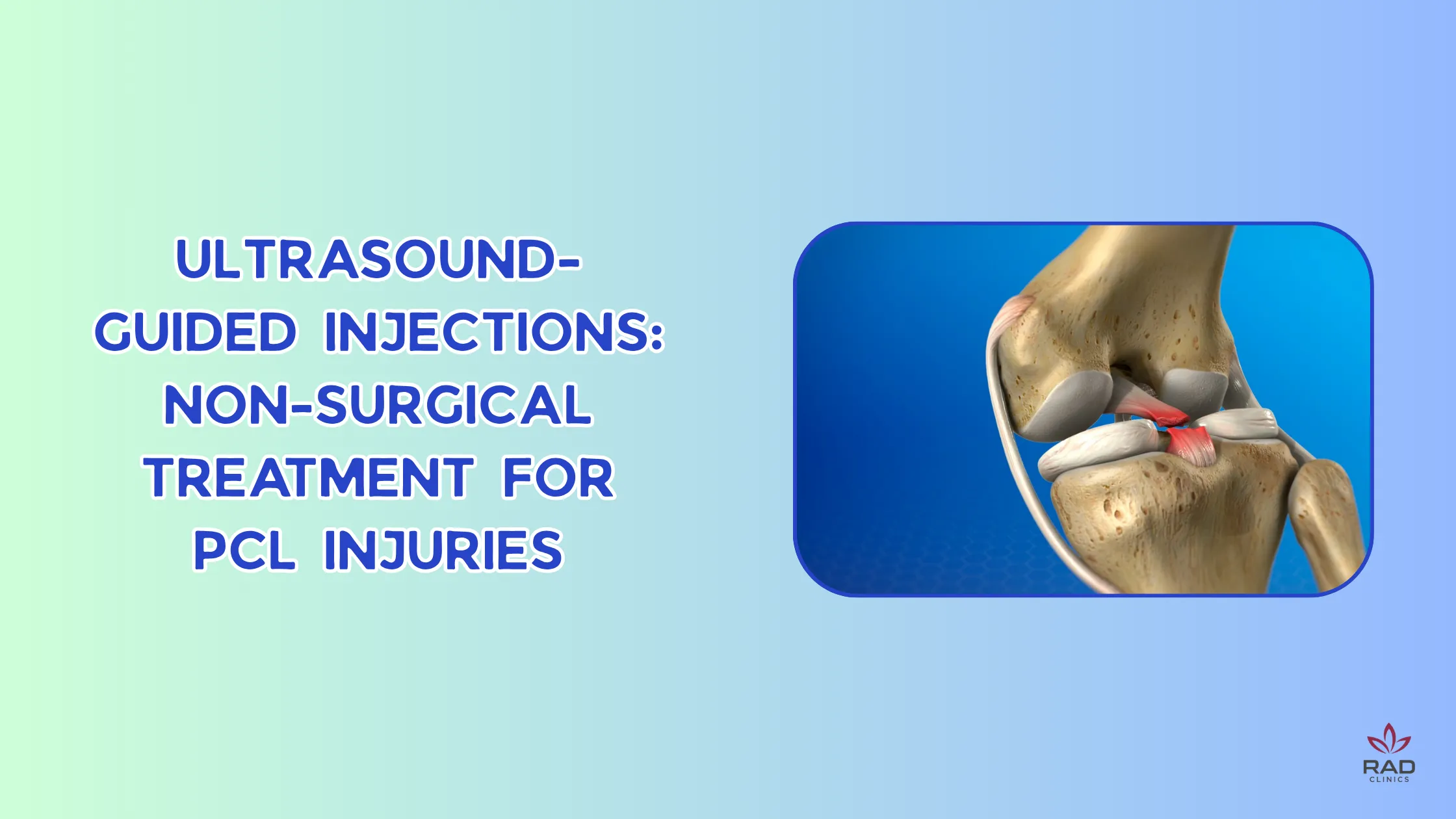

Ultrasound-guided injections may help some people with PCL injuries by reducing pain, targeting irritated tissue around the knee, and supporting rehabilitation without surgery. They do not replace a full assessment, but they can form part of a non-surgical treatment plan when your symptoms persist or your recovery slows.
The posterior cruciate ligament, or PCL, is one of the main stabilising ligaments in your knee. It helps stop the shin bone from moving too far backwards under the thigh bone. When the PCL is strained or torn, you may notice pain, swelling, reduced confidence in the knee, or a feeling that the joint is not fully stable. The next step is understanding how these injuries happen and what symptoms they cause.
What is the PCL, and what does it do?
The PCL stabilises your knee during walking, bending, stairs, sport, and changes of direction. It sits inside the knee joint and works with other structures, including the ACL, menisci, cartilage, and surrounding muscles.
 A healthy PCL helps control the backward movement of the tibia. An injured PCL can affect movement quality, load transfer, and balance through the joint. This is why even a partial PCL injury can make your knee feel different, especially when you walk downhill or twist. From here, it helps to know how the ligament usually gets injured.
How do PCL injuries happen?
PCL injuries usually happen after a direct force to the front of the shin when the knee is bent. This can occur in contact sports, during a fall, or in a road traffic collision when the shin strikes the dashboard.
Common causes include:
- falling onto a bent knee
- twisting during sport
- hyperextension of the knee
- a direct impact on the upper shin
Some PCL injuries happen on their own, while others occur with damage to other ligaments or knee structures. Combined injuries often cause more instability and may need closer review. The injury pattern often shapes the symptoms you feel next.
What are the symptoms of a PCL injury?
Common symptoms of a PCL injury include knee pain, swelling, stiffness, and a feeling of instability. Some people also notice weakness, reduced range of movement, or a lack of trust in the knee during activity.
Pain and swelling
Pain often starts after the injury and may sit deep in the knee or towards the back of the joint. Swelling can develop within hours, although it varies with the severity of the injury and whether other structures are involved.
Instability and reduced confidence
A partial PCL tear may not cause dramatic giving way, but your knee can still feel unreliable. You may notice this on stairs, slopes, or when changing direction quickly.
Stiffness and limited movement
Stiffness can make bending the knee uncomfortable. Weight-bearing may also feel awkward, especially during the first stage after injury.
These symptoms suggest a ligament problem, but symptoms alone do not confirm the diagnosis. Accurate assessment matters before treatment starts.
How is a PCL injury diagnosed?
A PCL injury is diagnosed through a combination of your history, a clinical examination, and imaging when needed. Your clinician will ask how the injury happened, where the pain sits, whether the knee swelled, and whether it feels unstable.
During the examination, they may assess tenderness, swelling, joint movement, and knee stability. Specific clinical tests can help identify whether the PCL is affected.
Imaging may also be used:
- MRI often confirms the ligament injury and helps grade the tear
- X-ray may help rule out associated bone injury
- Ultrasound may assess nearby soft tissues and guide treatment planning in selected cases
Imaging helps define the extent of the injury and identify associated problems, such as tendon irritation, joint inflammation, or damage elsewhere in the knee. Once the diagnosis is clear, the next question is whether surgery is always necessary.
Do all PCL injuries need surgery?
No. Many PCL injuries do not need surgery. Mild and moderate injuries often improve with activity modification, bracing, rehabilitation, and careful symptom management.
Non-surgical care is often appropriate when:
- The injury is partial
- The knee remains reasonably stable
- Symptoms improve with rehabilitation
- There is no major associated ligament damage
Surgery is more likely when instability is marked, when the tear is severe, or when multiple ligaments are injured. For many people, the main goal is to reduce pain, rebuild strength, and restore trust in the knee. This is where ultrasound-guided injections may support recovery.
How can ultrasound-guided injections help a PCL injury?
Ultrasound-guided injections may help by targeting pain-generating or inflamed tissue around the knee with greater precision. They are not suitable for every PCL injury, and they do not replace rehabilitation, but they may help reduce pain and allow more effective progression through your recovery plan.
Why ultrasound guidance matters
Ultrasound provides real-time imaging during the procedure. This allows the clinician to see the target tissue, guide the needle accurately, and avoid nearby structures. Precision matters in a complex joint such as the knee, where pain can come from more than one source.
What injections may be considered?
The most appropriate injection depends on your symptoms, scan findings, and wider treatment goals. In selected cases, clinicians may consider:
- corticosteroid injection for inflammation around related structures
- regenerative approaches such as PRP in suitable cases
- other image-guided treatments based on assessment
An injection may target tissue around the injured knee rather than the PCL itself. That distinction matters. The treatment plan should match the source of pain, not just the name of the ligament injury. This leads to an important practical question: who may benefit most?
Who may benefit from ultrasound-guided injection for a PCL injury?
People with ongoing knee pain, local inflammation, or slow progress in rehabilitation may benefit from ultrasound-guided injection as part of a broader non-surgical plan. This can apply when rest and physiotherapy have not fully settled symptoms.
You may be a suitable candidate if you have:
- persistent pain after a diagnosed PCL injury
- difficulty progressing strength or stability work
- associated soft tissue irritation around the knee
- a preference to explore non-surgical treatment first
Injections may be less appropriate if the knee is grossly unstable, if a major tear needs surgical review, or if there are medical reasons that make injection treatment unsuitable. A proper assessment helps separate these groups.
What happens during an ultrasound-guided knee injection?
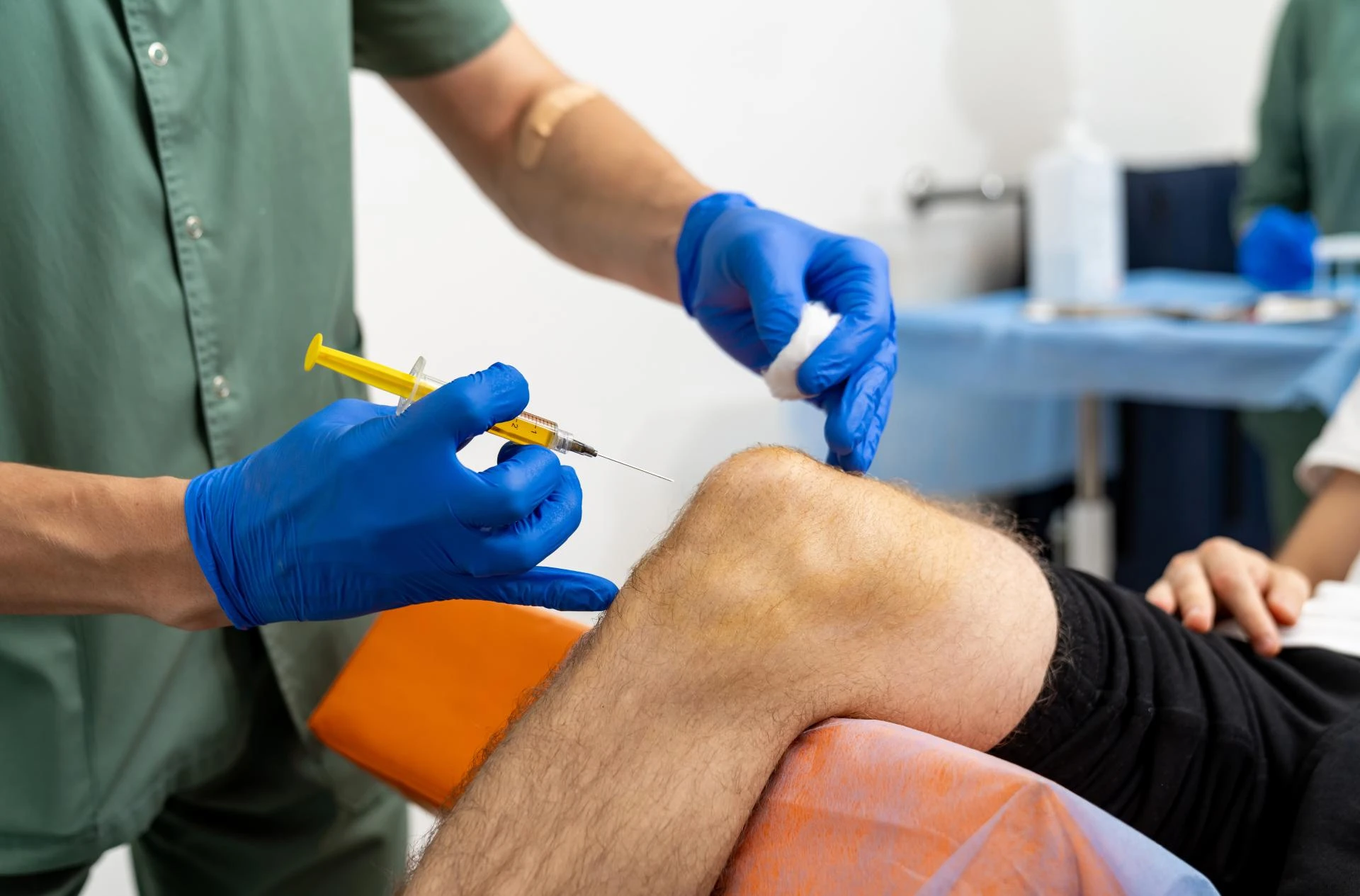
During an ultrasound-guided injection, your clinician uses real-time imaging to place the needle into the planned treatment area. The skin is cleaned, the knee is positioned carefully, and the target tissue is identified on screen.
The injection itself is usually brief. After treatment, you may rest for a short period and receive aftercare advice about activity, exercises, and symptom monitoring.
Recovery depends on the type of injection, the severity of the injury, and your rehabilitation programme. Some people feel temporary soreness after the procedure. Improvement may develop over days or weeks, depending on the treatment used and the condition of the knee.
When should you seek treatment for a suspected PCL injury?
You should seek assessment if knee pain, swelling, or instability continues after an injury, or if your knee does not feel reliable during walking, stairs, exercise, or sport. Early review helps confirm the diagnosis and reduce the risk of prolonged symptoms.
At RAD Clinics, ultrasound-guided assessment and treatment can support a non-surgical pathway for selected knee ligament injuries. If your recovery has stalled, imaging-led care may help clarify the pain source and guide the next stage of treatment.
Frequently asked questions about PCL injection.s
Can a PCL injury heal without surgery?
Yes. Many partial PCL injuries improve with rehabilitation, bracing, and time.
1. Do injections repair the PCL?
Not always. Injections may support symptom control or target related tissues, but they do not guarantee ligament healing.
2. Is ultrasound guidance more precise than a blind injection?
Yes. Ultrasound guidance helps the clinician see the target area and place the injection more accurately.
3. Can PRP help a PCL injury?
PRP may be considered in selected cases, but suitability depends on the injury pattern and clinical assessment.
4. When should you book an assessment?
Book an assessment if pain, swelling, or instability persists after injury, or if you cannot return to normal activity with confidence.













Sign in to leave a comment.