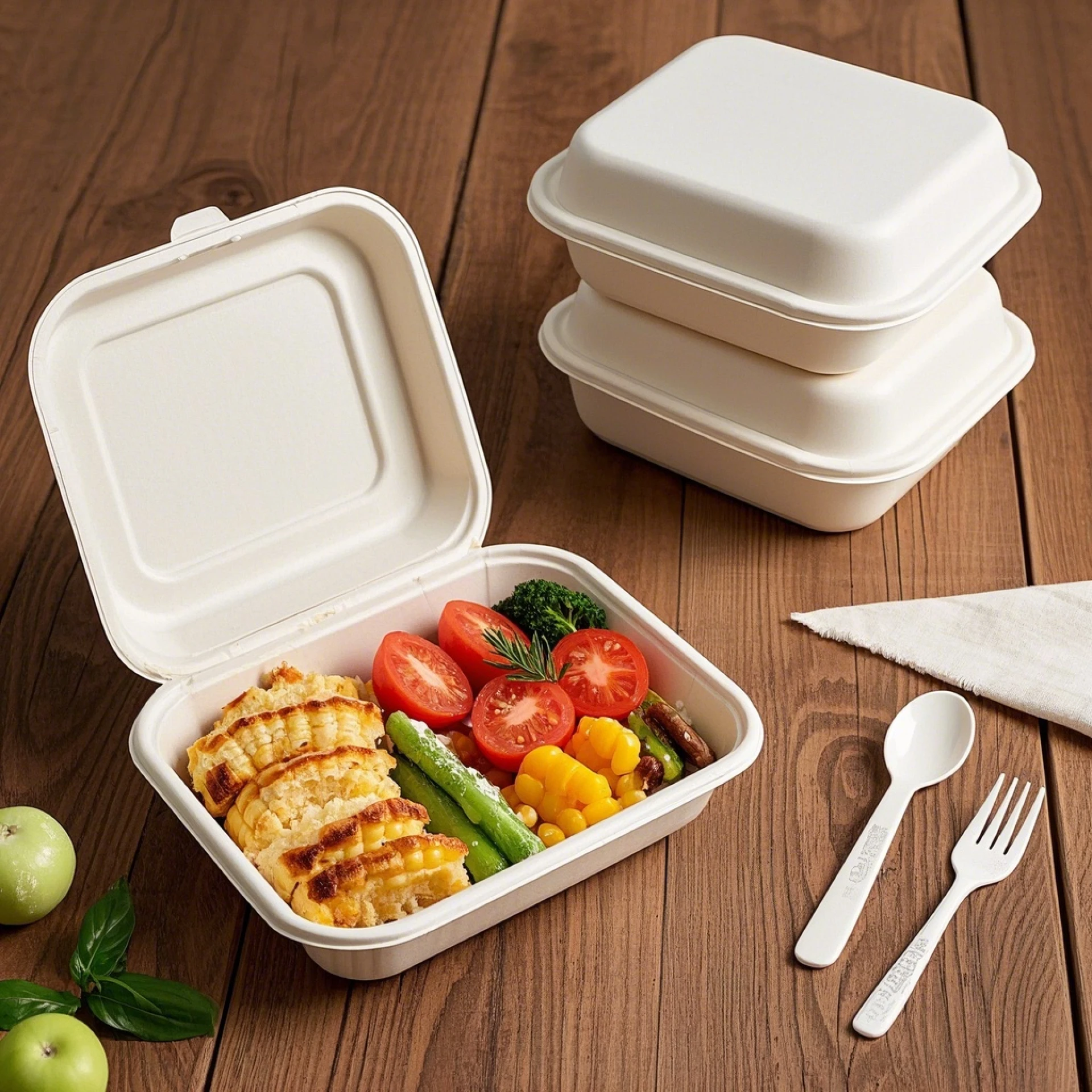

With the global demand for sustainable solutions soaring, many businesses are turning to paper packaging for food as a greener alternative to plastics. But with that demand comes confusion—and sometimes deception.
Many products on the market are labeled “eco,” “green,” or “biodegradable,” but lack verifiable certification. Others contain hidden plastics or only biodegrade under very specific industrial conditions.
So how do you know if your biodegradable food boxes are truly what they claim to be? In this article, we break down what makes biodegradable paper food packaging genuinely certified, why it matters, and what alternatives—like sugarcane packaging boxes and disposable bento boxes—offer real sustainability.
The Science Behind Compostability and Certification
According to the Ellen MacArthur Foundation, more than 2 million tons of compostable packaging were used globally in 2022—but only 42% were properly certified.
To be considered certified biodegradable, a packaging product must:
- Break down into non-toxic organic matter (CO₂, water, and biomass)
- Leave no visible, distinguishable, or toxic residue
- Complete decomposition within 90 days in industrial composting conditions
✅ Globally Recognized Certifications:
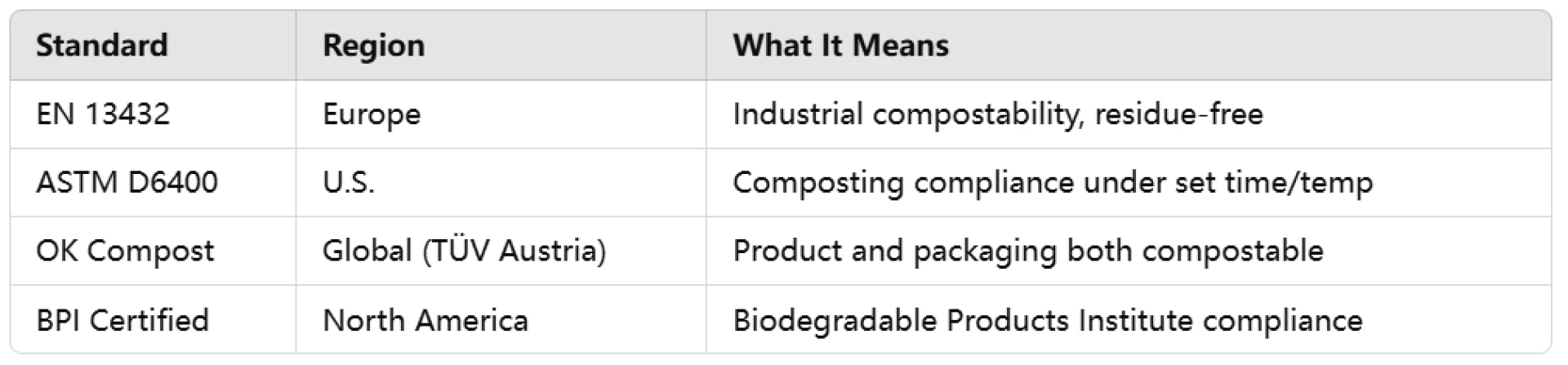
If your biodegradable paper food packaging doesn’t carry one of these marks, it may be partially degradable, not compostable, or contain hidden plastic barriers.
Why Certifications Matter in Paper Packaging for Food
In foodservice, packaging has to do more than hold food—it must be safe, compliant, and sustainable. Certified packaging ensures:
- No polyethylene (PE) linings hidden within paper trays or wraps
- Food-contact safety (FDA or LFGB approved)
- True compostability without generating microplastics
- Compliance with global and regional waste management policies
This is particularly crucial in regulated markets like the EU, California, and Canada, where plastic-laminated paper is increasingly banned.
What About Clamshell Boxes and Disposable Bento Boxes?
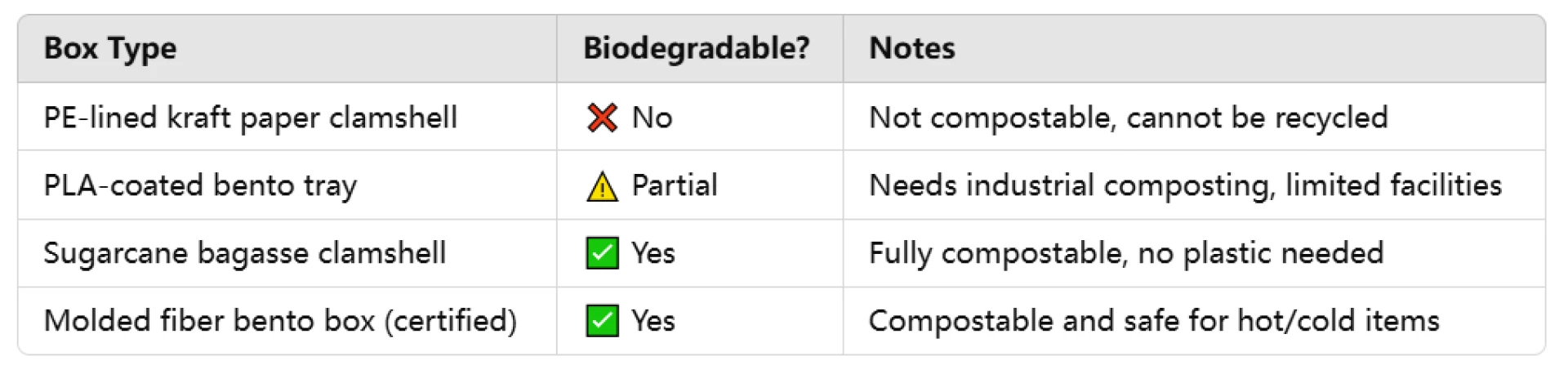
Some of the most common food packaging types—clamshell boxes and disposable bento boxes—often claim to be biodegradable, but that’s not always true.
🧾 Real vs. Faux Compostable Boxes:
Why Sugarcane Packaging Boxes Stand Out
Sugarcane packaging boxes are made from bagasse, the fibrous byproduct left after juice extraction. They offer:
- High heat resistance (up to 200°C)
- Natural grease and moisture resistance
- Fast composting (60–90 days)
- No coatings or chemical treatments required
- Renewable, low-carbon raw material source
Unlike coated paperboard, sugarcane packaging requires no lamination to remain food-safe and durable—making it a preferred option in certified compostable packaging.
Case Study: Certified Compostable Success in Foodservice
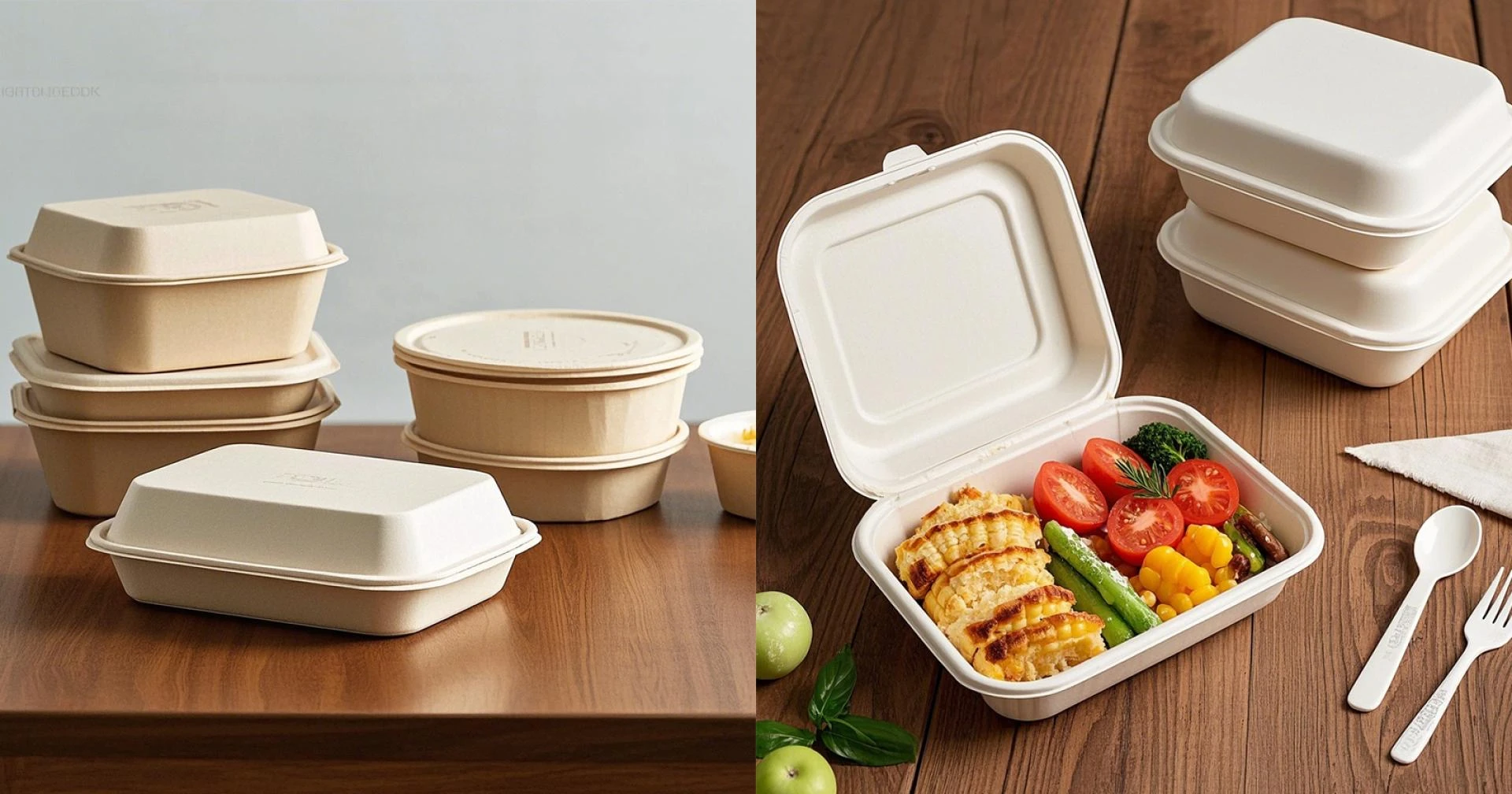
In 2023, a Southeast Asian franchise with over 120 locations switched from PE-lined kraft containers to certified sugarcane takeaway boxes and molded fiber disposable bento boxes.
Outcomes in 9 Months:
- Waste disposal costs dropped by 27% due to composting rebates
- Compliance with new regional plastic bans was achieved ahead of schedule
- Customer satisfaction scores increased by 18%
- Featured in a regional sustainability marketing campaign
Certifications helped the brand verify claims, reduce liability, and win more eco-conscious customers.
How to Verify Your Packaging Supplier
Before sourcing or importing biodegradable packaging, ask for:
- Certificates: EN 13432, ASTM D6400, OK Compost
- Material specs: Base fiber, coating type, shelf life
- Compost test data: Real-time breakdown visuals or documentation
- Sample testing: Run your own trial if possible
If sourcing biodegradable food boxes in bulk, ensure your supplier works with certified compostable raw materials and offers OEM/ODM services with compliance support.
Frequently Asked Questions
1. What does it mean when food packaging is biodegradable?
It means the material will break down naturally into water, CO₂, and organic matter—leaving no toxins or microplastics—usually within 90 days under composting conditions.
2. Are all paper food boxes biodegradable?
No. Many paper packaging for food products contain plastic linings or coatings, which prevent them from composting. Only packaging certified by EN 13432 or ASTM D6400 can be trusted as fully biodegradable.
3. What is the difference between sugarcane packaging and kraft paper?
Sugarcane packaging boxes are made from bagasse, a natural byproduct of sugar processing, and require no plastic coatings. In contrast, many kraft paper boxes are lined with PE, making them non-compostable unless specifically certified.
4. Can biodegradable clamshell boxes handle hot food?
Yes. Certified clamshell boxes made from sugarcane or bamboo pulp can withstand high temperatures (up to 200°C) and are safe for microwaves and ovens.
5. Where can I buy certified biodegradable disposable bento boxes?
We recommend Xiamen Bioleaderpack Co., Ltd., a top supplier of certified biodegradable food packaging, including disposable bento boxes, clamshell containers, and sugarcane takeaway boxes.
Final Thoughts: Certification Builds Trust—and Impact
In today’s green economy, words like “eco-friendly” and “biodegradable” are everywhere—but without certification, they’re just marketing. To build real trust with your customers and meet global compliance, invest in packaging with verified compostability.
Whether you're sourcing biodegradable food boxes, sugarcane takeaway trays, or paper-based bento boxes, look for those with recognized certifications and transparent sourcing. They don’t just meet the standard—they set one.






Sign in to leave a comment.