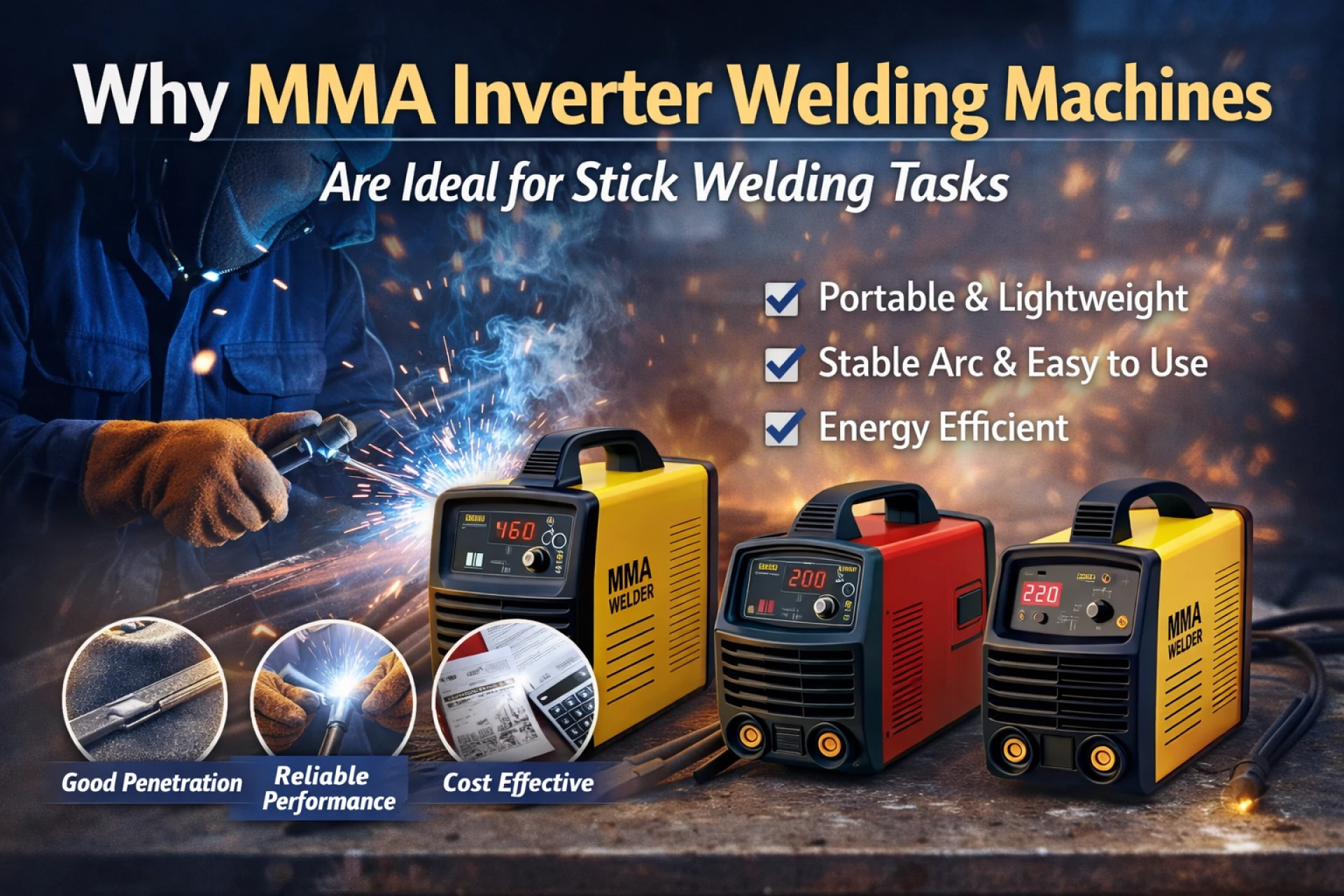

Stick welding, also known as Shielded Metal Arc Welding (SMAW), has remained one of the most reliable and widely used welding techniques for decades. From construction sites to heavy equipment repair, stick welding is trusted for its simplicity, durability, and ability to work in harsh conditions. One of the most significant improvements in this field has been the development of the MMA inverter welding machine, which has transformed how welders approach stick welding tasks.
Unlike older transformer-based welding equipment, inverter welders use advanced electronic technology to control and regulate power more efficiently. This innovation allows welders to achieve smoother arcs, better penetration, and improved overall welding performance. Because stick welding often requires working in unpredictable environments, the portability and adaptability of inverter machines make them particularly valuable.
Another reason these machines have become increasingly popular is their ability to deliver consistent welding performance even with fluctuating power supplies. This reliability is essential for welders working in remote locations, construction zones, or outdoor environments where stable electricity may not always be available. The modern inverter welder ensures that welders can maintain productivity without compromising weld quality.
Mma Inverter Welding Machine solutions from KeyGree highlight how advanced inverter technology enhances stick welding performance by providing stable arc control, efficient power conversion, and reliable operation across a wide range of welding environments.
Understanding Stick Welding and Its Importance
Stick welding remains one of the most practical welding methods used across many industries. The process involves using a consumable electrode coated in flux to create the weld. As the electrode melts, the flux coating generates a protective gas shield that prevents contamination from the surrounding atmosphere. This simplicity makes stick welding extremely dependable in situations where other welding techniques may struggle.
One of the main advantages of stick welding is its ability to work effectively in outdoor conditions. Wind, dust, and environmental contaminants often interfere with other welding processes such as MIG or TIG welding. Stick welding, however, is far more tolerant of these factors because the electrode coating provides its own protective shielding.
Another important aspect of stick welding is its versatility. The process can be used on a variety of metals including mild steel, stainless steel, and cast iron. This flexibility makes it ideal for industries such as construction, manufacturing, maintenance, and heavy equipment repair. Whether repairing structural beams or fabricating steel components, stick welding remains a trusted technique.
The skill level required for stick welding can vary depending on the complexity of the project. Experienced welders often prefer this method because it allows them to maintain control over the welding process even in challenging environments. Combined with modern inverter technology, stick welding has become even more efficient and accessible to both professionals and beginners.
How Inverter Technology Improves Stick Welding
The introduction of inverter technology has dramatically improved the performance and efficiency of stick welding equipment. Traditional welding machines rely on large transformers to regulate electrical current, which makes them bulky and energy-intensive. In contrast, inverter welding machines use advanced electronic circuits to convert power more efficiently and deliver more precise current control.
One of the most important improvements provided by inverter technology is arc stability. A stable arc is essential for producing strong and clean welds. Inverter machines respond quickly to changes in current demand, ensuring the arc remains consistent even when the electrode distance varies. This results in smoother weld beads and fewer welding defects.
Another significant advantage is energy efficiency. Inverter machines can convert electrical power with much higher efficiency compared to traditional welding machines. This reduces energy consumption and heat generation, allowing the equipment to operate longer without overheating. For professionals who weld frequently, this efficiency translates into lower operating costs and improved productivity.
Inverter technology also allows for the integration of advanced welding features that improve usability. Many machines include functions such as hot start, arc force control, and anti-stick protection. These features help welders start the arc more easily, prevent electrodes from sticking to the workpiece, and maintain consistent welding performance.
These technological improvements make inverter welders especially well suited for stick welding tasks that require precision, reliability, and adaptability.
Key Advantages of MMA Inverter Welding Machines
MMA inverter welding machines provide several advantages that make them an excellent choice for stick welding applications. Their combination of advanced technology and practical design allows welders to perform tasks more efficiently while maintaining high-quality welding results.
One of the most noticeable advantages is portability. Traditional welding machines are often large and heavy, making them difficult to transport. Inverter welding machines are much lighter and more compact because they rely on electronic components rather than large transformers. This portability allows welders to move easily between job sites or work in areas where space is limited.
Another major advantage is consistent welding performance. Inverter machines maintain a stable current output, ensuring the welding arc remains smooth and controlled. This helps reduce spatter, improves penetration, and results in stronger weld joints.
Additional benefits include:
- Improved arc starting capability
- Reduced electrode sticking
- Lower energy consumption
- Better control over welding current
- Increased operational efficiency
These benefits make MMA inverter welders suitable for both experienced welders and beginners who want reliable and easy-to-use equipment.
Common Applications of MMA Inverter Welding Machines
MMA inverter welding machines are widely used across various industries due to their flexibility and reliability. Their ability to perform effectively in demanding environments makes them a valuable tool for professionals who need dependable welding equipment.
One of the most common applications is construction and structural welding. Workers often need to weld steel beams, reinforcement bars, and structural components on-site. Because inverter welders are portable and durable, they are ideal for these tasks.
Another important application is equipment maintenance and repair. Industrial machinery, agricultural equipment, and construction tools frequently require welding repairs. MMA inverter welders allow technicians to perform quick and effective repairs without needing complex welding setups.
These machines are also frequently used in:
- Automotive repair and fabrication
- Pipeline installation and maintenance
- Shipbuilding and marine repair
- Metal fabrication workshops
- Small-scale manufacturing operations
The versatility of inverter welders allows them to adapt to different welding environments and project requirements.
Features That Make MMA Inverter Welders User-Friendly
One of the reasons MMA inverter welding machines have become so popular is their ease of use. Modern designs focus on providing intuitive controls and helpful features that simplify the welding process for both beginners and experienced professionals.
Many inverter welders include digital control panels that allow users to adjust welding current with precision. This level of control ensures that the correct settings can be applied for different electrode sizes and metal thicknesses.
Another helpful feature is hot start technology. When starting the welding arc, the machine briefly increases the current to make ignition easier. This prevents electrode sticking and allows the welder to begin the weld smoothly.
Additional user-friendly features often include:
- Arc force adjustment for maintaining arc stability
- Anti-stick protection to prevent electrode damage
- Thermal overload protection for safety
- Efficient cooling systems to maintain performance
These features make inverter welding machines more accessible and practical for a wide range of welding applications.
Maintenance Tips for Long-Term Performance
Proper maintenance is essential for ensuring that an MMA inverter welding machine continues to operate efficiently over time. While these machines are designed to be durable, regular care can significantly extend their lifespan and maintain consistent welding performance.
One of the most important maintenance tasks is keeping the machine clean. Dust and metal particles can accumulate inside the equipment and affect cooling systems. Regular cleaning of ventilation openings helps maintain proper airflow and prevents overheating.
Another important practice is inspecting cables and connectors. Welding cables carry high electrical currents, so it is essential to ensure they remain in good condition. Damaged or worn cables should be replaced immediately to prevent electrical hazards and maintain stable welding performance.
Proper storage also plays a key role in equipment longevity. Welding machines should be stored in dry environments away from moisture and extreme temperatures. Protecting the machine from environmental exposure helps prevent internal damage to sensitive electronic components.
By following these maintenance practices, welders can ensure their equipment continues to deliver reliable results for years.
Conclusion
Stick welding continues to be one of the most dependable and versatile welding methods available, and the introduction of inverter technology has significantly enhanced its efficiency and practicality. The MMA inverter welding machine combines modern electronic control systems with the proven reliability of stick welding, making it a valuable tool for professionals and hobbyists alike.
With benefits such as improved arc stability, portability, energy efficiency, and user-friendly features, inverter welders are well suited for a wide variety of welding tasks. From construction and equipment repair to fabrication and maintenance work, these machines provide the reliability needed to perform high-quality welds in different environments.
As welding technology continues to advance, inverter welding machines will remain a key component of modern welding operations, offering the perfect balance between performance, convenience, and efficiency.
Explore more about MMA inverter welding machines at https://www.keygree.com/arc/.











Sign in to leave a comment.