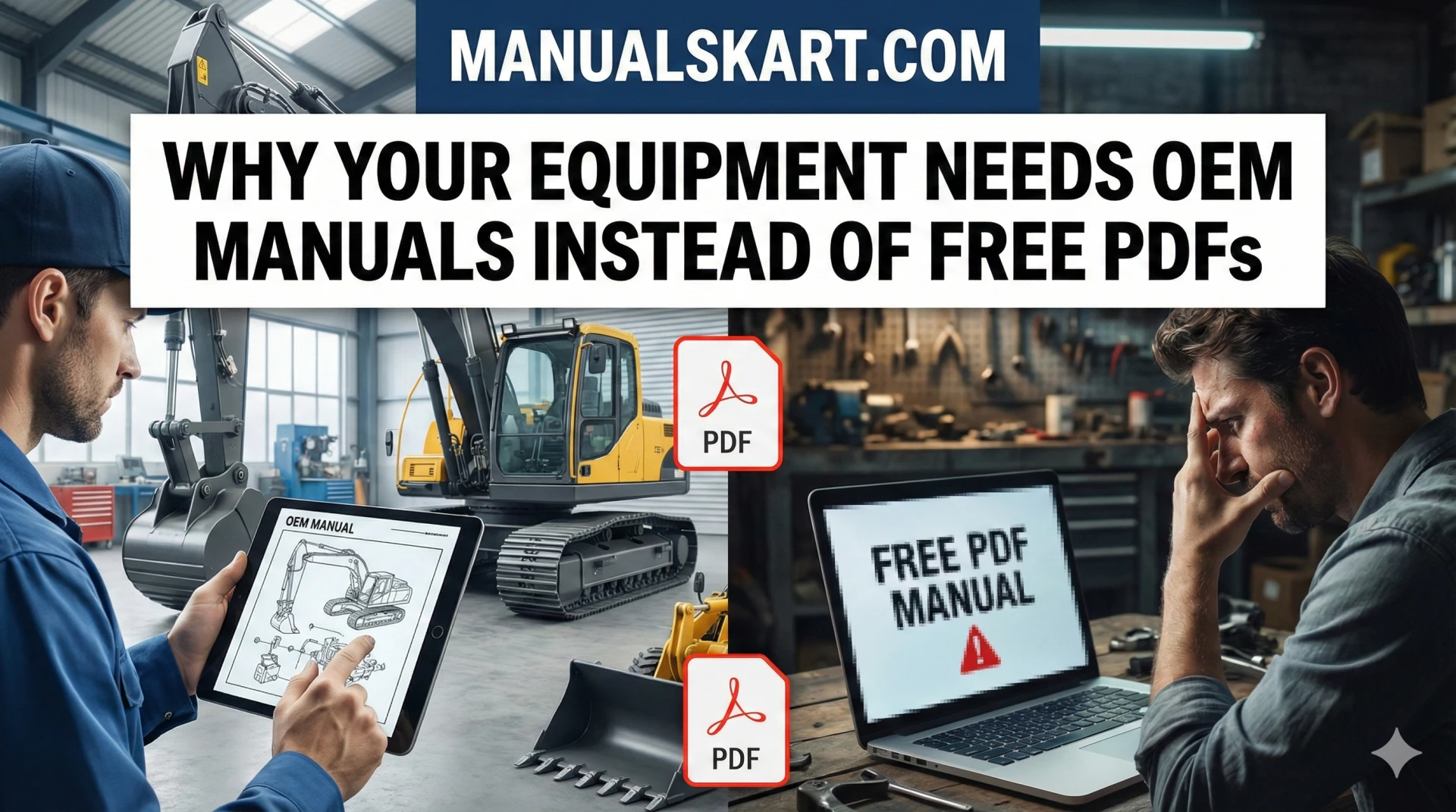
As a heavy equipment owner, mechanic, or enthusiast, you've probably searched for service manuals online and stumbled upon tempting free PDFs. While they seem like a quick, cost-saving option, relying on them for critical repairs on machinery from brands like Caterpillar, John Deere, or Komatsu can lead to serious issues. In this guide, we'll explain why your equipment needs OEM manuals instead of free PDFs, highlighting the risks of unofficial sources and the benefits of authentic, factory-backed documentation.
OEM (Original Equipment Manufacturer) manuals provide the precise, up-to-date information needed for safe and effective maintenance—something free downloads often lack. Let's break it down.
Table of Contents
- The Hidden Risks of Free PDF Manuals
- Accuracy and Completeness: Why OEM Wins
- Safety Concerns with Unofficial Manuals
- Updates and Revisions Matter
- Legal and Ethical Considerations
- Cost Savings in the Long Run
- Quality of Diagrams and Instructions
- Support for Specific Brands and Models
- How to Choose Reliable OEM Manuals
The Hidden Risks of Free PDF Manuals
Free PDFs found on random websites or forums might look convenient, but they come with significant downsides.
Common Issues:
- Malware and Viruses: Many "free" download sites are riddled with ads or hidden threats that can infect your computer.
- Incomplete or Scanned Copies: Poor-quality scans with missing pages, blurry text, or omitted sections.
- Outdated Information: Old versions that don't include the latest revisions or recalls.
These risks can turn a simple repair into a nightmare, especially when working on high-value equipment.
Accuracy and Completeness: Why OEM Wins
OEM manuals are created by the manufacturer using engineering data straight from the factory.
Key Advantages:
- Exact Specifications: Precise torque values, fluid capacities, and tolerances—no guesswork.
- Comprehensive Coverage: Full step-by-step procedures for disassembly, troubleshooting, and reassembly.
- Model-Specific Details: Tailored to your exact serial number, unlike generic free PDFs.
For instance, a genuine Caterpillar manual includes factory-tested procedures that generic versions often skip.
Safety Concerns with Unofficial Manuals
Heavy equipment involves high pressures, heavy components, and complex systems—safety is non-negotiable.
Potential Dangers:
- Missing Warnings: Free PDFs may lack critical alerts about hazards like hydraulic leaks or electrical risks.
- Incorrect Procedures: Wrong steps could lead to accidents or equipment failure.
- Voided Warranties: Using inaccurate info might invalidate coverage.
Mechanics know that one overlooked detail in a Komatsu hydraulic repair can cause catastrophic issues.
Updates and Revisions Matter
Manufacturers regularly update manuals for new findings, improvements, or safety bulletins.
Why It Counts:
- Latest Fixes: OEM versions include service bulletins and revisions.
- Free PDFs Lag Behind: Often stuck on old editions, missing vital changes.
Brands like Volvo frequently release updates for electronic systems—something unofficial sources rarely reflect.
Legal and Ethical Considerations
Downloading pirated or unauthorized PDFs can raise issues.
Points to Consider:
- Copyright Violations: Most free manuals are illegally shared copies.
- Support the Industry: Purchasing legitimate manuals helps fund ongoing development.
Opting for legal sources ensures you're on the right side while getting reliable content.
Cost Savings in the Long Run
Free might seem cheaper upfront, but mistakes from bad info cost more.
Real Benefits:
- Prevent Expensive Repairs: Accurate diagnostics avoid unnecessary part replacements.
- Reduce Downtime: Quick, correct fixes get your machine back to work faster.
- Extend Equipment Life: Proper maintenance preserves value.
Owners of Case Construction or John Deere equipment often find that investing in OEM manuals pays off quickly.
Quality of Diagrams and Instructions
Visuals make complex repairs manageable.
OEM Highlights:
- Clear, High-Resolution Diagrams: Exploded views, schematics, and photos.
- Searchable PDFs: Bookmarks and indexes for easy navigation.
- Professional Formatting: No blurry scans or missing illustrations.
Compare that to free PDFs, which are often low-quality scans.
Support for Specific Brands and Models
OEM manuals cover niche details for engines and attachments.
Examples:
- Detailed engine overhauls for Cummins or Perkins.
- Hydraulic circuits in New Holland Construction.
- Undercarriage specs for JCB.
Free sources rarely match this depth.
How to Choose Reliable OEM Manuals
Look for sources offering verified, high-quality digital downloads with instant access and clear formatting.
Conclusion
Your heavy equipment deserves the best care, and that starts with reliable information. Why your equipment needs OEM manuals instead of free PDFs boils down to accuracy, safety, longevity, and peace of mind. Skipping the risks of unofficial downloads prevents costly errors and keeps your machinery running smoothly.
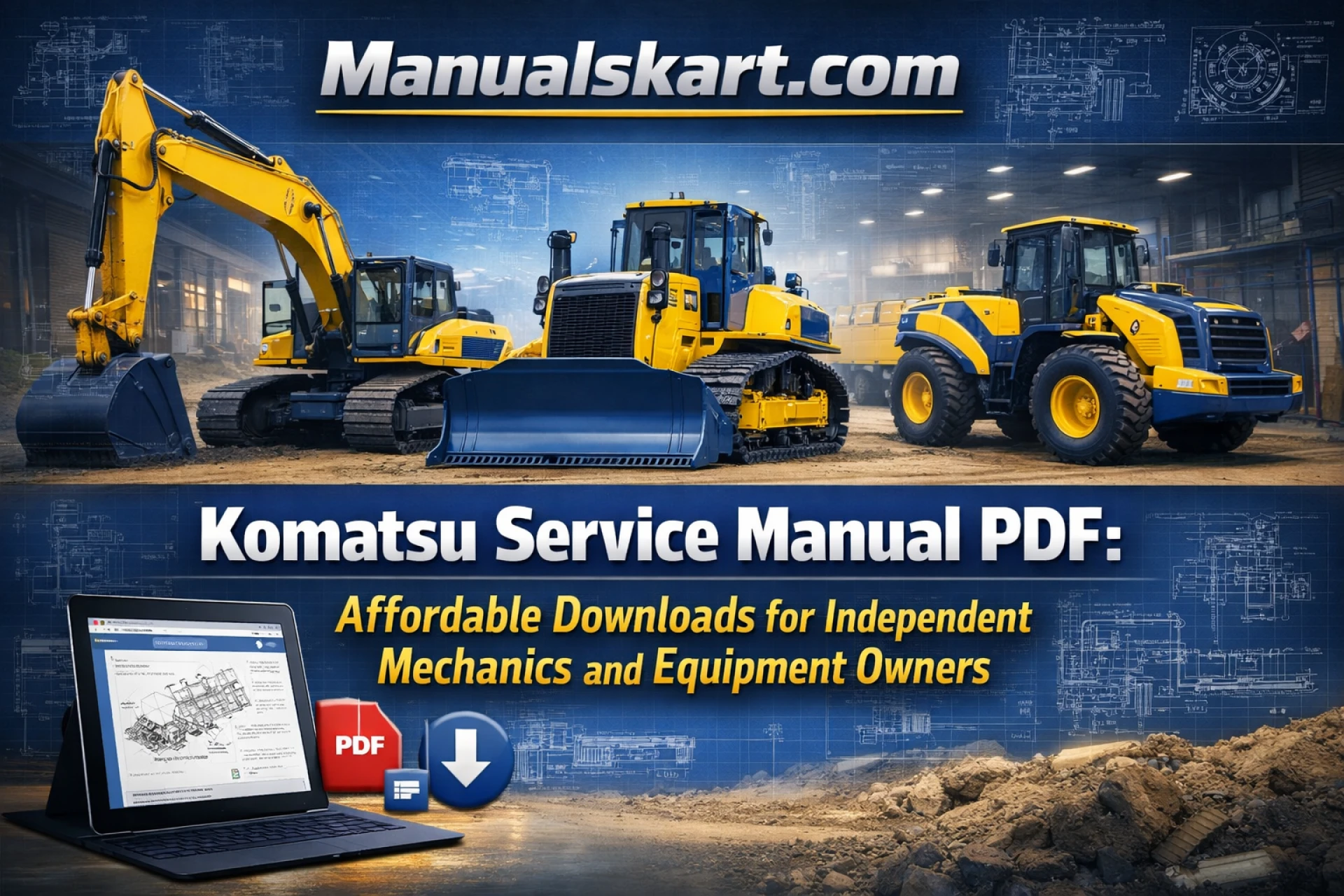
For authentic OEM service, parts, and operator manuals at affordable prices, explore the wide selection available on Manualskart.com. With instant PDF downloads and detailed diagrams for all major brands, it's a smart choice for mechanics and owners alike.
FAQ
Are free PDF manuals ever safe to use?
Rarely—most come from unverified sources with potential malware, incompleteness, or outdated info. Stick to legitimate purchases for safety.
Do OEM manuals really make a difference in repairs?
Yes, they provide factory-precise details that reduce errors, save time, and ensure proper procedures.
Can free manuals void my equipment warranty?
Possibly, if incorrect repairs based on bad info lead to damage—always use manufacturer-approved resources.
What's the best way to get updated OEM manuals?
Purchase from trusted digital providers that source directly from OEM archives and include the latest revisions.
Are there affordable alternatives to dealer-priced manuals?
Absolutely—reputable online sources offer high-quality OEM PDFs at a fraction of dealership costs.








Sign in to leave a comment.