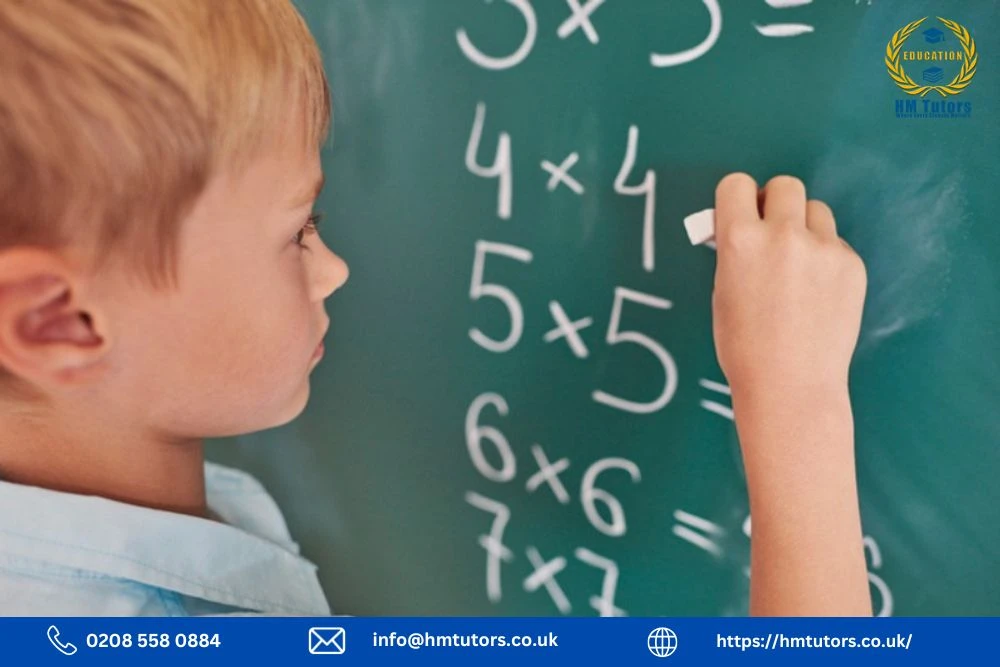

Year 3 is a pivotal stage in a child’s education, especially in Key Stage 2 (KS2) maths. Building on the foundation established in Key Stage 1, the year 3 key Stage 2 maths curriculum lays the groundwork for mathematical fluency, problem-solving, and reasoning. This guide explores key topics, teaching resources, and strategies to help pupils succeed.
Understanding Key Stage 2 Maths
The National Curriculum sets out clear objectives for KS2 maths, ensuring consistent standards across primary schools. In year 3, the focus is on solidifying knowledge of place value, fractions, multiplication, and division, while introducing written methods and problem-solving techniques.
Key Stage 2 maths provides pupils with essential skills, encouraging them to think critically and apply their knowledge to real-world problems. The curriculum also prepares children for the transition to upper key stage levels and eventually to secondary school.
Key Topics in Year 3 Maths
1. Place Value and Number Sense
Place value is fundamental in KS2 maths, helping pupils understand the value of each digit in numbers up to 1,000. This knowledge is crucial for addition, subtraction, and other mathematical operations. Key concepts include:
- Recognising the value of hundreds, tens, and units.
- Comparing and ordering numbers.
- Rounding numbers to the nearest 10 or 100.
2. Addition and Subtraction
Year 3 introduces formal written methods for adding and subtracting numbers. Pupils learn to:
- Add and subtract numbers with up to three digits.
- Solve number problems using mental and written methods.
- Apply knowledge of place value to simplify calculations.
3. Multiplication and Division
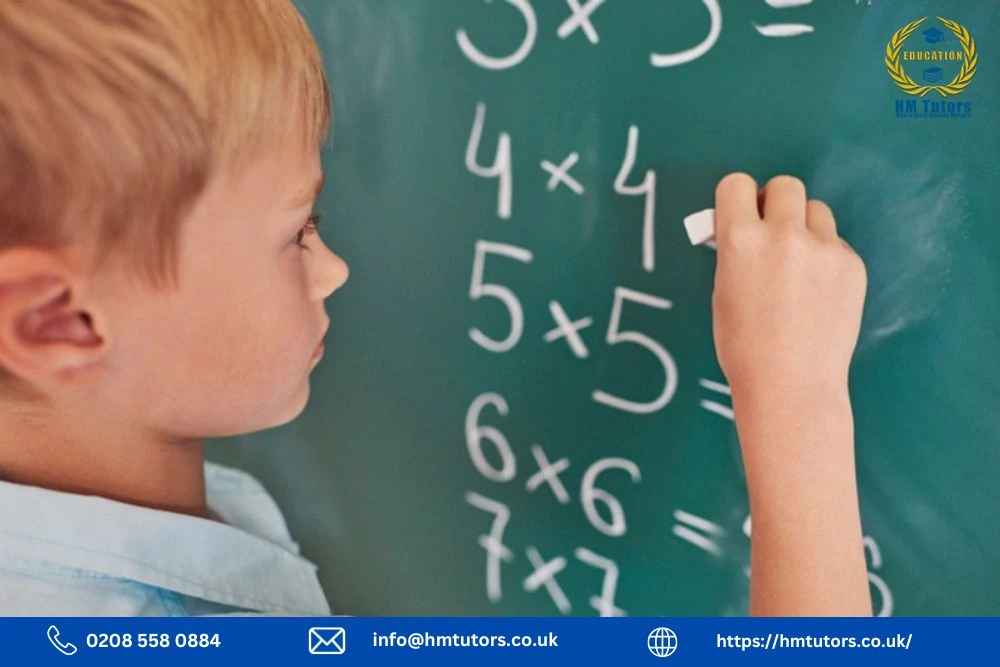
Times tables play a central role in year 3 maths. Pupils are expected to know their 3, 4, and 8 times tables by the end of the year. Mastery of multiplication and division is achieved through:
- Recognising patterns in times tables.
- Using formal written methods for multiplication.
- Dividing numbers into equal parts and solving division problems.
4. Fractions and Equivalent Fractions
Understanding fractions is an essential skill in year 3. Pupils explore simple fractions, unit fractions, non-unit fractions, and equivalent fractions. Key activities include:
- Identifying fractions of a set or quantity.
- Comparing and ordering fractions.
- Adding and subtracting fractions with the same denominator.
5. Geometry: 2D and 3D Shapes
Geometry in year 3 includes identifying, drawing, and describing 2D shapes and 3D shapes. Pupils also begin to explore symmetry and properties of shapes, linking this knowledge to practical applications.
6. Statistics and Data Handling
Bar charts and pictograms are introduced, allowing pupils to interpret and present data. Pupils also learn how to solve problems involving data, making connections between numbers and real-world situations.
Teaching Resources and Strategies
Using White Rose Maths
White Rose Maths provides structured schemes of work aligned with the National Curriculum. Its resources include year 3 maths worksheets, practical activities, and teaching plans that make maths lessons engaging and effective.
Interactive Teaching Techniques
Incorporating hands-on activities, such as using manipulatives for place value or visual aids for fractions, helps pupils grasp abstract concepts. Teachers can also use digital tools like Google Calendar to schedule weekly lessons and track progress.
Worksheets and Practice
Worksheets focusing on times tables, division, and equivalent fractions provide practice opportunities. Regular revision through written methods and problem-solving exercises ensures pupils retain their knowledge.
Encouraging Mathematical Vocabulary
Building a strong foundation in mathematical vocabulary enables pupils to articulate their reasoning clearly. Words like “partition,” “denominator,” and “multiply” should become part of their daily discussions.
Common Challenges in Year 3 Maths
1. Transitioning from Key Stage 1 to Key Stage 2
Moving from early years and foundation stage to KS2 can be challenging. Pupils often need support in adapting to the increased complexity of the curriculum.
2. Mastering Multiplication Tables
Learning multiplication tables can be daunting for some pupils. Regular practice, games, and songs can make memorisation more enjoyable.
3. Understanding Fractions
Fractions can be tricky, especially when pupils encounter equivalent fractions or subtract fractions. Breaking these concepts into smaller steps and using visual aids can help.
4. Formal Written Methods
Transitioning from mental maths to formal written methods requires time and practice. Teachers should focus on gradual progression, ensuring pupils understand each step.
Engaging Parents in the Learning Process
Involving parents in their child’s learning can enhance progress. Suggestions for parents include:
- Practising times tables and simple fractions at home.
- Using everyday situations, like cooking, to teach measurements and equivalent fractions.
- Encouraging the use of mathematics apps and games to reinforce classroom learning.
The Importance of Year 3 in Mathematics Education
Year 3 maths serves as the bridge between early mathematical learning and more advanced concepts in upper key stage levels. Mastery of these foundational skills is essential for success in later years, including secondary school.
Key Information for Parents and Teachers
- Focus on the core areas of place value, multiplication, and fractions.
- Use varied teaching resources to cater to different learning styles.
- Encourage consistent practice and application of mathematical skills.
Preparing for Future Success in KS2 Maths
By the end of year 3, pupils should have a solid understanding of the key topics outlined in the National Curriculum. This preparation equips them for the challenges of upper key stage and lays the groundwork for lifelong mathematical confidence.
FAQs
- What is the focus of Year 3 Key Stage 2 maths?
- Year 3 Key Stage 2 maths focuses on place value, multiplication, division, fractions, and formal written methods.
- Why are multiplication tables important in Year 3?
- Multiplication tables help pupils develop a strong foundation for solving problems involving division and long multiplication.
- How can parents support their child with Year 3 maths at home?
- Parents can practice times tables, use everyday activities to teach fractions, and engage their child with maths games and apps.
- What teaching resources are helpful for Year 3 maths?
- Resources like White Rose Maths, year 3 maths worksheets, and manipulatives are highly effective for teaching.
- Why is Year 3 significant in the maths curriculum?
- Year 3 serves as a bridge between early years and upper KS2, preparing pupils for advanced concepts in the curriculum.
Conclusion
Year 3 Key Stage 2 maths is a critical stage in a child’s mathematical journey. By focusing on place value, multiplication tables, fractions, and problem-solving, teachers and parents can foster a love for mathematics. With the support of resources like White Rose Maths and a structured approach to learning, pupils will develop the skills they need to excel in KS2 and beyond.










Sign in to leave a comment.