

Smart city infrastructure relies heavily on continuous video surveillance to monitor traffic, enhance public safety, and manage municipal operations. Thousands of high-resolution cameras generate massive, unyielding streams of data 24 hours a day. Municipal IT departments face a significant physical and logistical challenge. They must ingest this data without dropping frames and retain it for months to meet strict legal compliance standards.
Network Attached Storage provides a scalable framework to handle these rigorous demands. Modern NAS Systems are specifically engineered to support high-throughput sequential writing, which is characteristic of persistent video feeds. This article outlines the architectural principles required to design a storage environment capable of continuous smart city video ingestion and long-term archiving.
The Architecture of Continuous Video Ingestion
Surveillance video writes are highly sequential and demand consistent low-latency performance. When hundreds of high-definition cameras transmit data simultaneously, NAS systems must absorb the incoming data streams without bottlenecking, ensuring reliable and uninterrupted storage performance. Frame drops compromise the integrity of security footage, rendering it useless for forensic analysis or traffic pattern evaluation.
High-Throughput Storage Requirements
Standard enterprise storage often prioritizes random read/write performance for databases. Surveillance storage requires the exact opposite. The system must prioritize continuous, large-block sequential writes. To achieve this, administrators must allocate dedicated network bandwidth and isolate the video traffic from standard municipal data streams. Using virtual local area networks (VLANs) ensures that packet collisions and network congestion do not interrupt the surveillance feed.
The Role of the NAS Appliance
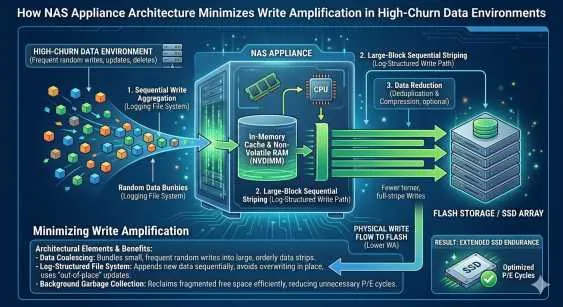
Deploying a dedicated NAS Appliance at the network edge or core is the first step in building a robust architecture. These physical hardware devices come optimized with heavy-duty processors and extensive RAM caches. The RAM cache absorbs the immediate influx of video packets, organizing them into sequential blocks before flushing them to the physical disks. Selecting an appliance with optimized network interfaces, such as 10GbE or 25GbE ports, ensures that the network throughput matches the storage hardware's capabilities.
Scaling for Long-Term Video Archiving
Smart cities cannot simply overwrite data every few days. Legal frameworks and municipal policies often dictate retention periods spanning 90 days to several years. This specific requirement forces NAS Systems to scale rapidly into the petabyte range without degrading ingestion speeds.
Tiered Storage Strategies
A hybrid storage approach prevents budget overruns while maintaining maximum performance. High-speed solid-state drives (SSDs) or NVMe arrays act as the primary ingestion tier. Once the video management system (VMS) processes the incoming streams, automated lifecycle policies migrate the aging video files to secondary storage tiers. These secondary tiers utilize high-capacity, helium-filled hard disk drives (HDDs). This automated tiering mechanism keeps the ingestion pathways clear and utilizes cost-effective storage density for long-term archiving.
Utilizing ISCSI NAS for Block-Level Access
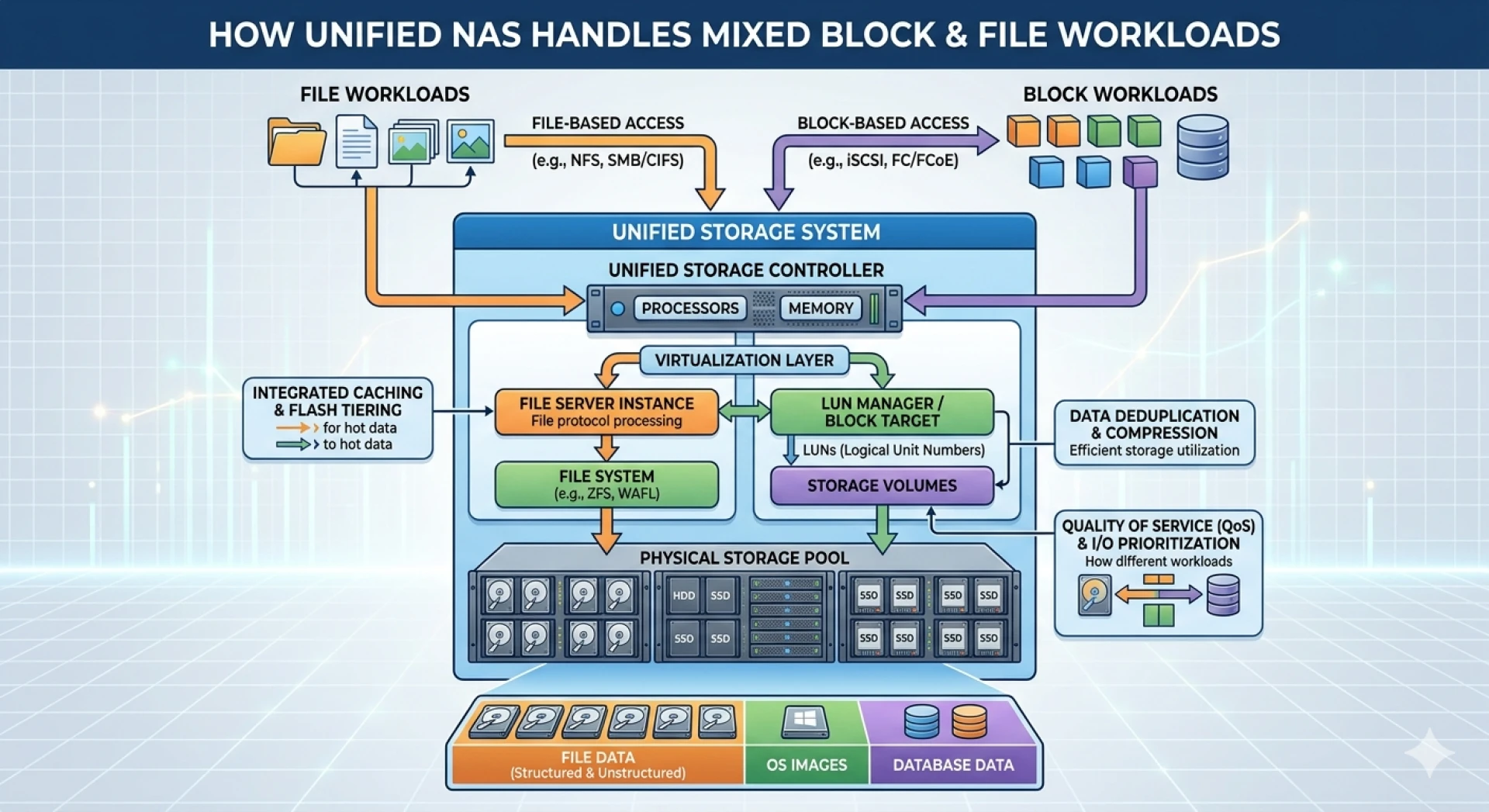
While traditional Network Attached Storage uses file-level protocols like NFS or SMB, surveillance environments heavily benefit from block-level storage access. Implementing an ISCSI NAS configuration allows the VMS server to interact with the storage array as if it were a locally attached physical drive.
This configuration bypasses standard file system overhead, significantly reducing latency during concurrent read and write operations. Furthermore, VMS databases, which index timestamps, facial recognition metadata, and license plate logs, operate much more efficiently over iSCSI. This protocol ensures rapid search and retrieval times during active municipal investigations.
Ensuring Data Integrity and Compliance
Hardware failures are statistically inevitable in large-scale storage environments. Continuous 24/7 operation causes mechanical wear on hard drives, necessitating a highly resilient data protection strategy.
RAID Configurations and Erasure Coding
Administrators must configure the NAS Appliance with advanced RAID levels, such as RAID 6 or RAID 60. These configurations tolerate multiple simultaneous drive failures without data loss, giving technicians time to replace defective hardware. For ultra-scale municipal environments exceeding multiple petabytes, erasure coding provides a more efficient alternative to traditional RAID. It distributes data fragments and parity blocks across multiple distinct storage nodes, allowing the system to rebuild lost data rapidly while minimizing wasted capacity.
Retention Policies and Immutable Storage
Chain of custody is paramount for legal proceedings involving surveillance footage. Video archives must remain immutable and protected from tampering. Administrators can configure Write Once Read Many (WORM) policies on the specific storage volumes holding archived footage. WORM technology prevents unauthorized users, malware, and even automated system processes from deleting or altering the video before the legally mandated retention period expires.
Building a Resilient Municipal Infrastructure
Designing storage for smart city surveillance requires careful capacity planning and architectural foresight. IT leaders must balance the immediate mechanical need for high-speed video ingestion with the long-term physical reality of petabyte-scale archiving. By leveraging a high-performance NAS Appliance, deploying intelligent tiered storage algorithms, and utilizing block-level protocols like ISCSI NAS, municipalities can build an infrastructure that guarantees data integrity. A well-architected storage system ultimately ensures that smart city initiatives deliver on their core promise of enhanced public safety and uninterrupted operational efficiency.

Sign in to leave a comment.