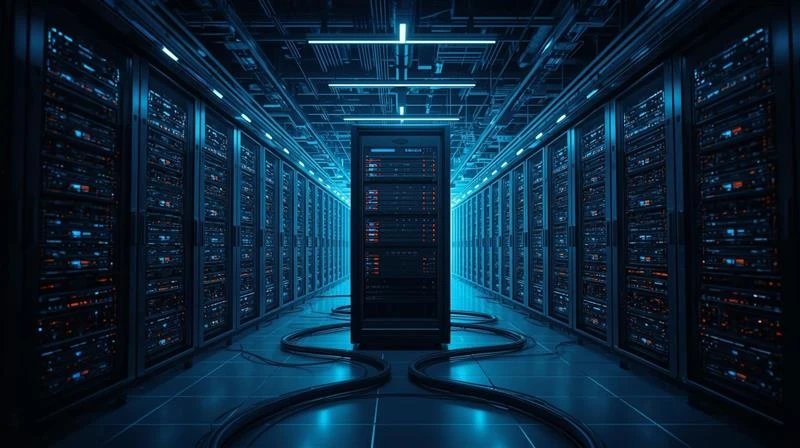

Rendering a single frame in a high-end VFX production can take hours. Multiply that by thousands of frames, add a team of artists working simultaneously across a studio, and you begin to understand why storage infrastructure is the backbone of modern visual effects pipelines. The network-attached storage (NAS) system sits at the center of this infrastructure—quietly enabling the computational horsepower that brings cinematic worlds to life.
This post breaks down how NAS solutions support rendering farms in VFX and animation studios, what makes them uniquely suited to this environment, and what studios should consider when designing or upgrading their storage architecture.
What Is a NAS System, and Why Does It Matter in VFX?
A NAS system is a dedicated file storage device connected to a network, allowing multiple users and systems to access data from a centralized location. Unlike direct-attached storage (DAS), which ties storage to a single machine, or cloud storage, which introduces latency over the internet, a NAS operates locally on a high-speed internal network.
For VFX and animation studios, this distinction is critical. Rendering farms consist of dozens—sometimes hundreds—of render nodes, each pulling asset data simultaneously. Every millisecond of I/O latency compounds across the pipeline. A well-configured NAS delivers the low-latency, high-throughput performance these environments demand.
The Role of NAS in High-Speed Rendering Farms
Centralized Asset Access Across Render Nodes
A rendering farm works by distributing frames across multiple machines, all processing different parts of the same scene. Each node needs access to the same source files: textures, geometry caches, shaders, and lighting data. Without a centralized storage system, studios would be forced to replicate assets across individual machines—an unmanageable and error-prone approach at scale.
NAS solutions solve this by acting as a single source of truth. All render nodes mount the same file system, ensuring consistency across every frame. When an artist updates a texture or modifies a scene file, every node immediately has access to the latest version—no manual syncing required.
High-Throughput Performance for Simultaneous Access
Rendering is I/O intensive. A single render job might involve thousands of large texture files, EXR image sequences, and volumetric caches, all being read concurrently by dozens of nodes. A NAS system designed for high-performance workloads prevents bottlenecks and ensures that multiple render nodes can access data simultaneously without performance degradation, whereas standard consumer-grade storage collapses under this kind of load.
Enterprise NAS solutions are engineered for exactly this scenario. They typically feature multiple high-speed network interfaces (10GbE, 25GbE, or even 100GbE), striped RAID configurations for parallel read performance, and large cache tiers—often using NVMe SSDs—to absorb burst I/O. The result is sustained throughput that keeps render nodes fed with data and minimizes idle time.
Support for Complex VFX File Formats
VFX pipelines rely on formats that generate enormous amounts of data. OpenVDB volumes for fluid and smoke simulations, multi-layer EXR sequences, Alembic geometry caches—these aren't small files. A single hero asset in a feature film can run into hundreds of gigabytes.
NAS systems handle these large sequential reads efficiently, especially when configured with appropriate block sizes and file system tuning. Studios running pipelines built on software like Houdini, Maya, or Nuke benefit from NAS architectures optimized for large file streaming, which reduces render stalls and improves overall farm utilization.
Designing a NAS Architecture for a Rendering Farm
Tiered Storage Strategies
Not all data in a studio requires the same level of performance. Active production assets—scenes currently in render—need the fastest possible access. Completed sequences, archived projects, and source footage can tolerate slower access times.
A tiered NAS architecture addresses this by placing active data on high-performance NVMe or SAS-based NAS nodes, while archived material moves to higher-capacity, lower-cost SATA arrays or object storage. Automated data tiering policies can migrate files between tiers based on access frequency, keeping the fast tier lean and performant.
Network Infrastructure Considerations
A NAS system is only as fast as the network it sits on. For rendering farms, a dedicated storage network—separate from general office traffic—is standard practice. This prevents render traffic from competing with administrative workflows and ensures consistent throughput under load.
Many studios implement InfiniBand or high-density 25/100GbE fabrics for their render and storage networks. Bonding multiple network interfaces on the NAS provides both additional throughput and redundancy, protecting the farm from a single point of network failure.
Scalability as Productions Grow
Production workloads are unpredictable. A project that starts with 20 render nodes may scale to 200 under deadline pressure. NAS solutions designed for studio environments support horizontal scaling—adding additional NAS nodes or expanding existing ones without disrupting active workflows.
Scale-out NAS architectures distribute both capacity and performance across multiple nodes, presenting a single global namespace to the render farm. Artists and render nodes see one unified file system regardless of how many physical devices sit behind it.
NAS Security in Production Environments
Protecting Valuable IP
VFX studios handle some of the most commercially sensitive digital assets in existence. Unreleased footage, character designs, and visual effects sequences represent significant intellectual property. NAS security is not an afterthought—it's a contractual and operational requirement.
Modern NAS solutions provide granular access controls, allowing studios to restrict which users and systems can read, write, or execute specific files and directories. Role-based access control (RBAC) ensures that a render node can read production assets without having write access, limiting the blast radius of any accidental or malicious modification.
Encryption and Compliance
Many studios working with major film studios or streaming platforms operate under strict security requirements—including SOC 2 compliance and Motion Picture Association (MPA) content security guidelines. NAS security features like encryption at rest and in transit, audit logging, and immutable snapshots help studios meet these requirements without sacrificing performance.
Immutable snapshots, in particular, provide a recoverable state of the file system at any point in time. If a ransomware attack or accidental deletion compromises production assets, the studio can roll back to a known-good snapshot with minimal data loss.
Network Segmentation and Access Controls
Isolating the storage network from broader studio infrastructure reduces the attack surface. A NAS system accessible only to render nodes and designated workstations—rather than the entire studio network—limits unauthorized access. Combined with multi-factor authentication for administrative interfaces and encrypted management channels, studios can enforce a defense-in-depth approach to NAS security.
Key Metrics to Evaluate a NAS System for Rendering
When assessing NAS solutions for a rendering environment, studios should evaluate:
- Aggregate throughput: Total read bandwidth across all connected clients simultaneously
- IOPS capacity: Particularly relevant for metadata-heavy workloads and small file access patterns
- Latency under load: How the system performs when all render nodes are active, not just in isolation
- Failover time: How quickly the system recovers from a drive or controller failure without interrupting active renders
- Management tooling: Monitoring, alerting, and capacity planning capabilities
Building a Pipeline That Scales
The demands on studio storage infrastructure will only increase. As resolutions climb to 8K and beyond, simulation complexity grows, and virtual production workflows add new real-time data requirements, the NAS system at the center of the rendering farm must be designed with headroom in mind.
Investing in the right NAS solutions—combining high-throughput hardware, intelligent tiering, and robust NAS security—means studios can take on more complex productions without rebuilding their infrastructure every few years. The goal isn't just storage. It's a foundation that keeps artists productive and render farms running at full capacity, frame after frame.











Sign in to leave a comment.