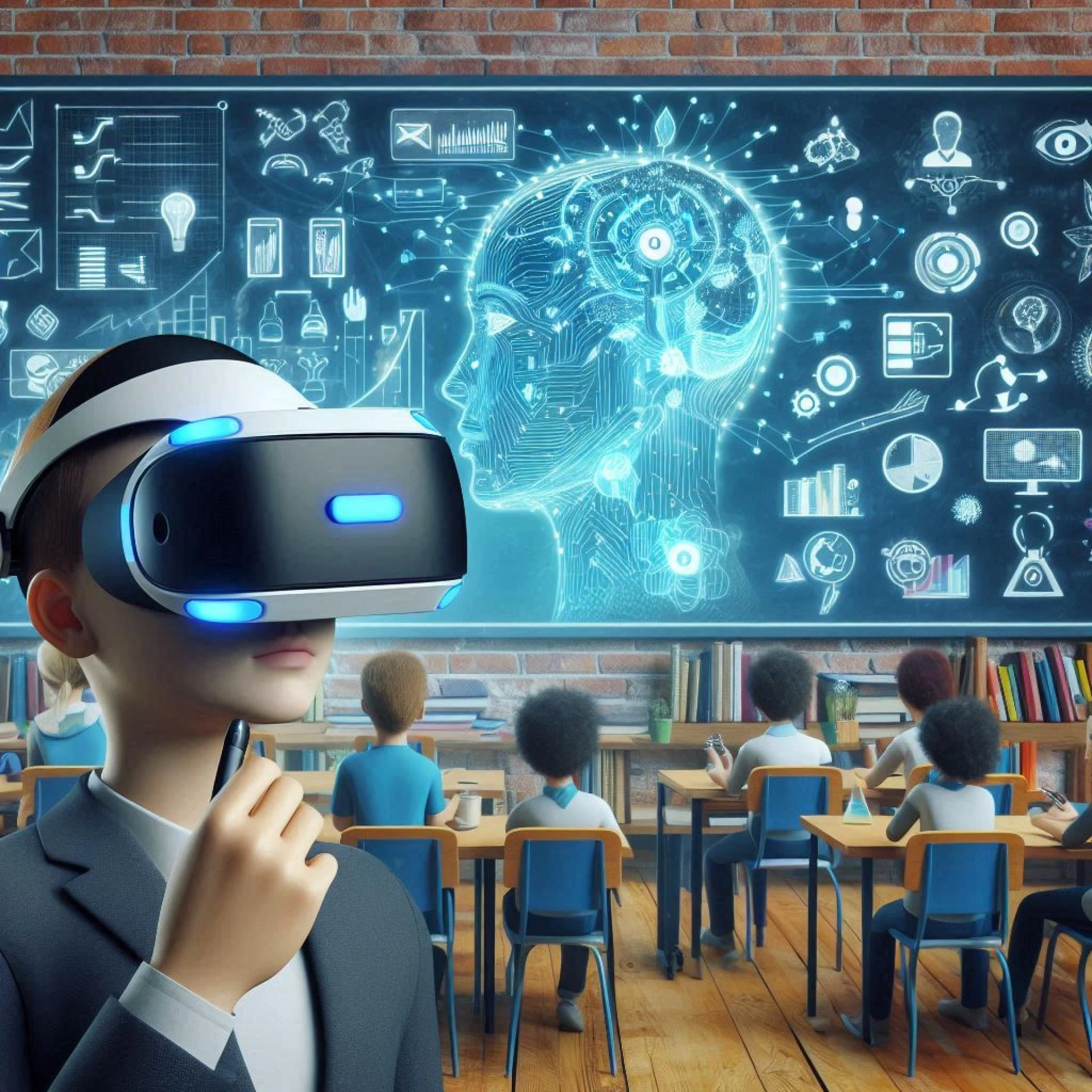

Education is undergoing a seismic shift. Gone are the days when learning was confined to textbooks and static lectures. Today, immersive technologies like virtual reality (VR) and intelligent systems powered by adaptive artificial intelligence (AI) are merging to create dynamic, personalized learning environments. Enter VR classrooms with adaptive AI instructors—a groundbreaking concept poised to redefine how we teach, learn, and engage with knowledge.
What Are VR Classrooms with Adaptive AI Instructors?
Imagine a classroom where students explore the pyramids of Egypt, dissect a virtual frog, or converse with historical figures—all without leaving their homes. VR classrooms use head-mounted displays and motion-tracking technology to immerse learners in interactive 3D environments. But the real magic lies in the integration of adaptive AI instructors. These AI systems analyze student behavior, performance, and preferences in real time to tailor lessons, adjust difficulty levels, and provide instant feedback.
Unlike traditional teaching methods, adaptive AI doesn’t follow a one-size-fits-all approach. If a student struggles with algebra, the AI might switch to visual problem-solving tools or break concepts into smaller steps. If another excels, it introduces advanced challenges to keep them motivated. The result? A fluid, responsive educational experience that evolves with each learner.
The Benefits: Personalized, Immersive, and Accessible
a) Hyper-Personalized Learning
Adaptive AI ensures no student is left behind—or held back. By tracking metrics like response time, error patterns, and engagement levels, the AI identifies gaps in understanding and adjusts content accordingly. For instance, a visual learner might receive 3D models to grasp geometry, while an auditory learner gets narrated explanations.
b) Unmatched Immersion
VR transforms abstract concepts into tangible experiences. Biology students can "walk" through a human bloodstream, while history classes might witness the signing of the Declaration of Independence. This immersion boosts retention—studies show VR learners retain up to 75% of information compared to 10% from reading.
c) Breaking Geographic Barriers
VR classrooms democratize access to quality education. A student in a remote village can attend a lecture by a Nobel laureate or collaborate with peers worldwide. Adaptive AI further bridges gaps by offering multilingual support and accommodating disabilities, such as providing sign language avatars for hearing-impaired students.
d) Instant Feedback and Reduced Anxiety
Many students hesitate to ask questions in traditional settings. With AI instructors, learners receive private, judgment-free guidance. The AI flags mistakes immediately, offering hints or alternative approaches, fostering a safe space to experiment and grow.
Challenges and Considerations
While the potential is staggering, hurdles remain. High-quality VR equipment is costly, though prices are dropping rapidly. Connectivity issues in underserved regions could limit access, and prolonged VR use may cause motion sickness in some users. Additionally, critics argue that over-reliance on AI might reduce human interaction, a cornerstone of holistic education.
However, proponents counter that AI instructors aren’t meant to replace teachers but to empower them. Educators can focus on mentorship, creativity, and emotional support while AI handles repetitive tasks like grading and progress tracking.
Real-World Applications and the Road Ahead
Pioneering institutions are already testing VR-AI hybrids. For example, Stanford University’s Virtual Human Interaction Lab uses VR to teach empathy through perspective-taking simulations. Meanwhile, platforms like ENGAGE and AltspaceVR host global virtual classrooms with AI-driven breakout sessions.
In K-12 education, tools like ClassVR offer curated VR content aligned with curricula, while AI platforms like Carnegie Learning provide math tutoring that adapts to individual needs. Corporations are also adopting VR-AI training modules to upskill employees in risk-free environments, from healthcare simulations to engineering troubleshooting.
Looking ahead, advancements in haptic feedback and AI emotional recognition could make interactions even more nuanced. Imagine an AI that detects frustration through voice tone and adjusts its teaching style—or a VR lab where students "feel" chemical reactions.
Conclusion: Education’s New Frontier
VR classrooms with adaptive AI instructors represent more than just tech innovation—they signal a cultural shift toward inclusive, student-centered learning. By blending immersion with intelligence, this model caters to diverse needs, nurtures curiosity, and prepares learners for a fast-evolving world.
As with any transformation, challenges will arise. But by prioritizing equity, collaboration between educators and technologists, and balancing automation with human touch, we can unlock a future where every student thrives. The classroom of tomorrow isn’t just virtual—it’s limitless.












Sign in to leave a comment.