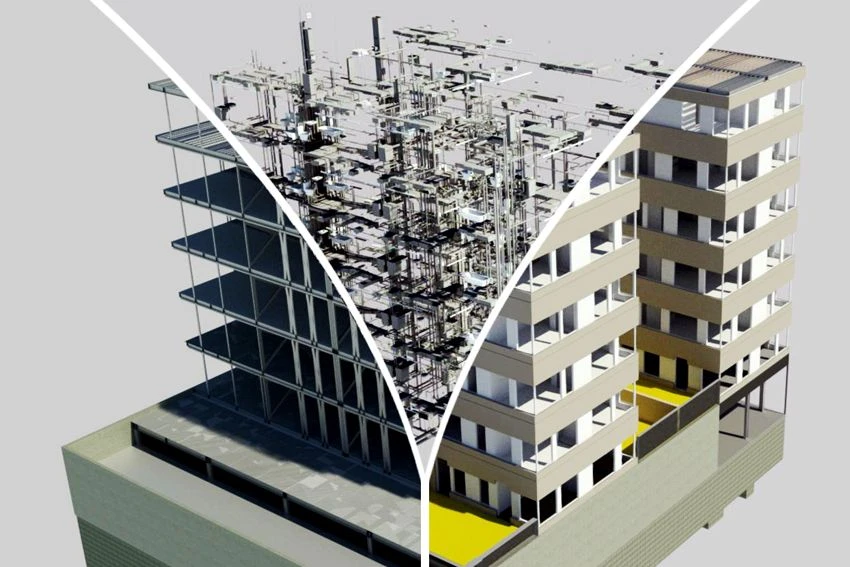
Estimating has always been part art, part arithmetic. Today, it is also about data discipline. Revit BIM Modeling changes the starting point: instead of counting from static sheets, a Construction Estimating Company works from a living model. That shift shortens bid cycles, improves accuracy, and reduces the number of surprises that derail margins during construction.
The point is simple. A Revit model is not just a pretty picture. It is a structured set of objects — walls, slabs, ducts, windows — each carrying measurable attributes. These attributes let estimators extract quantities directly, test alternatives, and produce budgets that trace back to visible elements in the model. For any Construction Estimating Company that wants to compete on speed and reliability, that traceability quickly becomes a strategic advantage.
Why the model-first approach changes estimating
Traditional estimating relies on manual takeoffs and a lot of interpretation. Different estimators may count differently, and revisions force repeated work. Revit BIM Modeling removes much of that variation. Once the model is built with consistent families and tagging, quantity takeoffs are repeatable and verifiable. The estimator’s role shifts from counting to judgment: checking assumptions, validating rates, and advising on value choices.
That does not mean the work gets easier overnight. It means the work becomes more meaningful. Estimators can run what-if scenarios in minutes rather than days. They can show a client how a material change affects cost and schedule. The result is better-informed decisions — and fewer contentious change orders later.
Practical benefits that every Construction Estimating Company will notice
The improvements are real and practical. Below are the kinds of gains teams report after adopting model-driven estimating.
- Faster turnaround: Automated extracts cut the time spent on basic counts.
- Fewer omissions: Consistent families reduce the chance of missing repeat items.
- Traceable estimates: Every line item links to a model object and a model version.
- Cleaner procurement: Accurate quantities reduce over-ordering and waste.
- Better client conversations: Visuals make cost drivers easier to explain.
Each of these outcomes helps a Construction Estimating Company compete more effectively for work while protecting margins on delivery.
How to build a reliable Revit-to-estimate workflow
A reliable workflow is repeatable and low-friction. It begins with simple agreements: define the level of detail required, set naming conventions, and decide which parameters every model element must include. With those rules in place, the handoff between the Revit author and the estimating team becomes predictable.
A practical sequence looks like this:
- Agree on LOD and tagging rules before modeling starts.
- Model a representative zone and run clash detection.
- Extract quantities and map elements to your cost codes.
- Apply local unit rates and produce a time-phased estimate.
- Review and validate critical line items visually in the model.
Start with a pilot area. One floor or one trade will reveal the common gaps — missing tags, inconsistent families — and allow you to fix them before scaling the approach to the whole project. When this loop is polished, the Revit output becomes a dependable input for a Construction Estimating Company.
Common pitfalls and simple, effective fixes
Problems in model-driven estimating are almost always process problems: unclear naming, missing metadata, or late involvement of cost specialists. These are fixable.
- Inconsistent naming: publish a short naming guide and use it.
- Missing tags: require a minimal parameter set on every extractable object.
- Too much detail: match the level of detail to estimation needs, not curiosity.
- Late estimator involvement: include cost professionals in early model reviews.
Addressing these items with short rules and quick checks saves hours of cleanup later. Small governance prevents large rework.
How does this help decision-makers and owners?
Owners want predictability; contractors want margins. Revit BIM Modeling supports this by making estimates auditable and change impacts visible. When quantities are tied to real objects, it’s easier to justify budgets and to show where contingency is allocated. Subcontractors get clearer scopes. Procurement teams order smarter. Everyone negotiates from a common reference instead of arguing over different sets of numbers.
This clarity shortens approval cycles and often leads to smoother execution on site. Fewer surprises, clearer cashflow planning, and reduced disputes — these outcomes are practical and measurable.
Getting started without overhauling everything
You don’t need to convert all projects at once. A low-risk path looks like this: choose a pilot that reflects your typical work, set out naming and tagging rules, run an extract, then compare it with a manual takeoff. Fix gaps, document the conventions, and repeat. Once the pilot yields reliable results, scale up.
For a Construction Estimating Company, this staged approach proves the business case quickly: less time on takeoffs, fewer change orders, and bids that hold up when the project goes live.
Conclusion
Revit BIM Modeling is changing how estimates are made; it does not replace human judgment, but improves the inputs upon which the judgment is based. A Construction Estimating Company that adopts a structured, model-driven workflow can win faster bids and produce budgets that are more enforceable and lessen the friction that erodes margins in the execution. Begin with small-scale trials, insist on clean tags and clear naming, then let your model be the only source of truth, which bridges both budget and design.










Sign in to leave a comment.