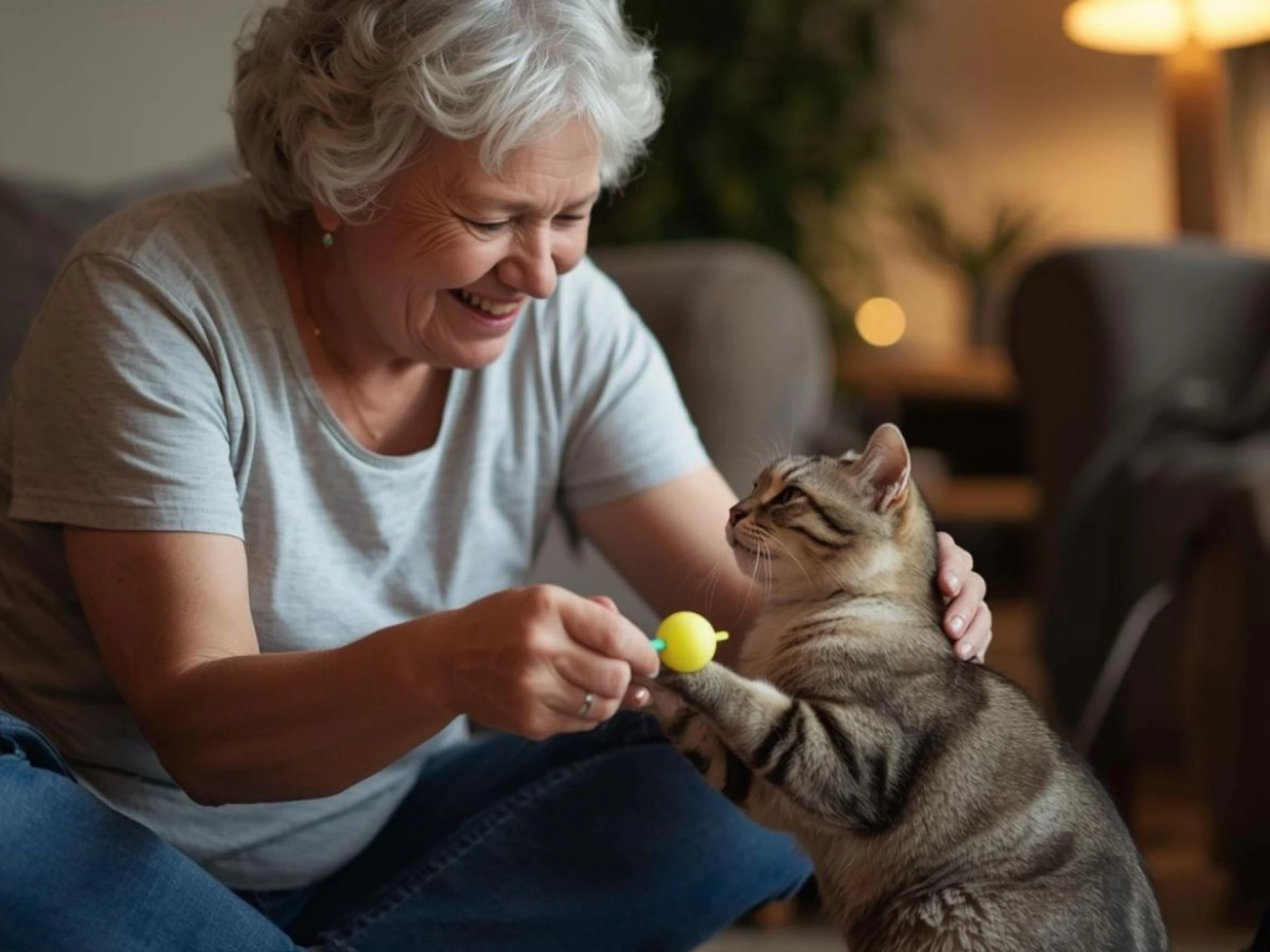

Interestingly, more older adults are choosing cats as companions. In Australia, pet ownership studies show that millions of households include at least one cat, and many of those owners are retirees or senior parents looking for calm companionship at home.
But here’s a small challenge many people don’t talk about.
Senior cat owners often love spending time with their pets, yet high-energy play can feel tiring or physically demanding. Chasing a kitten across the living room or bending repeatedly to pick up toys isn’t always ideal.
Meanwhile, cats still need daily stimulation to stay healthy.
So what’s the middle ground?
Think of it like this: the right toy can turn playtime into a gentle, low-effort bonding moment rather than a workout. That’s exactly why wand toys are becoming a favourite for older pet parents.
Why Are Wand Toys Easier for Senior Cat Owners?
Cats are natural hunters. They love movement—especially quick, unpredictable motion that mimics prey.
A cat wand works beautifully because it creates that movement without requiring the owner to run around.
Instead of bending down or tossing toys repeatedly, you simply move the wand lightly from a chair or sofa. The dangling toy does the rest.
Meanwhile, the cat chases, jumps, and pounces—getting a healthy dose of exercise.
Think of it like fishing, but for feline hunters.
A gentle wrist movement can keep a cat entertained for minutes at a time.
Do Cats Really Benefit From Gentle Play?
Yes, and more than many people expect.
Veterinarians often recommend at least two short play sessions daily for indoor cats. Even five to ten minutes of interactive play can help with:
- Maintaining a healthy weight
- Preventing boredom
- Reducing destructive behavior
- Improving mental stimulation
Interestingly, older cats especially benefit from light activity. Gentle play keeps their joints moving and helps prevent stiffness.
Meanwhile, younger cats burn off energy that might otherwise show up as midnight zoomies.
What Is the Best Way for Senior Parents to Play With Cats?
The goal is simple: keep the play session fun but effortless.
Here’s an easy routine that works well for many households.
Step 1: Choose a Comfortable Spot
Sit in a comfortable chair or sofa. Good posture helps prevent strain during longer play sessions.
Step 2: Move the Toy Slowly
Instead of fast, jerky motions, try slow sweeping movements across the floor.
Interestingly, many cats actually prefer this. It mimics the sneaky movements of prey.
Step 3: Encourage Natural Hunting
Let the cat stalk the toy before catching it. Pause occasionally so the cat can pounce.
Think of it like a small hunting game.
Step 4: Mix Play Styles
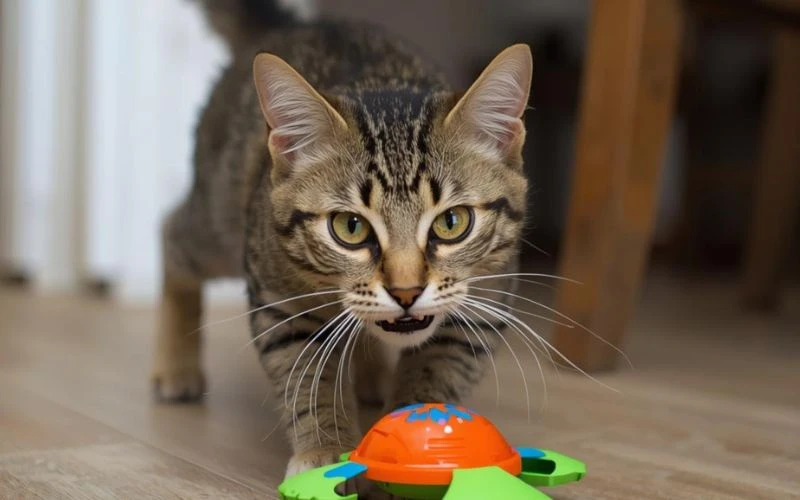
While wand toys encourage active interaction, rolling an interactive cat ball across the floor can add variety to the session. Some cats enjoy chasing moving balls after their wand play warm-up.
A little variation keeps cats curious and mentally engaged.
Can Gentle Play Improve the Bond Between Cats and Their Owners?
Absolutely.
Cats often form stronger bonds through shared activities. Playtime creates trust because the cat sees the owner as part of the “hunt.”
Meanwhile, many senior parents find the routine calming. Watching a cat leap, roll, and chase a toy can be surprisingly relaxing.
Some owners even turn playtime into a daily ritual—morning play before breakfast or evening play before dinner.
The result? A routine both human and cat look forward to.
What Are Common Mistakes to Avoid?
Even with simple toys, a few small adjustments can make playtime better.
Avoid these common mistakes:
- Playing too long without breaks
- Moving the toy too quickly for older cats
- Ending play abruptly without letting the cat “catch” the toy
- Using only one type of toy every day
Meanwhile, remember that every cat has a personality. Some love jumping; others prefer stalking and pouncing quietly.
Practical Checklist: Gentle Play Tips for Senior Cat Parents
If you want easy, enjoyable playtime with your cat, try this simple checklist:
✔ Choose toys that allow play from a seated position
✔ Keep play sessions short but regular (5–10 minutes)
✔ Move toys slowly to mimic prey movements
✔ Allow your cat to catch the toy occasionally
✔ Rotate toys to keep play interesting
✔ Add variety with different toys during the week
Meanwhile, remember the golden rule of cat play: consistency matters more than intensity.
A few minutes of gentle interaction each day can keep your cat healthier, happier, and more connected to you.
And sometimes, the simplest toy—moved with a small flick of the wrist—can turn an ordinary evening into a fun little adventure for both of you.












Sign in to leave a comment.