
Introduction: Why This Is Not Just Another Medical Choice — It’s a Life Decision
You’re told your arteries are clogged. Now you find yourself at a medical crossroads with two signs:
One says: Bypass Surgery – Proven, but invasive, costly, and scary.
The other says: EECP Therapy – Non-surgical, natural, lesser-known.
This is not simply a matter of selecting a treatment. It’s about deciding what kind of healing you really believe in. We’re cutting through the medical noise to show you the real picture today —EECP therapy vs bypass surgery honestly, clinically, human-ly.
That is not a welcome comparison. It’s a sign of how cardiovascular medicine is changing — and why so many patients are pushing back against old defaults to find better, more modern options.
Let’s Define the Basics – But Not in Textbook Terms
What Bypass Surgery Means For a Patient
Also known as CABG (Coronary Artery Bypass Graft), this is a complex heart surgery during which blood vessels from elsewhere in the body (such as your leg or your chest) are used to “bypass” the blockages (via two or three surgery techniques) in the arteries of the heart.
It’s very effective, especially in cases with multiple blockages and where occlusions are severe. But it comes with:
- General anesthesia
- ICU admission
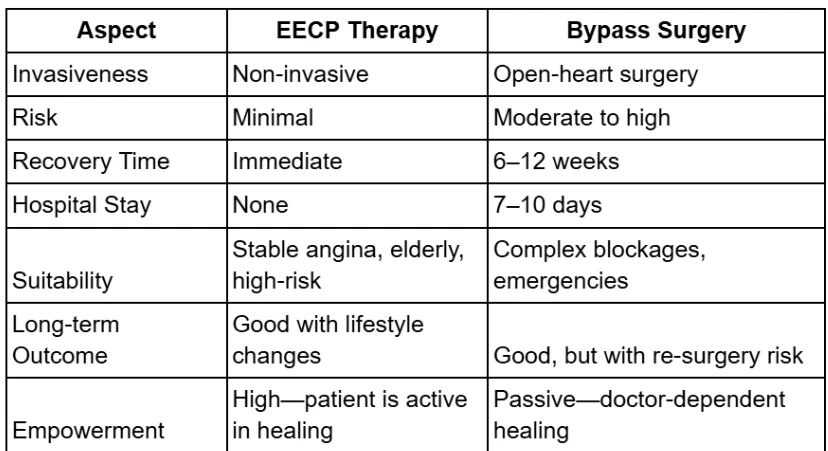
- Long recovery (6–12 weeks)
- Pain, scarring, hospital stay
- After surgery: risk of infection, clotting, kidney problems?
- Emotional toll — fear, fatigue, financial pressure
EECP Therapy: The Science of Healing Without the Knife
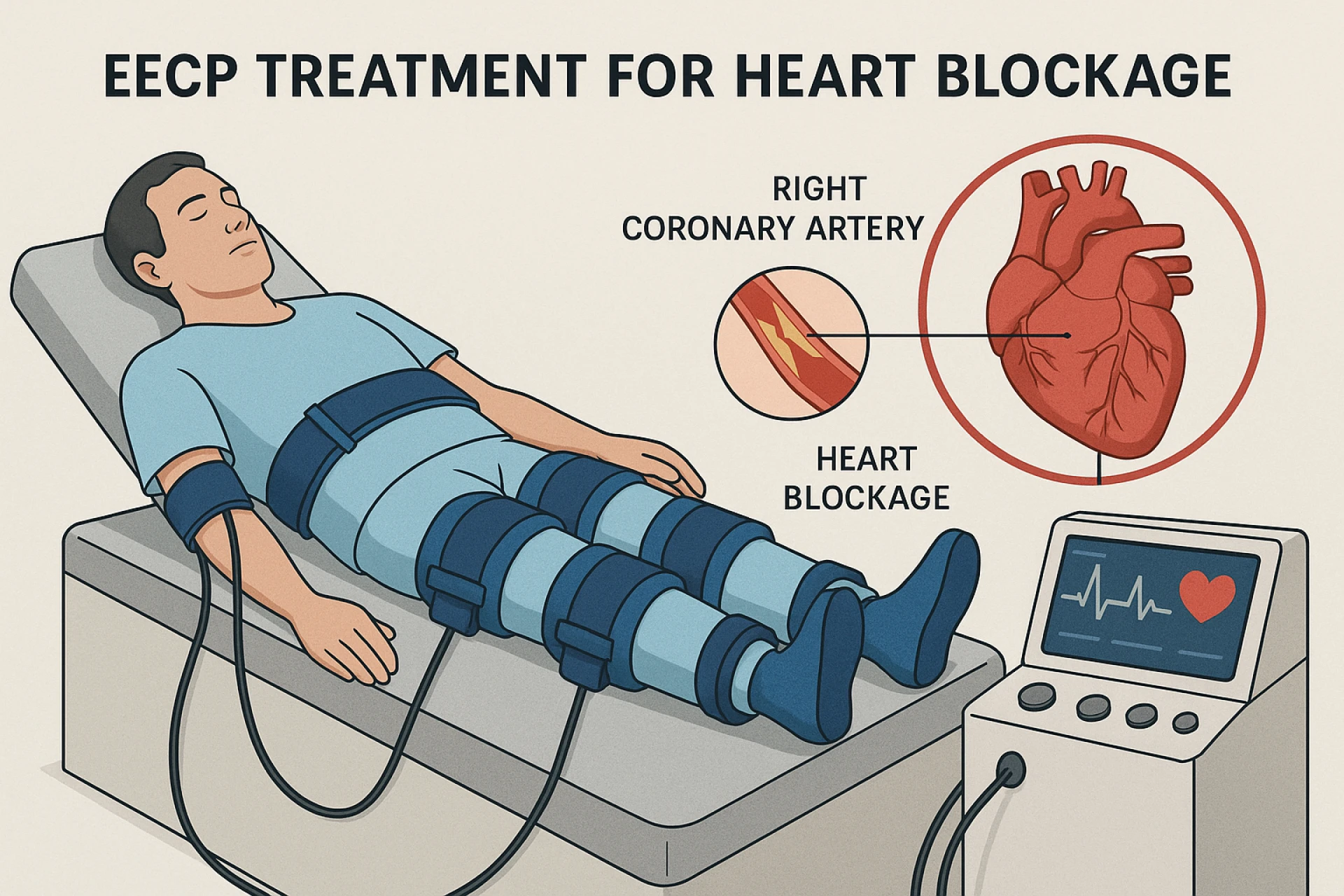
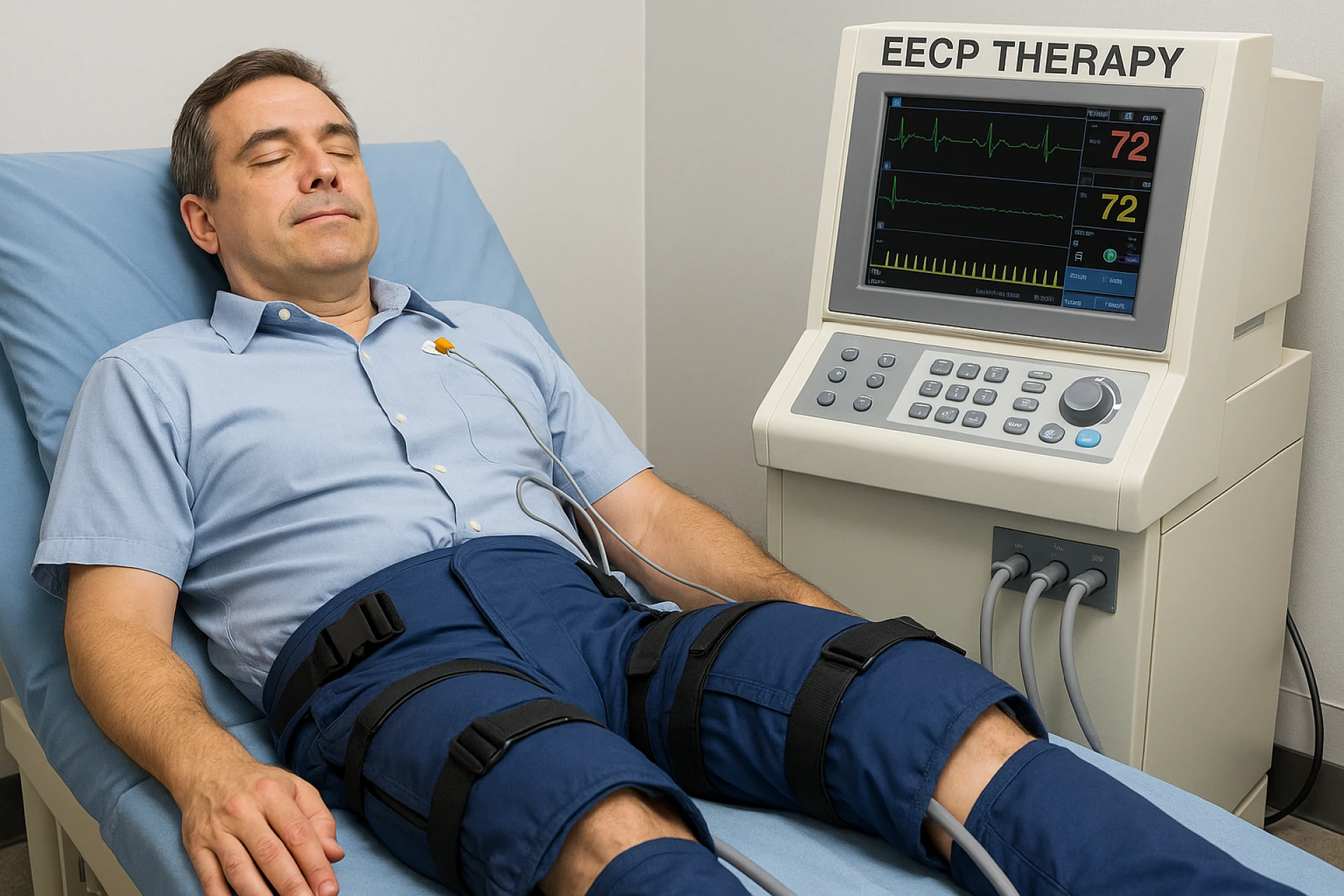
Enhanced External Counter Pulsation or EECP is a non-invasive outpatient therapy that promotes the formation of new blood vessels (collateral circulation) in the heart. Delivered through cuffs on the legs, the treatment acts like a “second heartbeat” that promotes blood flow, offering blood a way around blocked arteries — without surgery.
- Zero downtime
- No hospitalization
- Safe for elderly or high-risk patients
- Lowers angina, shortness of breath, exhaustion
- 40 sessions of 1 hour each—can resume life alongside
But here’s the surprising part: EECP builds on itself over time; it is much more than a symptomatic fix — it retrains the cardiovascular system to run efficiently.
Let’s Be Brutally Honest: When Is Each Option Needed?
Bypass Surgery is more appropriate for:
- Patients having left main artery disease
- Unstable angina or acute myocardial infarction
- When arteries are too diseased for natural vessel growth
- Patients requiring urgent restoration of blood supply
EECP Therapy is better for:
- Chronic stable angina
- Patients who are unfit or unwilling to have surgery
- And those with several co-morbidities (diabetes, kidney problems)
- Patients with symptoms after surgery
- Individuals seeking non-invasive cardiac rehabilitation
The key insight?
Most patients are not in immediate danger. And for these people, surgery is often fast-tracked when smarter alternatives like EECP aren’t even discussed.
Emotional Uplift of EECP vs Psychological Cost of Bypass Surgery
Surgery Often Seems Like a Breakdown
Even when medically necessary, heart bypass surgery takes a toll on confidence. Patients often:
- Are afraid of anesthesia or complications
- Combat mini months of dormancy
- Experience post-op depression
- Dependence, vulnerability, anxiety
EECP Offers Agency
EECP is often undertaken by patients who:
- Feel involved in their healing
- Continue their daily routines
- Gain optimism seeing natural improvements
- Become more committed to lifestyle change
This mental resilience is important. Healing isn’t just about numbers, it’s about how a patient feels day to day.
What Does The Research Say
EECP:
JACC: 90 %+ reduction in angina, quality of life.
Mayo Clinic Proceedings: Validation of long-term safety and cost-effectiveness of EECP.
International Journal of Cardiology: Demonstrated collateral development with enhanced external counterpulsation in patients with severe coronary artery disease.
Bypass Surgery:
Adept at quickly relieving chest pain and increasing survival in higher-risk patients.
Yet frequently connected with cognitive decline following surgical intervention in the elderly.
The risk of reintervention after 7–10 years is significant, particularly in diabetics and smokers.
So while surgery may be life-saving, EECP can be life-giving.
What Most Hospitals Will Not Tell You
- Hospitals earn significantly more from surgeries than from non-invasive therapies.
- EECP is not promoted aggressively due to a lack of procedural revenue.
- Most cardiologists trained in conventional care may not even be certified in EECP.
You, the patient, must ask: “Is there a non-surgical option available for me?”
It’s time for patients to rise—not in distrust, but in awareness.
Ask for second opinions. Ask about EECP. Question what truly nourishes your body and life purpose.
The Bottom Line on EECP Therapy vs Bypass Surgery
This Is More Than a Medical Decision — It’s a Mind-Set Shift
In a world that worships quick resolutions, the idea of opening up the chest may sound like the only “real” answer. But healing doesn’t have to be dramatic. It is not a battle between EECP therapy vs bypass therapy. It’s a conversation. And it’s about time that conversation included:
- The patient’s values
- The body’s natural wisdom
- And the medical community’s willingness to consider softer paths
If you find yourself in this dilemma, don't just ask “What will cure my heart blockage?
You can ask instead, “What will make me feel whole again?”
And maybe the gentler road will, just maybe, take you further.












Sign in to leave a comment.