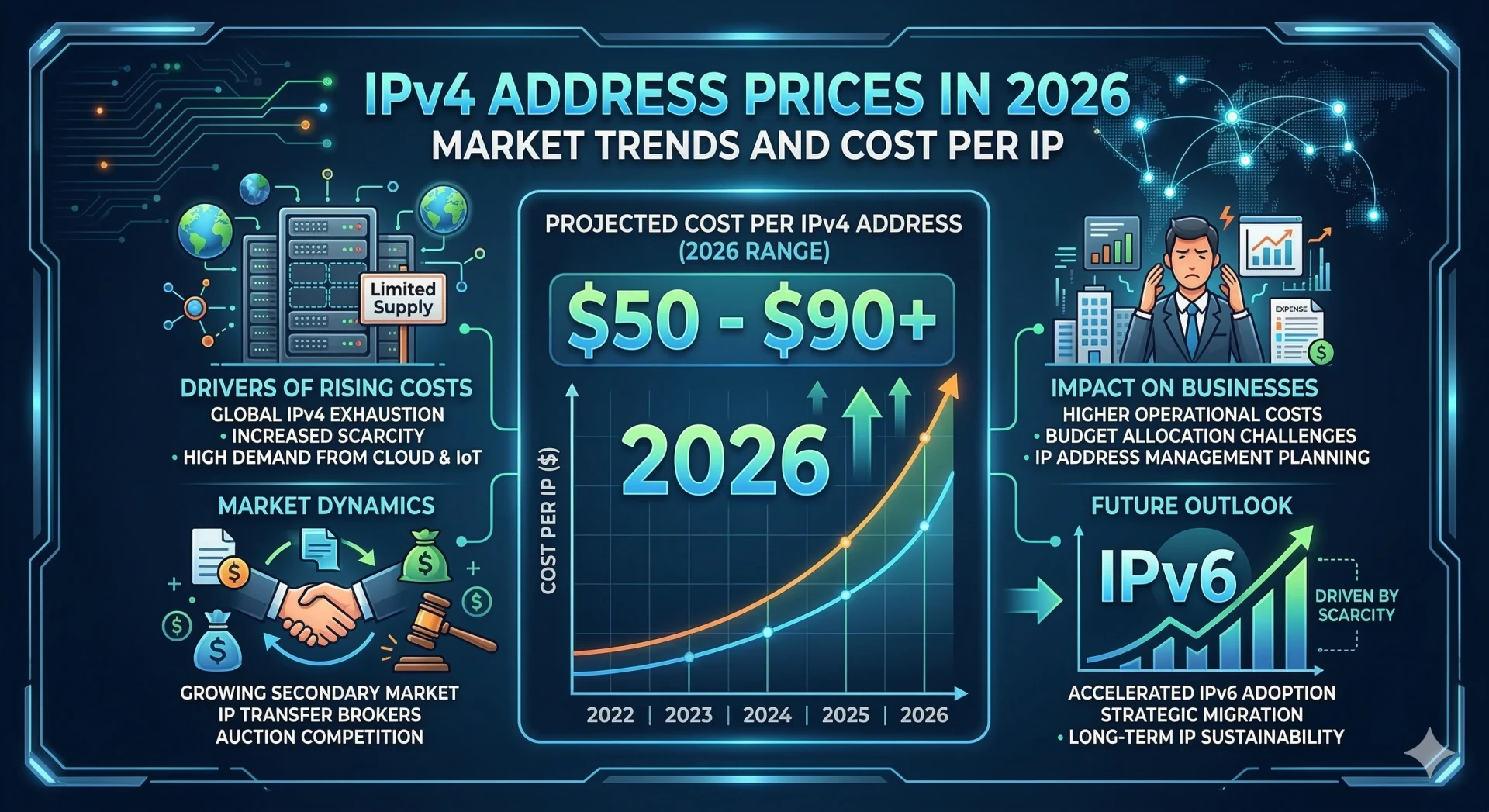

As the internet continues to expand, IPv4 addresses remain one of the most valuable digital infrastructure assets. Despite the long-term transition toward IPv6, demand for IPv4 addresses remains strong in 2026 due to legacy systems, cloud infrastructure requirements, and slow global IPv6 adoption. For companies operating hosting services, ISPs, cloud platforms, or large SaaS environments, understanding the IPv4 market is critical. This article explores current IPv4 address price trends in 2026 and examines the typical cost per IP across different address block sizes.
Why IPv4 Addresses Still Have Value
IPv4 addresses were designed in the early days of the internet and provide approximately 4.3 billion unique addresses. The global pool of new IPv4 allocations was effectively exhausted around 2011, meaning organizations now rely on transfers and secondary markets to acquire additional address space.
Although IPv6 offers a vastly larger address pool, many networks still rely heavily on IPv4. Migration costs, legacy software compatibility, and infrastructure limitations have slowed IPv6 adoption worldwide. Many organizations operate dual-stack systems, but IPv4 remains essential for compatibility with large parts of the internet.
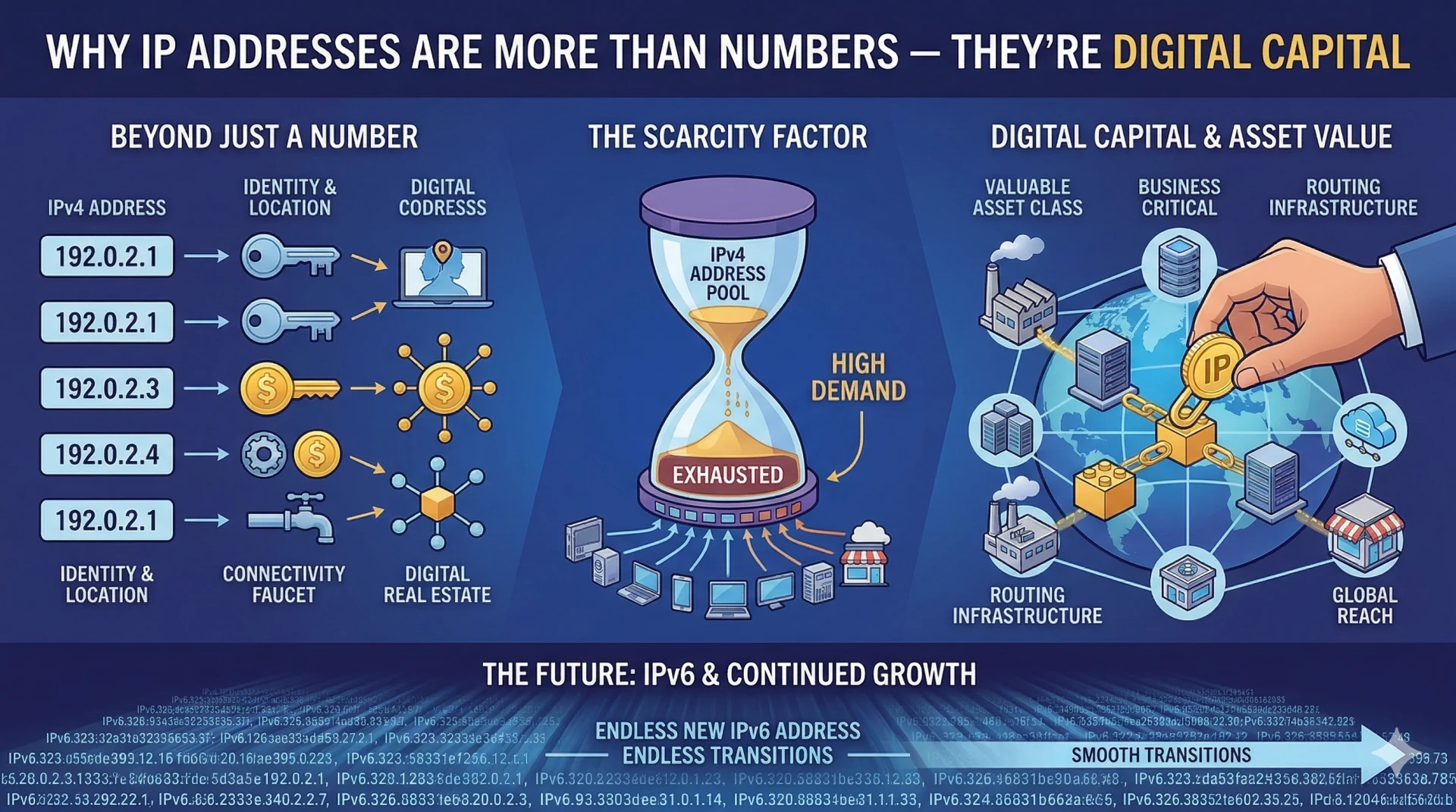
Because of this scarcity and continued reliance, IPv4 addresses have effectively become a tradable digital asset, with an active global market where organizations buy, sell, or lease address blocks.
Average IPv4 Price per Address in 2026
The price of IPv4 addresses fluctuates depending on supply, demand, block size, and transfer policies. While prices peaked between 2021 and 2022, the market has gradually stabilized over the past few years.
In 2026, the average market price for IPv4 addresses typically ranges between $20 and $40 per IP address. However, the final price often depends on the size of the block being purchased.
Smaller blocks, such as /24 networks containing 256 IP addresses, often sell at higher prices per IP. These blocks are particularly valuable because /24 is the minimum size generally accepted for global routing on the internet. As a result, hosting providers, VPN companies, and small ISPs frequently compete for these smaller allocations.
Medium-sized blocks such as /22 or /20 networks usually offer slightly lower prices per IP because buyers are acquiring larger quantities of addresses at once. Meanwhile, very large blocks like /18 or larger may receive bulk pricing discounts, bringing the per-IP price closer to the lower end of the market range.
For example, purchasing a /24 block in 2026 may cost roughly $6,000 to $9,000, while large infrastructure providers buying thousands of addresses may negotiate significantly lower per-IP costs.
Major IPv4 Market Trends in 2026
Market Stabilization
After a period of rapid price increases between 2018 and 2021, the IPv4 market has entered a more stable phase. Increased supply from organizations selling unused address space has helped reduce price volatility.
Today, the market is considered more mature, with brokers, transfer platforms, and structured transactions becoming standard across the industry.
Demand from Cloud and Hosting Providers
Cloud computing continues to be one of the biggest drivers of IPv4 demand. Infrastructure providers require large numbers of IP addresses for services such as web hosting, CDN networks, VPN services, email servers, and gaming platforms.
Many enterprise customers still require dedicated IPv4 addresses, particularly when running legacy applications or maintaining compatibility with older network environments.
As global digital services expand, this demand continues to sustain the IPv4 market.
Growth of IPv4 Leasing
Another major trend in 2026 is the growth of IPv4 leasing. Instead of purchasing address blocks outright, many companies prefer to lease them to reduce upfront capital costs.
Leasing typically costs around $0.30 to $0.50 per IP address per month, depending on block size and contract duration. This model has become especially popular for startups, hosting providers, and rapidly growing platforms that need address space quickly but prefer operational expenses over large capital investments.
Increasing Professionalization of the IPv4 Market
The IPv4 transfer market has become significantly more structured in recent years. Professional brokers, marketplaces, and escrow services now facilitate transactions between buyers and sellers.
Organizations looking to acquire IPv4 address space must also comply with transfer policies established by regional internet registries (RIRs), ensuring that transfers remain transparent and properly recorded.
Future Outlook for IPv4 Pricing
Looking ahead, IPv4 will likely remain a valuable resource for the foreseeable future. Although IPv6 adoption continues to grow globally, the migration process is slow and uneven across industries and regions.
Several key trends are expected to shape the future IPv4 market:
- Continued demand for routable /24 address blocks
- Growth of IPv4 leasing services
- Gradual price stabilization rather than sharp increases
- Expansion of IPv6 alongside existing IPv4 infrastructure
Rather than disappearing quickly, IPv4 will likely coexist with IPv6 for many years as the internet gradually transitions to the newer protocol.
Conclusion
In 2026, IPv4 addresses continue to function as a scarce and valuable component of internet infrastructure. Average market prices typically range between $20 and $40 per IP, depending on block size, market supply, and buyer demand.
For companies expanding digital infrastructure, understanding IPv4 pricing trends is essential for making strategic decisions about whether to buy or lease address space. Even as IPv6 adoption increases, IPv4 addresses remain an important asset within the global internet ecosystem.









Sign in to leave a comment.