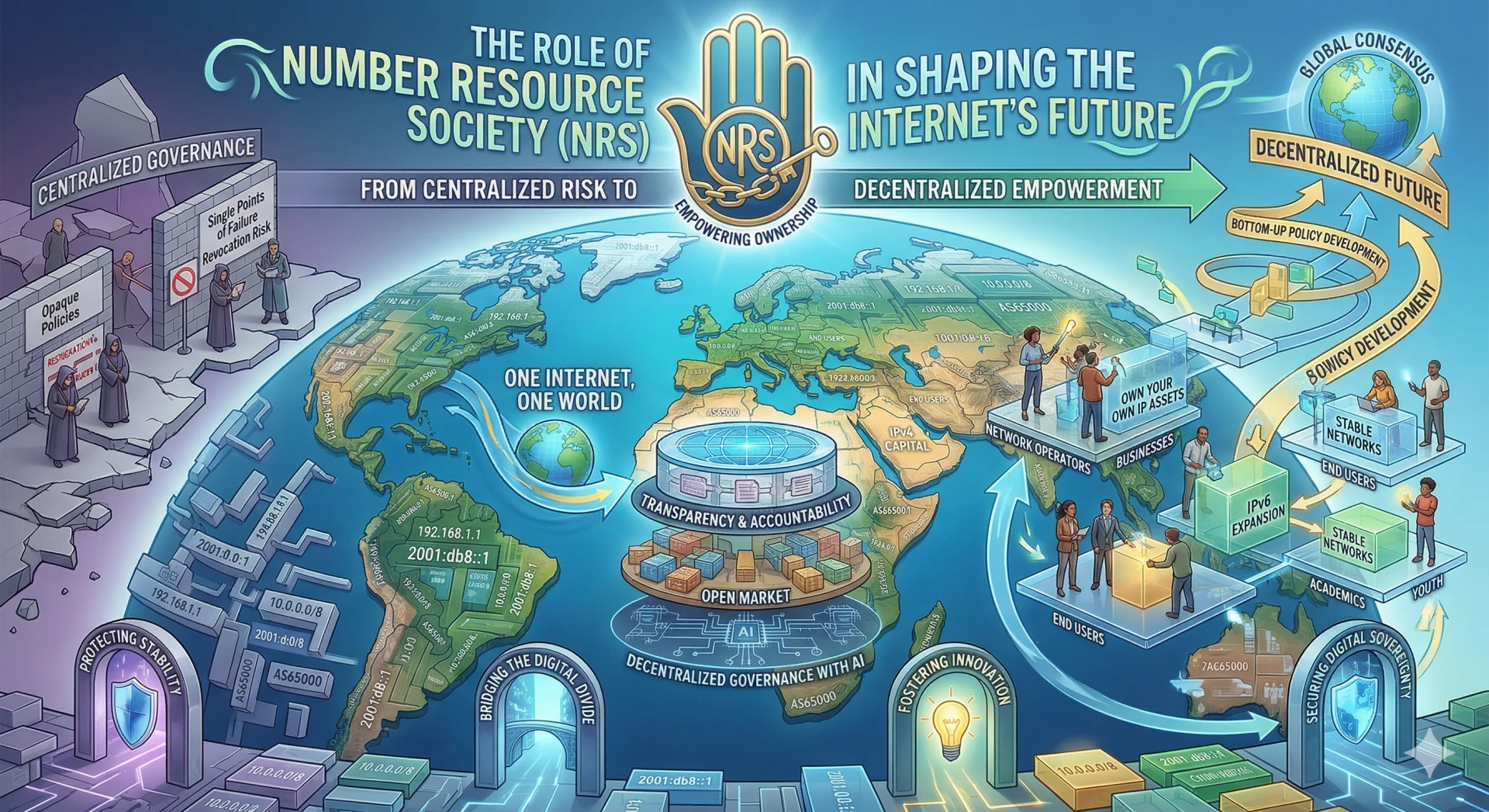

As the internet evolves into critical global infrastructure, the way it is governed is becoming a growing concern. The Number Resource Society (NRS) has emerged as a response to a fundamental problem: the increasing risk of centralized control over internet number resources. Rather than functioning as a traditional governance body, NRS exists to challenge structural weaknesses and advocate for a more resilient, decentralized future.
Why the Number Resource Society (NRS) Exists
The creation of NRS is rooted in a simple but urgent reality: centralized systems at the registry level no longer scale safely. What began as a technical coordination mechanism for managing IP addresses has evolved into a system with economic value, political exposure, and global consequences.
According to its core philosophy, NRS is not driven by ideology but by systems engineering. The internet succeeded because it avoided reliance on centralized authority. However, this principle was never fully applied to the number resource layer. NRS exists to address that gap and push the system toward a model that aligns with how the internet was originally designed.
The Problem with Centralized Internet Governance
At the heart of NRS’s argument is the idea that centralization creates structural risk. When control is concentrated, it introduces single points of failure—whether through political pressure, legal intervention, or institutional breakdown.
Internet registries today operate on voluntary participation, not enforced authority. This means their legitimacy depends entirely on user consent. When governance becomes restrictive or overly centralized, that consent begins to erode.
NRS highlights a critical insight:
Systems based on voluntary cooperation cannot survive if participants are unable to exit.
Without the ability to leave or choose alternatives, a coordination system can quickly turn into a control system—undermining the very foundation that made the internet successful.
Decentralization as a Structural Necessity
NRS reframes decentralization not as a political stance, but as a technical requirement for survivability. As the internet becomes more valuable and more contested, trust-based models become fragile.
Instead of relying on goodwill or consensus, NRS promotes:
- Exit rights instead of forced participation
- Portability instead of lock-in
- Redundancy instead of monopoly
- Mechanism-based governance instead of discretionary control
These principles are designed to eliminate single points of failure and ensure the system can continue functioning under stress—whether from geopolitical conflict, legal disputes, or economic pressure.
Rethinking Internet Number Resource Governance
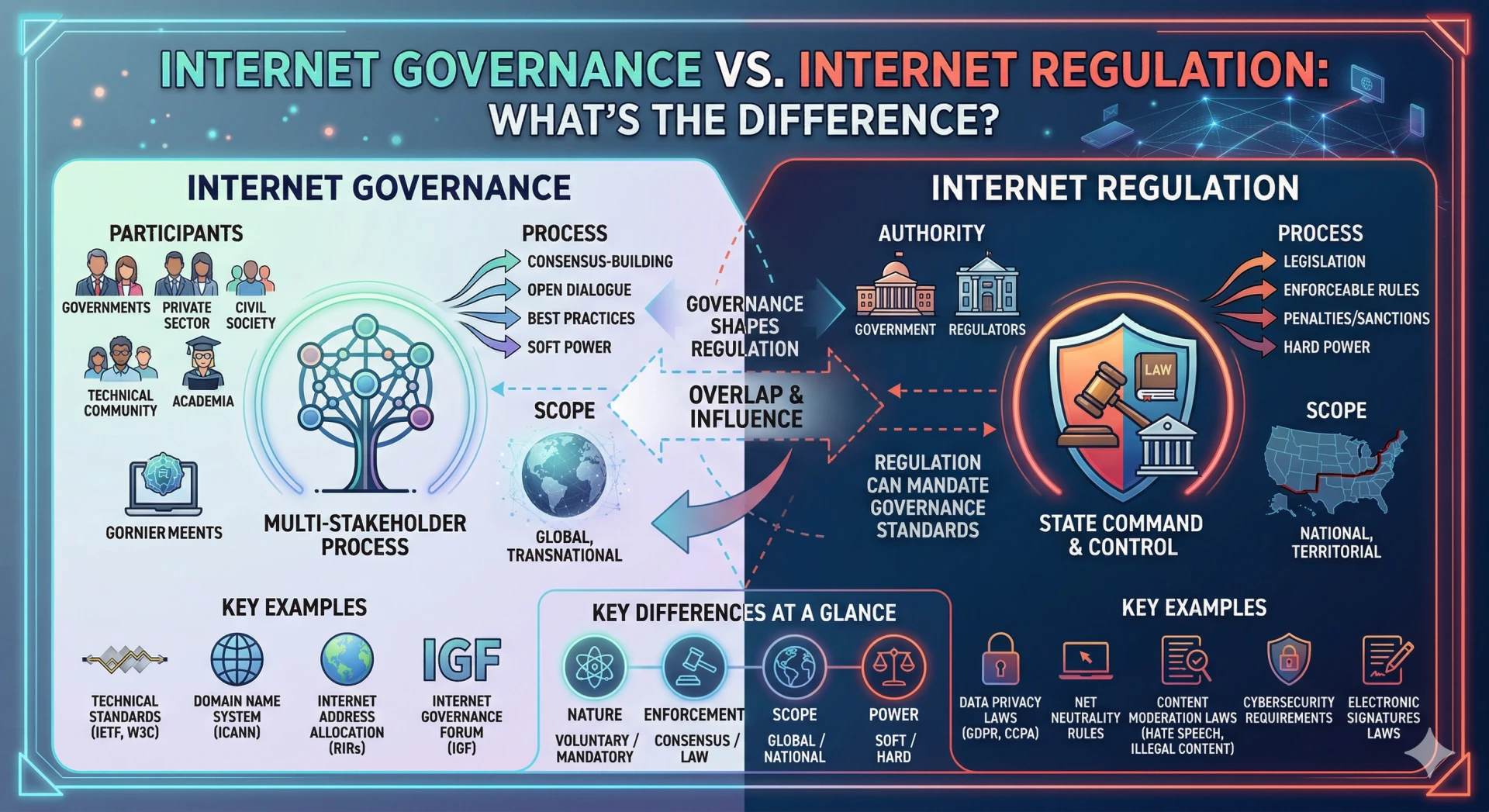
Traditional models of internet governance often assume that centralized coordination is necessary for stability. NRS challenges this assumption by arguing that coordination does not require centralization.
The internet already demonstrates this at the network layer, where decentralized systems enable global connectivity without a single controlling authority. NRS advocates extending this model to the number resource layer, where IP address ownership and control could be distributed rather than centrally managed.
This shift would:
- Reduce dependency on single institutions
- Minimize political and legal risks
- Allow networks to operate more autonomously
Building a More Resilient Internet
NRS does not position itself as a commercial entity or service provider. Instead, its role is to influence the direction of governance by exposing risks and promoting structural change.
Its goal is clear:
To move the internet toward a system where no single entity can become a choke point.
This includes supporting transitional mechanisms that:
- Reduce systemic risk
- Increase transparency
- Enable gradual decentralization
By focusing on structure rather than narratives, NRS aims to make the cost of centralization visible before it leads to large-scale failures.
The Future of the Internet Depends on Decentralization
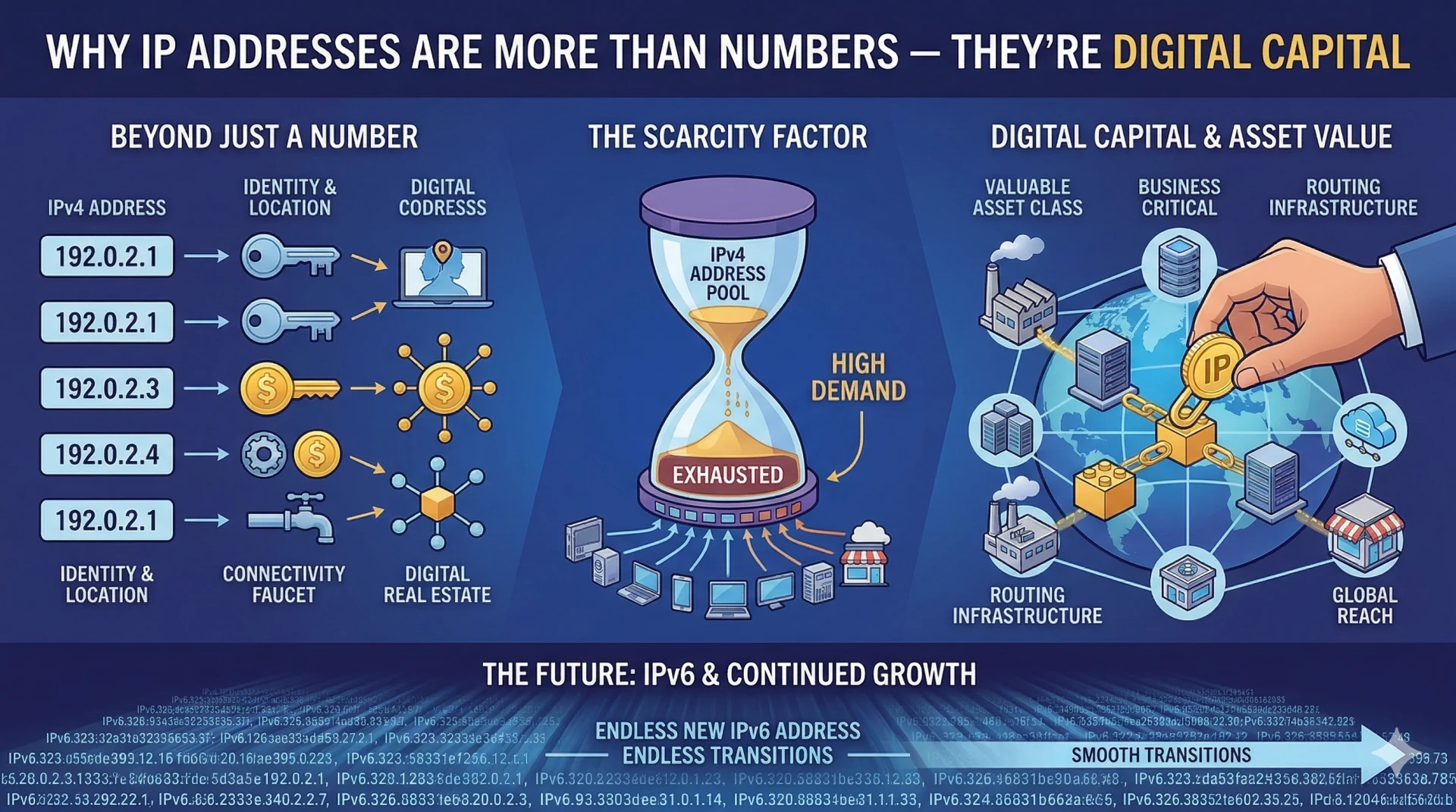
As the internet continues to grow in importance, the limitations of centralized governance models are becoming harder to ignore. Scarcity of resources, rising economic value, and geopolitical tensions are putting increasing pressure on existing systems.
NRS argues that decentralization is no longer optional—not because it is ideal, but because the alternative does not scale.
The future internet must be:
- Resilient to political and institutional failure
- Independent of centralized control
- Built on mechanisms rather than trust alone
Conclusion
The Number Resource Society (NRS) represents a shift in how we think about internet governance. It challenges long-standing assumptions and pushes for a system that reflects the realities of a global, high-stakes digital infrastructure.
Rather than preserving existing models, NRS focuses on what comes next:
A decentralized, resilient, and scalable internet where control is distributed—and failure is contained.
As the digital world becomes more complex, the role of organizations like NRS will be critical in ensuring that the internet remains not just functional, but future-proof.










Sign in to leave a comment.