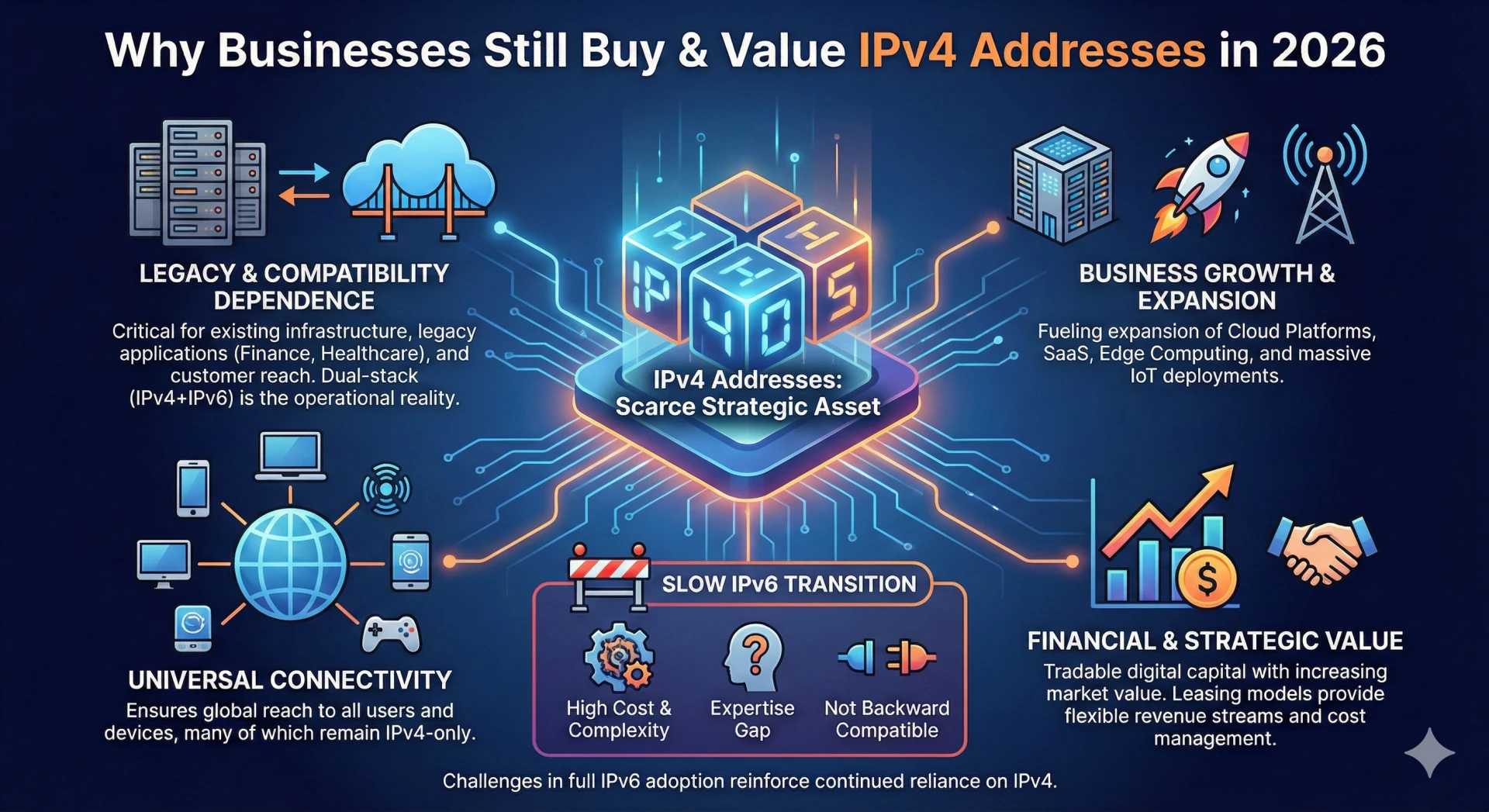

Why Businesses Still Buy IPv4 Addresses in 2026
Despite years of discussion around IPv6 adoption, the global demand for IPv4 continues to grow. Cloud providers, hosting companies, SaaS platforms, and enterprise networks are still actively looking to buy IPv4 addresses to support infrastructure expansion.
But why is this happening in 2026?
IPv4 Exhaustion Is Structural — Not Temporary
The depletion of IPv4 was formally recognized in 2011 when the Internet Assigned Numbers Authority distributed the last /8 blocks to the Regional Internet Registries. Since then, RIRs like:
- RIPE NCC
- ARIN
- APNIC
- LACNIC
- AFRINIC
have either exhausted their pools or placed strict limitations on new allocations.
This means organizations cannot simply “request more IP space.” Instead, they must acquire IPv4 addresses through the secondary transfer or leasing market.
Why Companies Still Buy IPv4 Addresses
Even with IPv6 available, IPv4 remains operationally essential for several reasons:
1. Legacy Compatibility
Many enterprise systems, firewalls, IoT deployments, and legacy applications still rely on IPv4 routing and configurations.
2. Cloud & Hosting Growth
As companies scale infrastructure across multiple data centers and cloud environments, dedicated IPv4 space is required for:
- Dedicated servers
- VPS hosting
- CDN nodes
- Email infrastructure
- SSL-based services
3. IP Reputation & Control
Owning IP space allows businesses to manage:
- Reverse DNS
- Clean routing history
- Spam reputation
- BGP announcements
Organizations that buy IPv4 addresses gain long-term control instead of relying solely on upstream provider allocations.
Transfer vs Leasing: What’s the Difference?
There are two primary ways to obtain IPv4 space:
✔ IPv4 Transfer (Purchase)
A permanent ownership transfer approved by the relevant RIR. This option is often chosen by companies planning long-term infrastructure growth.
✔ IPv4 Leasing
Shorter-term agreements where the IP block remains under the lessor’s registry account but is routed and authorized for use via LOA (Letter of Authorization).
Both methods are legitimate when structured in compliance with RIR policies.
What to Look for When Buying IPv4 Addresses
If you plan to buy IPv4 addresses, consider:
- RIR-compliant transfer process
- Clean WHOIS history
- No blacklist or spam abuse history
- Clear contractual agreement
- Escrow protection (for transfers)
- LOA documentation (for leasing)
Working with experienced brokers or organizations familiar with registry policy reduces regulatory and routing risks.
The Market Outlook
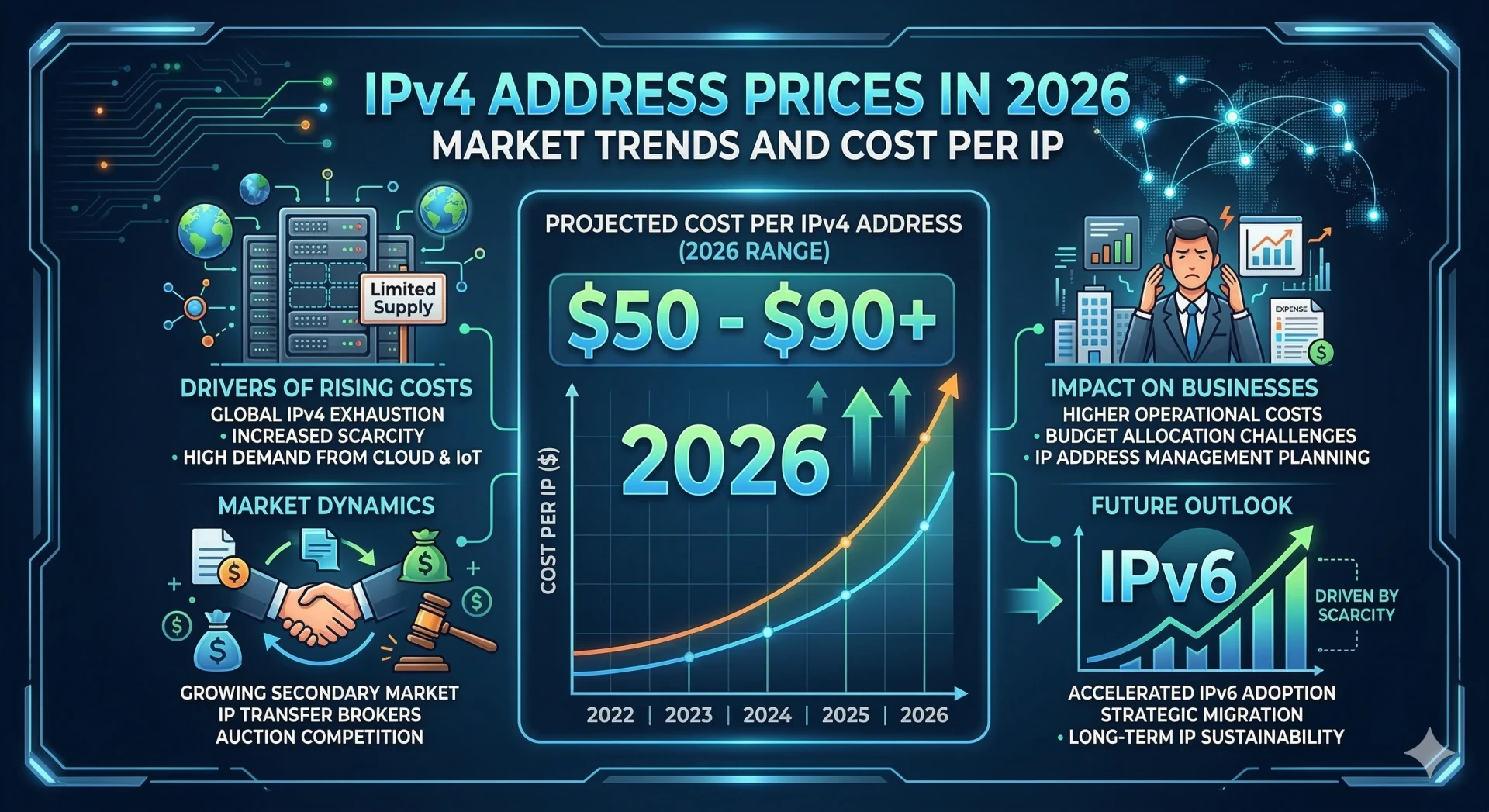
IPv4 prices have fluctuated over the years, but demand remains strong due to:
- Ongoing IPv6 slow adoption
- Cloud-native infrastructure scaling
- Enterprise digital transformation
Until IPv6 fully replaces IPv4 at the global routing level, the secondary IPv4 market will remain active.










Sign in to leave a comment.